Search

Your Notifications (0)

There are currently no notifications. You're all set!

What's New

Explore recent and historical product updates for Revvity Signals' Cloud Native SaaS Software 

Collapse All

40 releases — this page expanded. Collapse


What’s New

The latest release of Signals introduces enhancements to the ChemDraw+ application. Specifically, coordination bonds are now treated identically to dative bonds in both chemical perception as well as chemical search. Additionally, improvements to visualization of biopolymers have been made. Finally, several bug fixes have been extended with this release.

The following improvements are available for users of Signals ChemDraw. Certain features may only be available with enablement by an administrator.

ChemDraw+

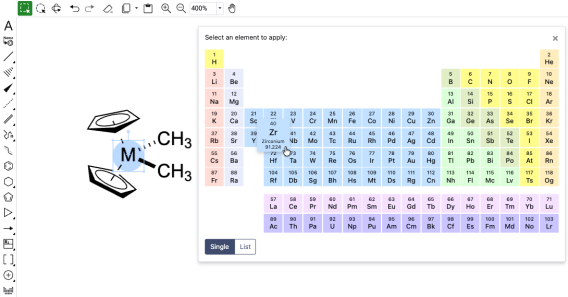
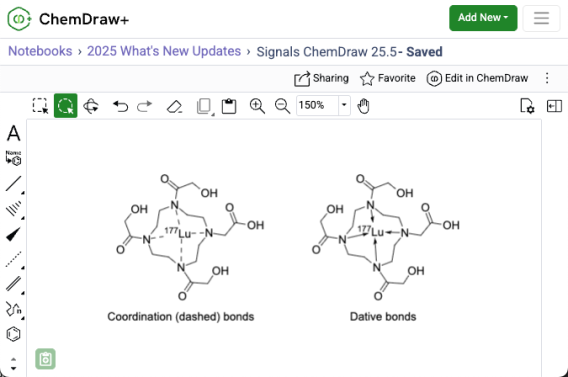
-    Coordination bonds are now identical to dative bonds
-    Show/hide residue IDs of biopolymers


ChemDraw+

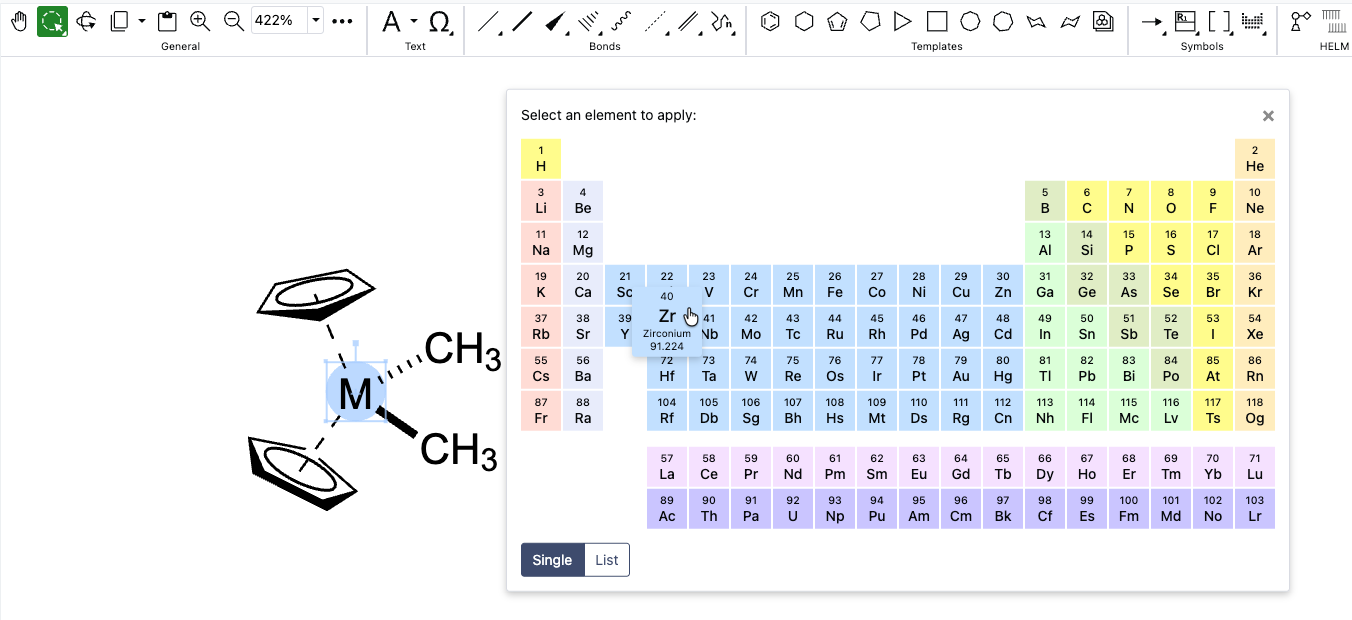
Coordination bonds are now identical to dative bonds

ChemDraw now treats coordination bonds and dative bonds identically, ensuring consistent valence calculations and stereochemical perception for these chemically equivalent bond types. Additionally, these bonds will match each other when searching, meaning that structures containing a dative bond will match those containing a coordination bond in the same position and vice versa.  

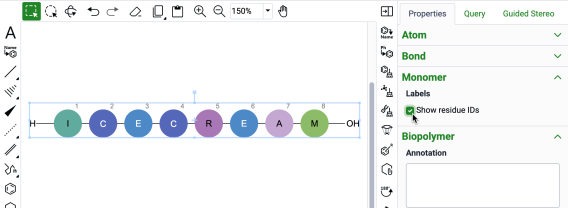
Show/hide residue IDs of biopolymers

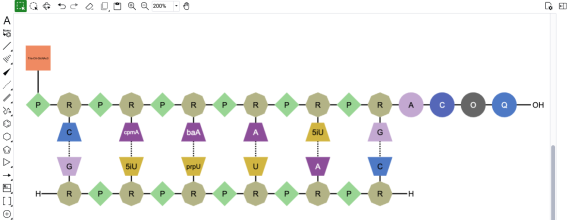
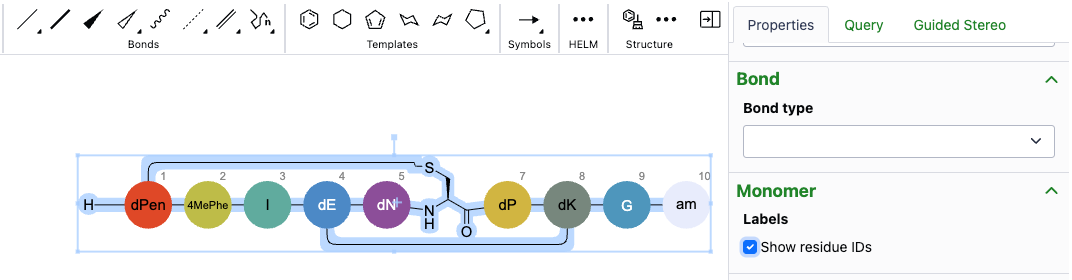
It is now possible to show and hide the residue IDs of biopolymers on the ChemDraw canvas. Upon selection of a biopolymer, the show/hide residue ID option checkbox will be available in the “Monomer” section of the Properties panel.

What's New

We are delighted to release our new version of Signals, 25.5. This release brings enhancements in Signals Synergy, our SAR and Decisioning capabilities, Samples, Materials Libraries and Inventory, and to Admin Defined Tables and Variation Tables amongst others. We have new beta capabilities for SAR and decisioning and an AI based capability to extract text from images. Finally, we have also fixed a number of small bugs.

This release of Signals brings updates to the horizontal view, and management of materials, in Variation tables. We have extended import and export flows to and from Signals Synergy, including a beta capability in publishing table data to Inventa. We have redesigned Order and Internal Request Tables in Inventory, extended the material lineage capability and extended our extraction coverage for the ELN archive. We have extended the utility of autotext, and added calculated product equivalents in the stoichiometry tables. Finally, we have also fixed a number of small bugs.

The following improvements are available for users, administrators and developers on the Signals platform. Certain features may only be available with appropriate licensing and/or with enablement by an administrator.

  • Fundamentals
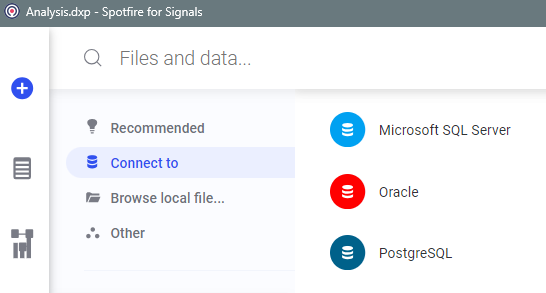
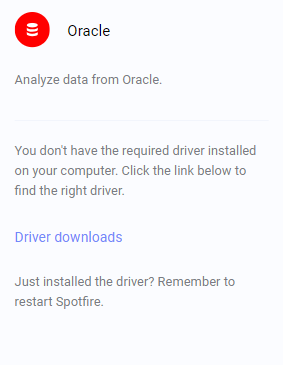
    –Spotfire Connector Oracle available
    –Addition of Plates to Parallel Experiments
    –Automatic fill of hierarchical attribute child value if it is the only child
     
  • AI
    –Text Extraction from Images (beta)
     
  • SAR & Decisioning 
    –HELM rendering supports ChemDraw and custom coloring schemes
    –Nanobody Structure Prediction Data Function
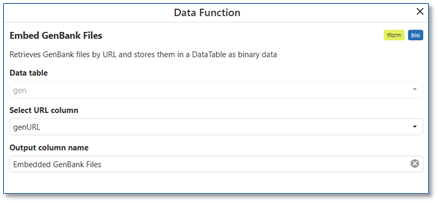
    –Embed GenBank Data Function
    –Mapping useability enhancements in Publish Results to Data Factory app (beta)
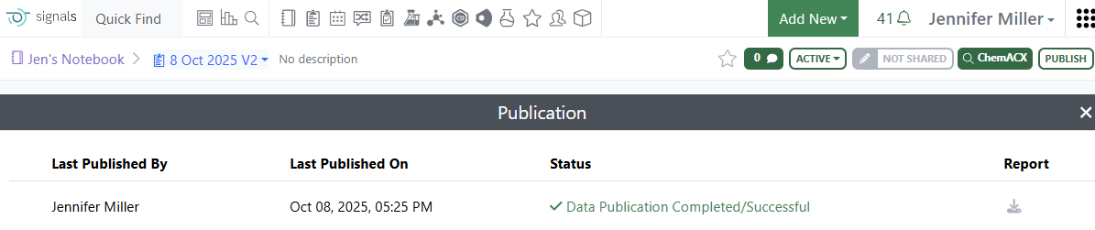
    –Downloadable report for successful publications (beta)
     
  • Synergy
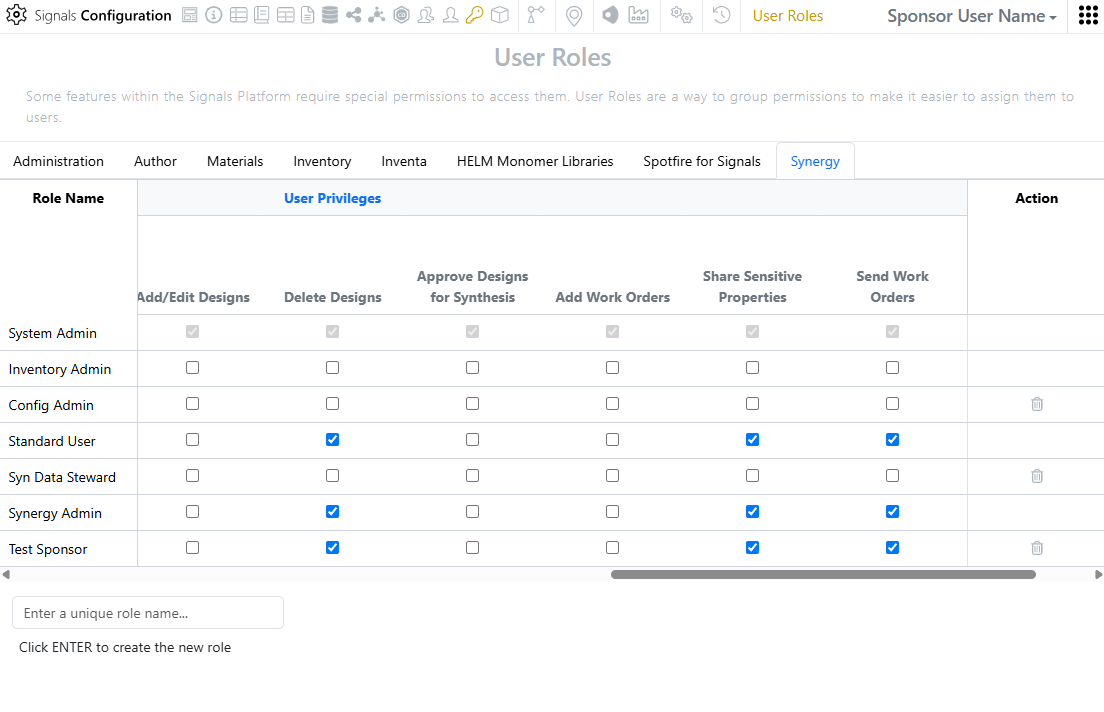
    –Create Work Order privilege
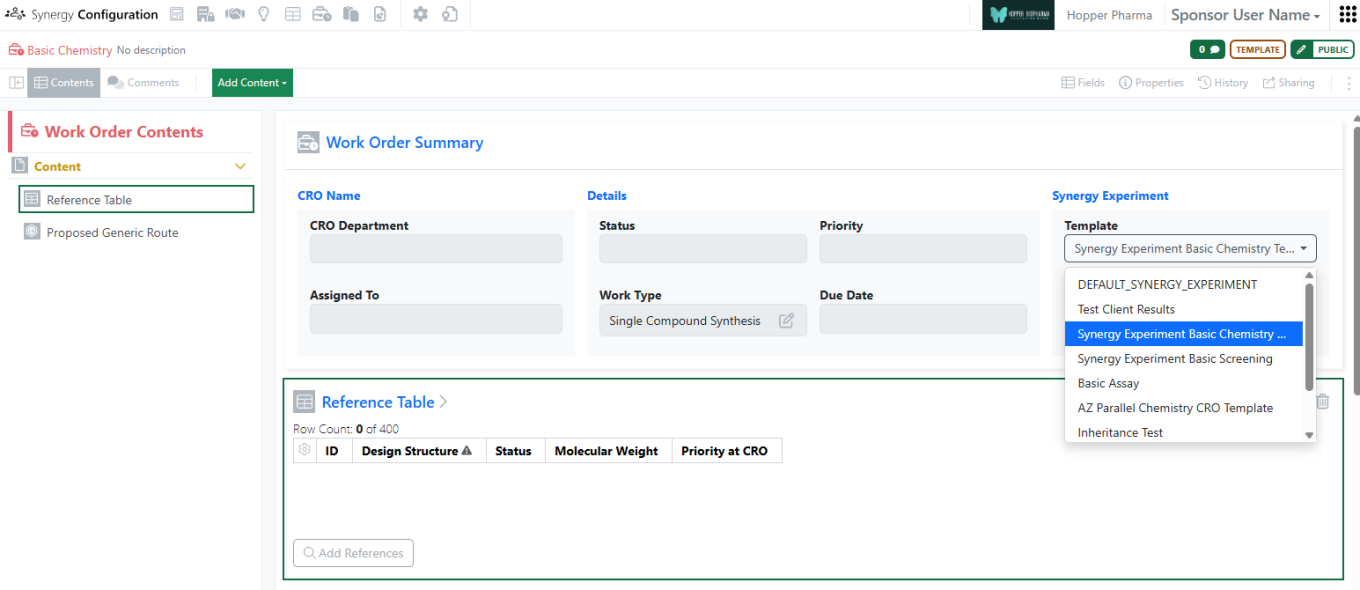
    –Select default Synergy Experiment Template for a Work Order Template
    –Include Reference Table configuration in a Work Order Template
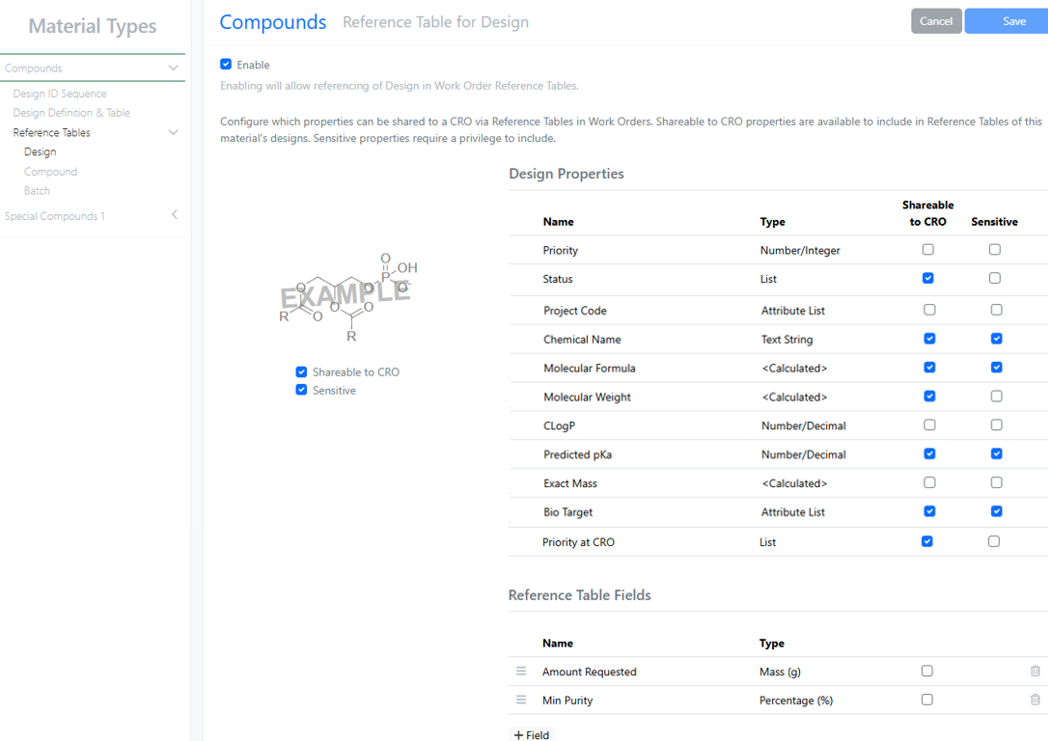
    –Admin-defined fields for Reference Tables
    –Add Designs to Work Order Reference Tables from multiple Ideas
    –Customize Design ID sequence
    –Sponsor users Quick Add Designs to Chemical Drawings in Experiments, ADOs, and Synergy Experiments
    –Expanded Designs Statuses for Design synthesis tracking and Approve Designs for Synthesis privilege – available to all systems
    –Bulk Design status update from Designs Smart Folder Data Grid view – available to all systems
    –Kanban board view in Designs Smart Folder for Designs synthesis tracking – available to all system
     
  • Admin Defined Tables & Variation Tables
    – CASE function
    – Multiline entry in equation editor
    – Improvements to the Horizontal Summary View in Variation Tables
    – Publish Variation Tables to Inventa available to all systems 
     
  • Samples
    – Autoscaling of units for Sample Moles calculation
    – Significant figure handling improvements in Sample calculations 
     
  • Inventory
    – New labels
    – Requests support Internal Request workflow
    – System Supplier List available in new container creation workflow (beta)
    – Add Material Library properties to container labels
     
  • Materials
    – Updates to the Materials Table material selection
    – Change the batch/lot of a selected material
    – Calculated properties for DNA and RNA materials
    – Bulk import with multipart GenBank and FASTA files
    – Disregard Order in Materials Bulk Import 
     
  • Administration
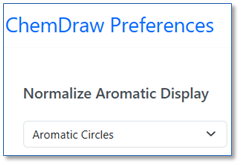
    – ChemDraw aromatic display preferences are respected in Inventa
     
  • Integrations & APIs
    – API update to allow chemical drawing import via HELM
    – API for fetching bulk import success reports
    – API for fetching Worksheet field definitions
    – APIs for fetching and creating CRO users
    – External Actions can be hidden from CROs
     

We also fixed several small bugs in this release. Details of the enhancements are described below.

The following OnDemand videos for Signals Notebook End Users are now available

  • Materials Table: Register and Manage Materials within an Experiment

System administrators of Signals Synergy should be aware that there is a new privilege called Add Work Orders that is now required to create Work Orders. Previously, no privilege was required to create Work Orders. For users to continue creating Work Orders, you must grant them this privilege via a role. 

Data Factory administrators should be aware that job-service/postJobserviceLoad primary API is now asynchronous and will immediately respond with a 202 and the string “accepted”. It will no longer return the job’s information. 

Data Factory administrators should be aware that the DELETE /information-design-service/mtypes/{name} primary API now returns 409: Conflict when trying to delete a measurement type linked to an Experiment, ADO, or Table in Signals One. 

Developers should note that we have changed the GET/entities endpoint to no longer allow for both “trashed” and “untrashed” items to be fetched simultaneously. The "includeOptions" will continue default to "untrashed" when no explicit parameters are specified. This change only impacts customers who are explicitly setting “includeOptions” to “trashed,untrashed” or any combination including both.

Administrators are recommended to subscribe to the channels within our support news site found at https://support.revvitysignals.com/hc/en-us/categories/360004446171-Support-News which contains more information about releases and other pertinent product information.

This content is anticipated for release on our Production E3 environments, and for Private Cloud customers on our deferred release schedule, in November 2025.
 

Further Details 

The following improvements are available for users, administrators and developers on the Signals platform. Certain features may only be available with appropriate licensing and/or with enablement by an administrator.

Fundamentals

Spotfire Connector Oracle is available within Spotfire for Signals. The end user must install the required driver for function in Spotfire for Signals Analyst. Data Connection information must be embedded in analysis file. Authoring, editing, and creating new is supported in Spotfire for Signals Analyst while Spotfire for Signals Online can consume existing.

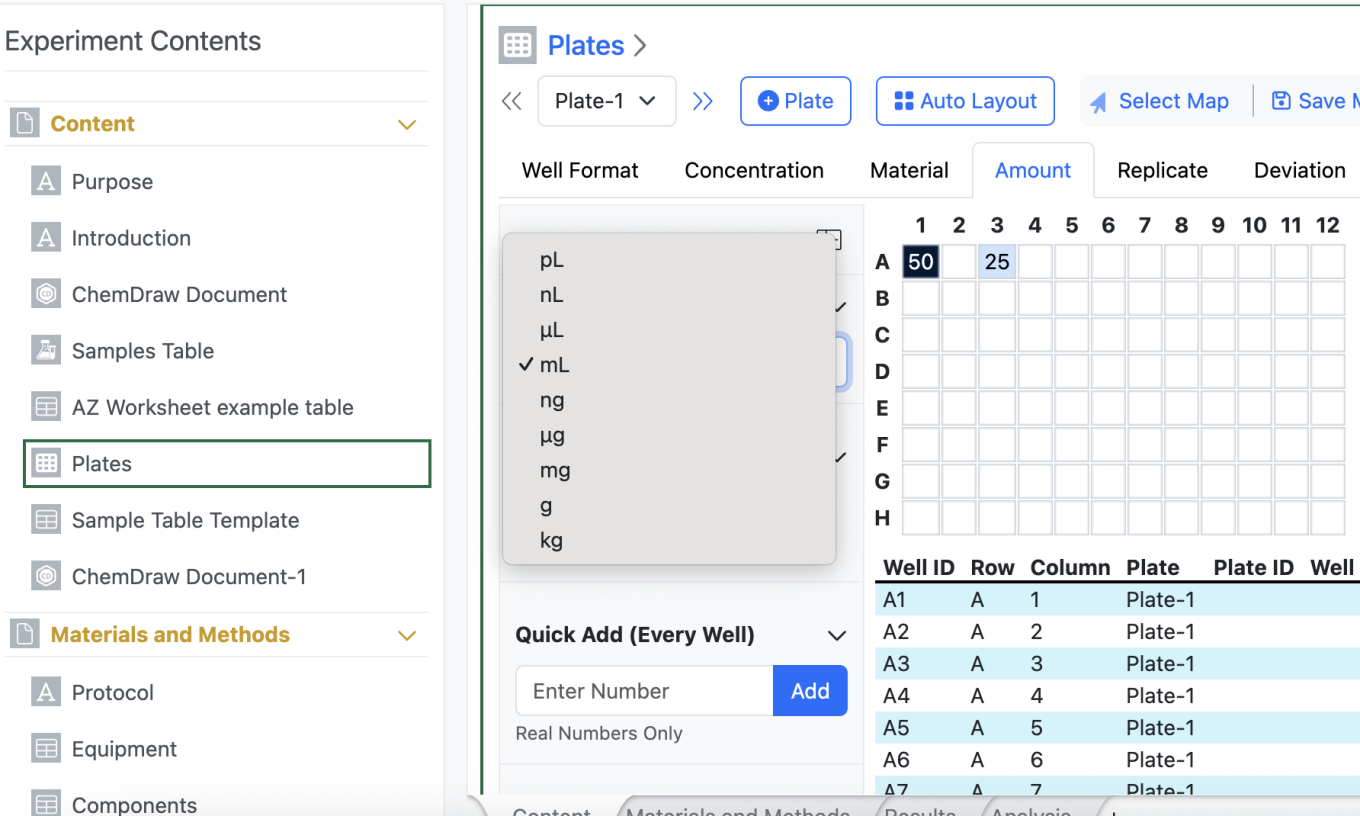
Users are now able to add the standard Plate element in Parallel Experiments using the Add Content dropdown. When populating the plates using Autofill, the user now can populate that plate with samples from the Sample Summary table.

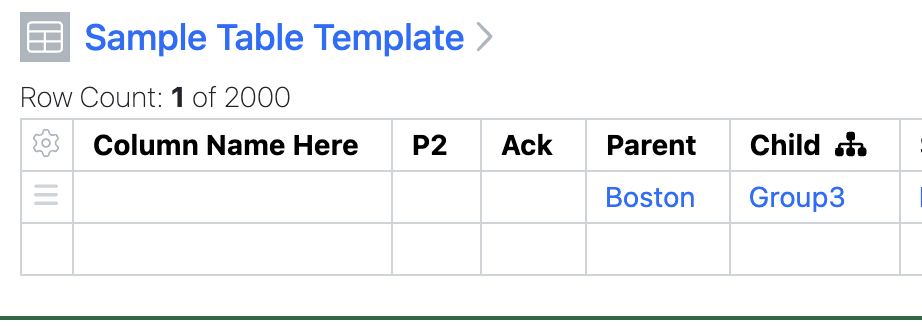
In a click reduction effort, child fields in a Parent/Child Hierarchical Attribute pair will automatically fill if the user only has access to a single child of their selected parent. This is no way alters user access to values in the HA. Users are still able to remove any auto-filled child attributes.

SAR & Decisioning

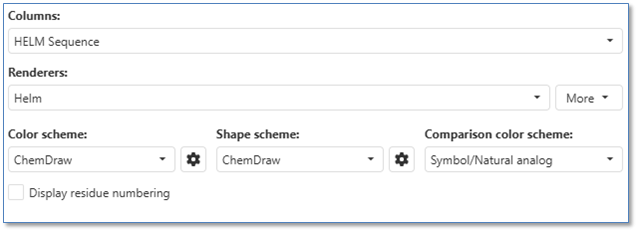
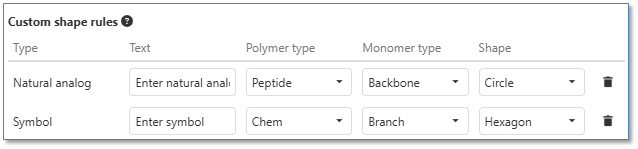
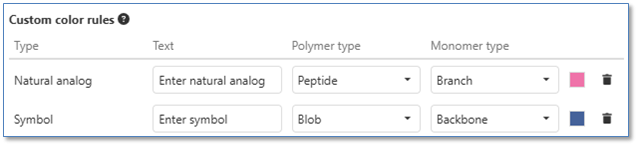
Users can now customize HELM rendering in ChemCharts visualizations by selecting predefined ChemDraw or Pistoia styling, or by creating their own custom color and shape schemes

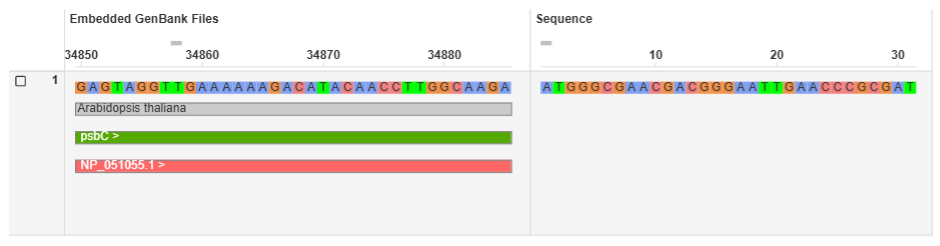
Users can now embed GenBank files into Inventa Analysis using the ChemCharts 'Embed GenBank Files' data function, which extracts GenBank IDs and file content from URLs in Spotfire tables

Users can leverage the new 'Nanobody Dashboard' ChemCharts data function to generate comprehensive visualizations for nanobody developability assessment, including 3D structure prediction, antibody numbering, surface area analysis, developability metrics, and sequence liability identification

Synergy

The System Admin can now control which Roles can create Work Orders using the new Add Work Orders privilege. Previously, all users with access to the Synergy App (Synergy App privilege) could create Work Orders; now, users must be granted this privilege in Signals Configuration to create Work Orders.

For commonly used workflows, several improvements have been made to reduce the number of clicks required by the Sponsor end user. First, a default Synergy Experiment template can be selected for a given Work Order Template. This allows the Sponsor end user to create a Work Order and the Draft Synergy Experiment using a single creation screen. In addition, the admin can now add a Reference Table to the Work Order Template and pre-configure the default shared properties.

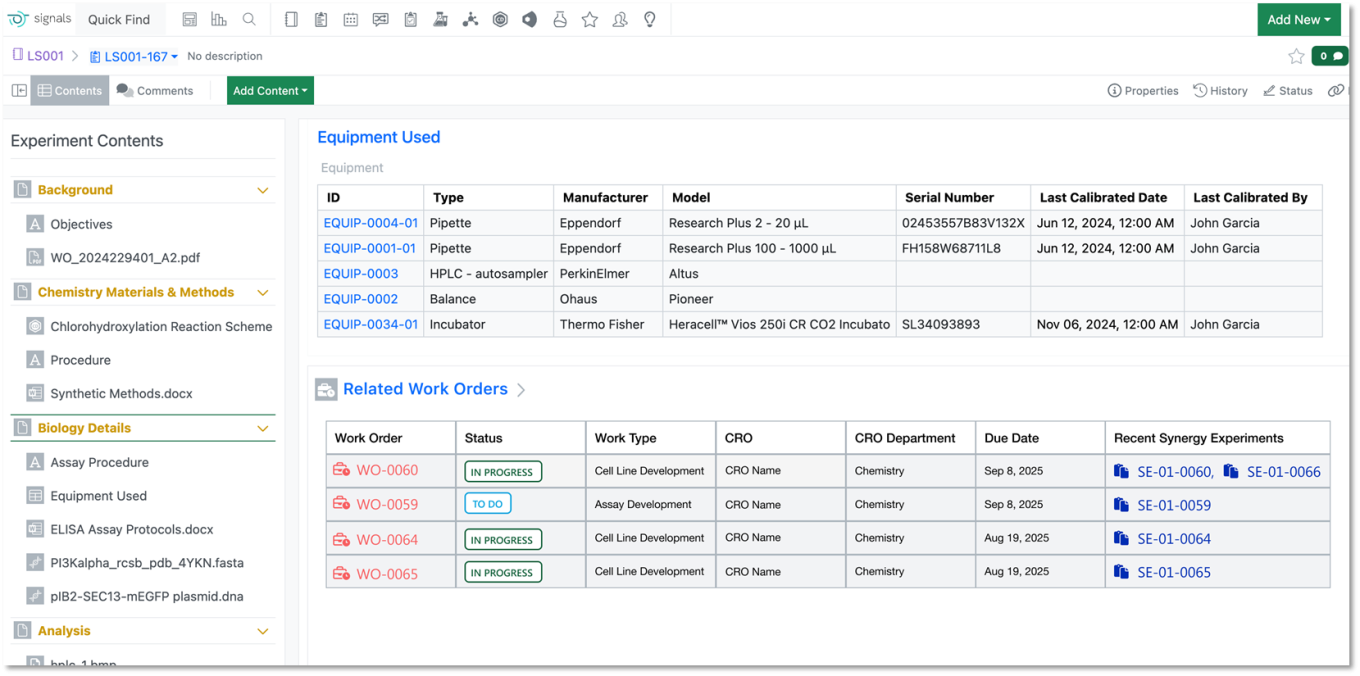
Reference Table configuration also now supports admin-defined fields, in addition to the shared properties of Designs or Material Assets and Batches. Reference Table admin-defined fields can be used to convey additional information to the CRO, such as which assays to run on specific compounds or the amount and minimum purity requested for Design synthesis.

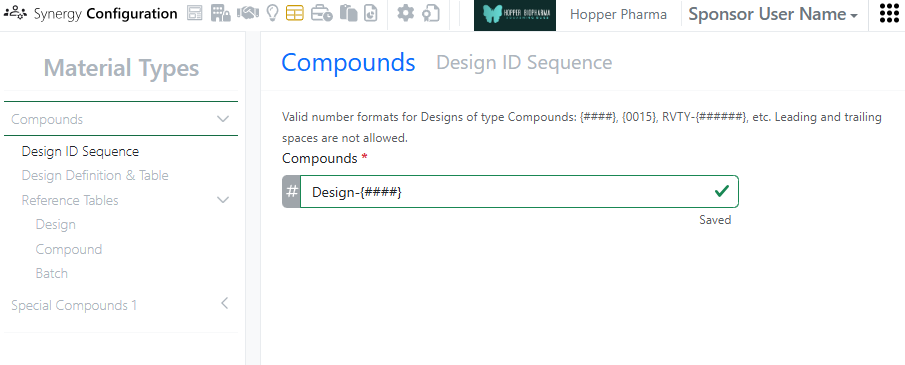
For Designs, the Design ID is now customizable by the admin in Synergy Configuration. In addition, Designs from multiple Ideas (e.g., across chemistry teams or across projects) can now be added to a Reference Table in a single Work Order.

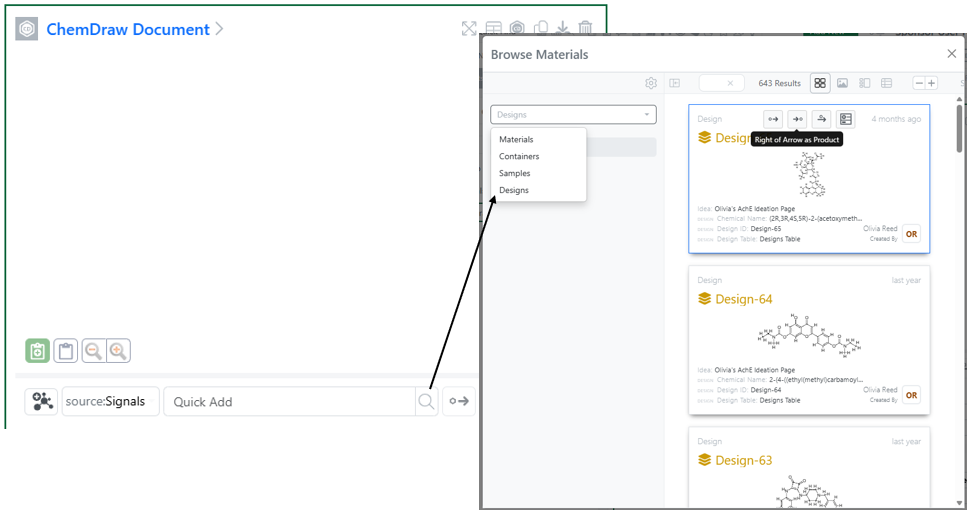
Finally, internal users can now use the Quick Add toolbar to easily add Design structures to Chemical Drawings in Experiments, admin-defined objects, and Synergy Experiments. The Design ID will be added to the stoichiometry grid Product or Reactant Table and propagated to any subsequently created Sample(s) and then into the Originating Design on registered Material(s) from the Sample(s).

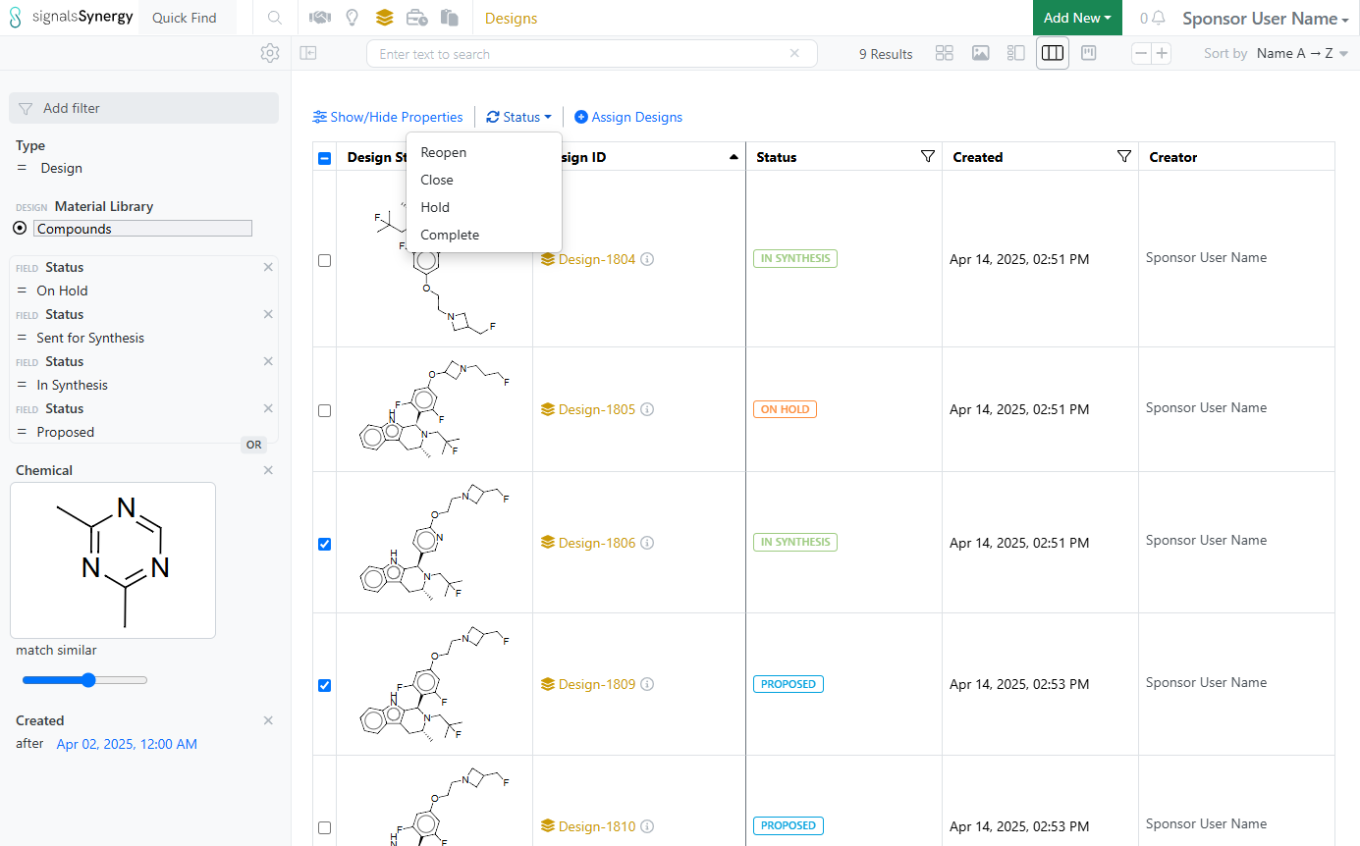
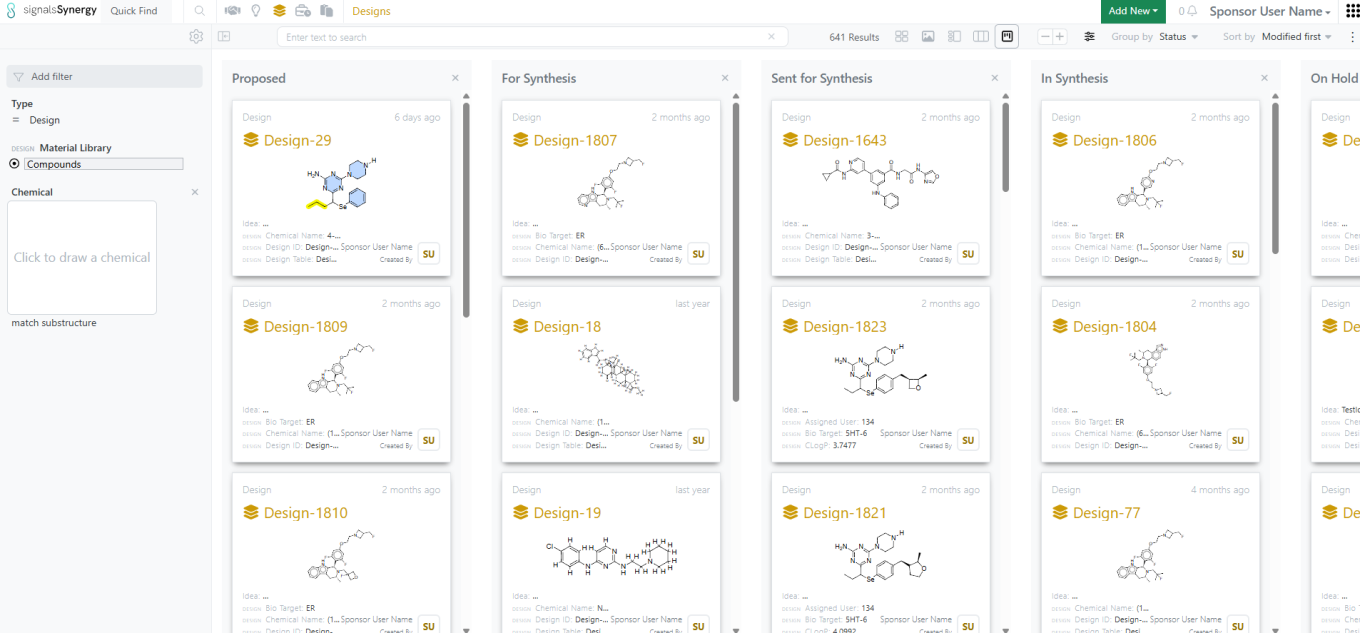
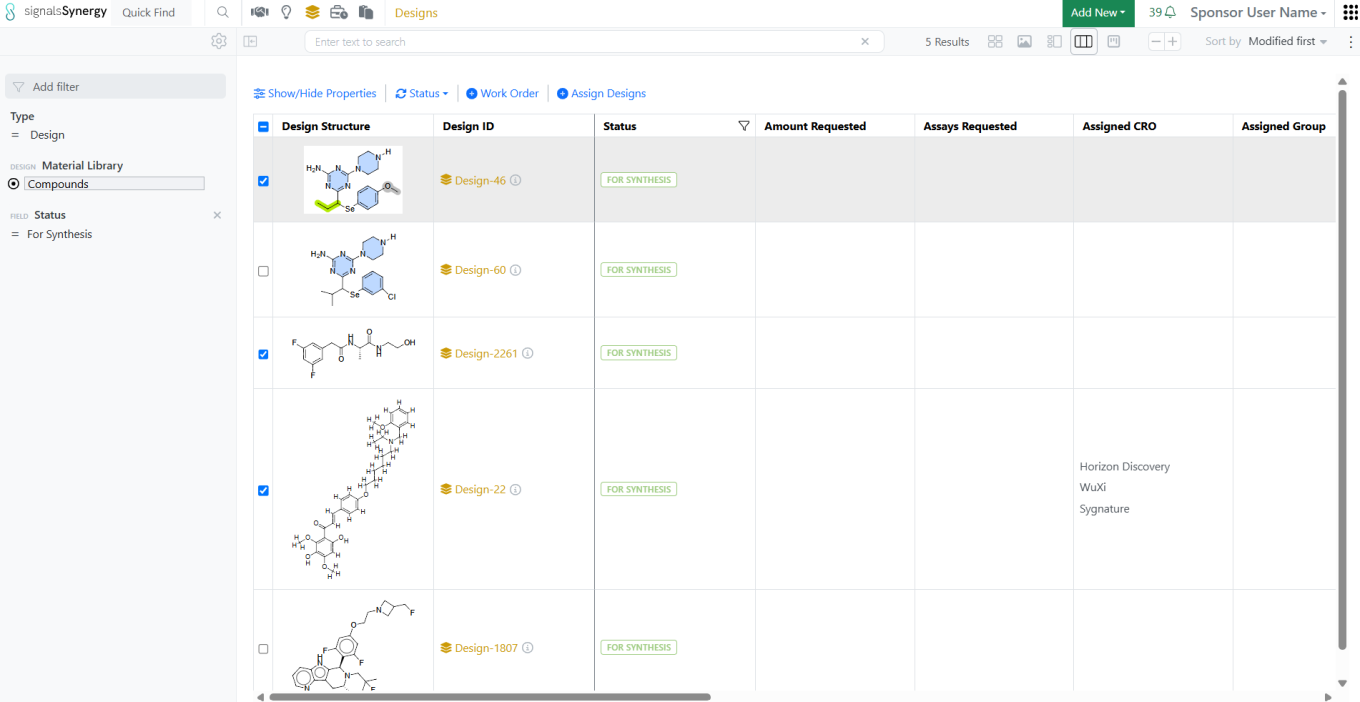
Finally, expanded Design statuses for Design synthesis tracking, Approve Designs privilege, bulk status updates, and a Kanban Board view of Designs by Status in the Designs Smart Folder are now available to all systems.

Admin Defined Tables & Variation Tables

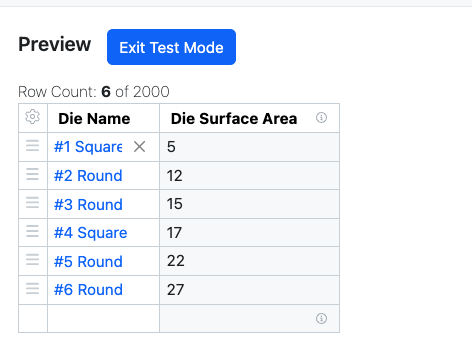
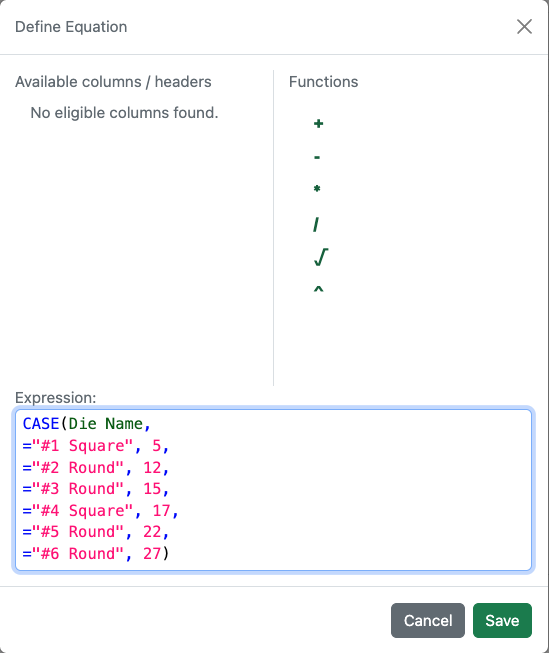
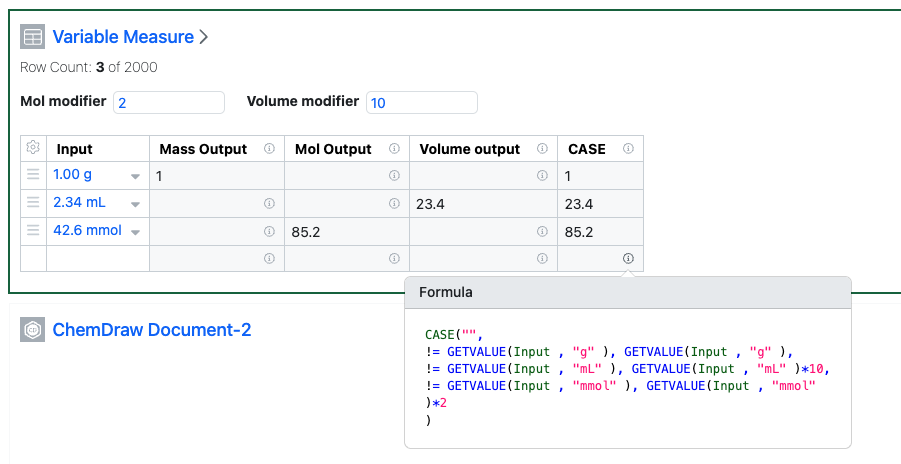
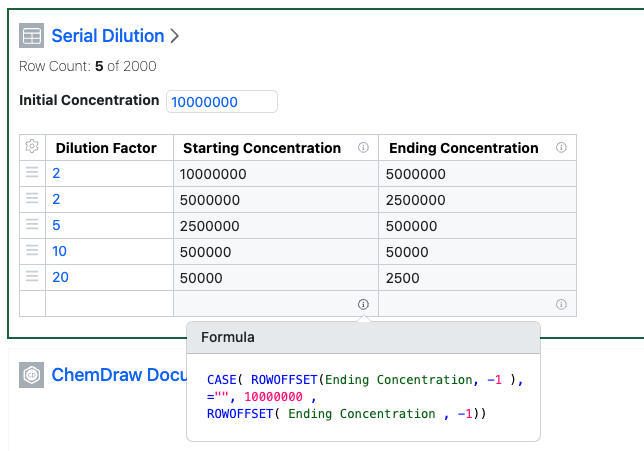
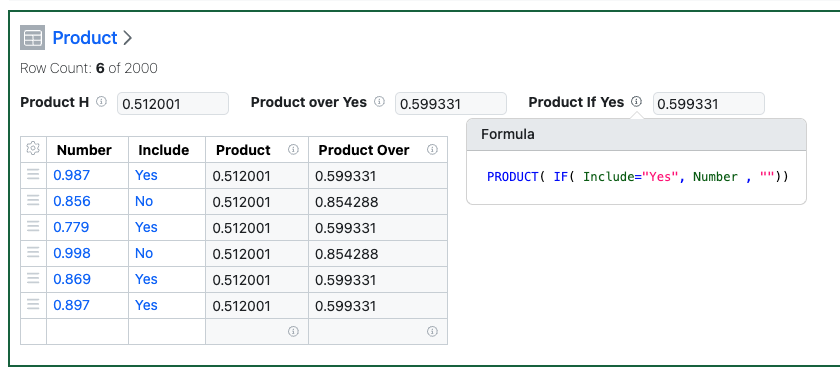
We have added a new conditional function, CASE, to the equation editor in Admin Defined Tables and Variation Tables. The CASE statement allows the admin to define a series of up to 20 different outcomes based off of the results in a given comparison column. The first matching result is provided. The admin can define a final result should no outcomes match. This provides a more elegant alternative to nested IF statements.

We have also updated the equation editor to allow multirow editing to aid in the definition of the equations for more complex equations such as those using the CASE function above.

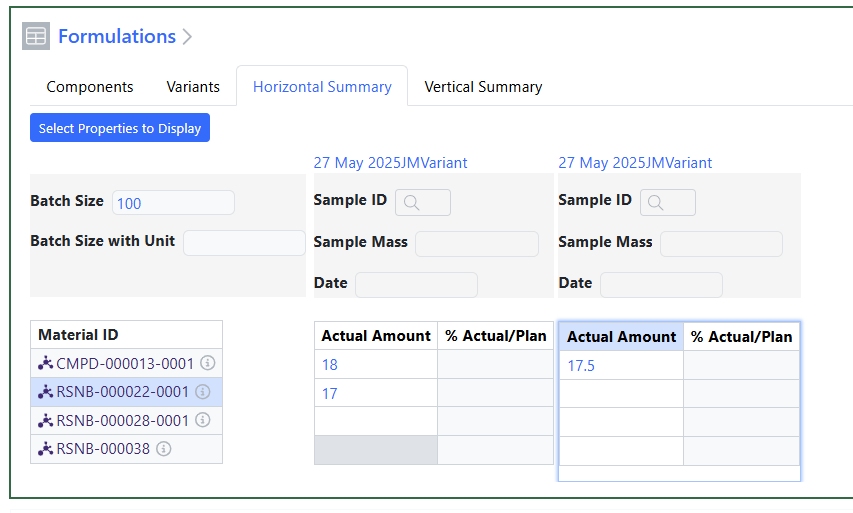
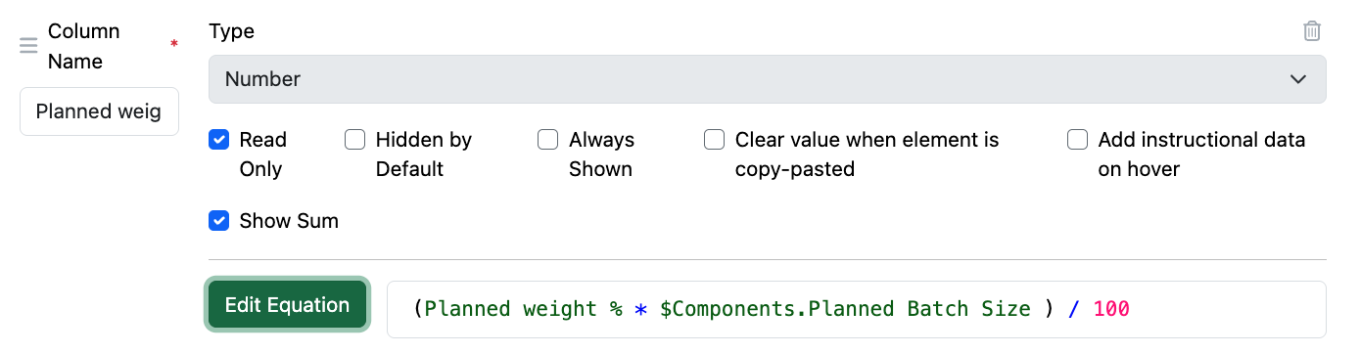
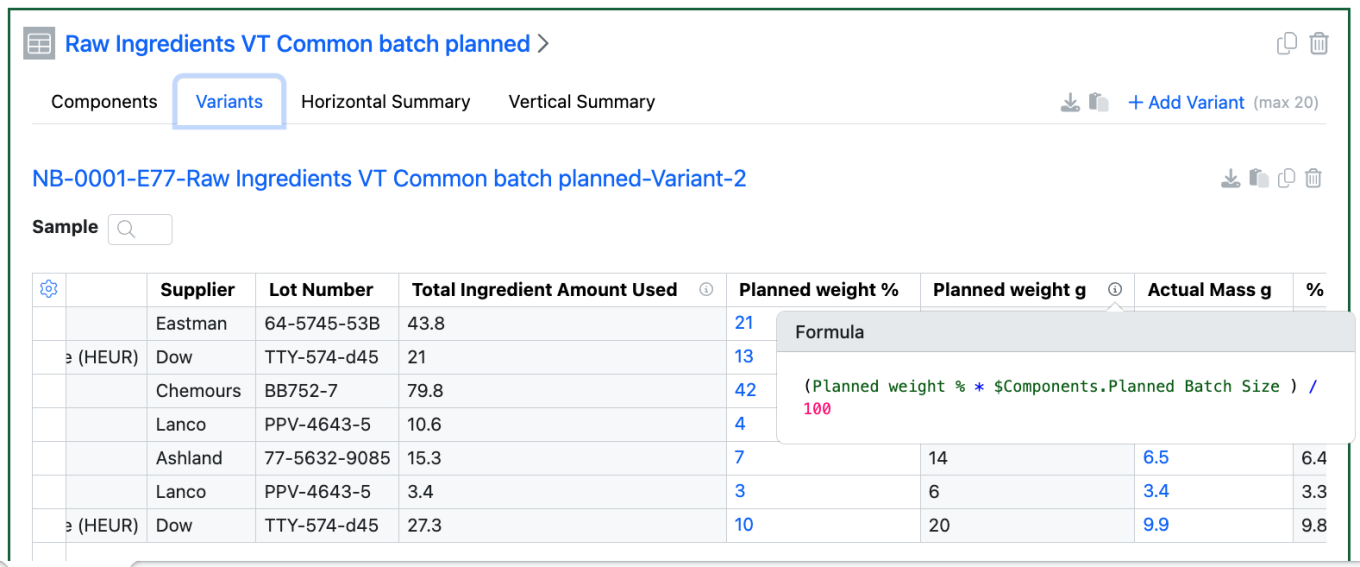
The Horizontal View in Variation Tables has been updated to highlight the variant, the component and the header of the column so users can easily see where they are entering values:

The publication of Variation Tables to Inventa is now available to all systems.

Samples

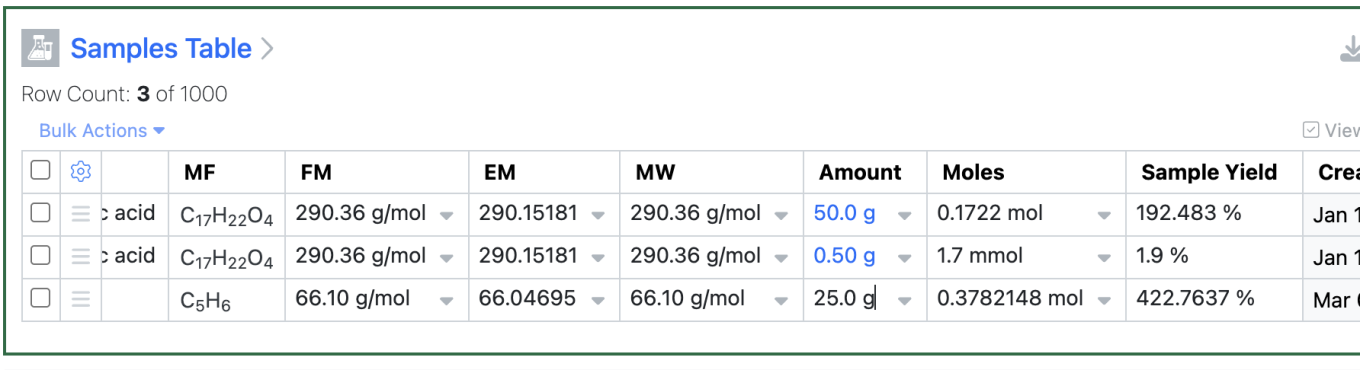
To conserve the behavior from calculations in the stoich grid in the Sample calculations, autoscaling of units for Sample Moles calculation have been added along with Significant figure handling improvements in Sample calculations.

Significant Figures are now applied to calculated values for Sample Yield and Moles in Samples: Moles should have the same number of Significant Figures as Amount, Sample Yield should have the same number of Significant Figures as Moles in Samples when the number of Significant Figures for Theo Moles in Products is higher, and Sample Yield should have the same number of Significant Figures as Theo Moles in Products when the number of Significant Figures for Moles in Samples is higher.

Inventory

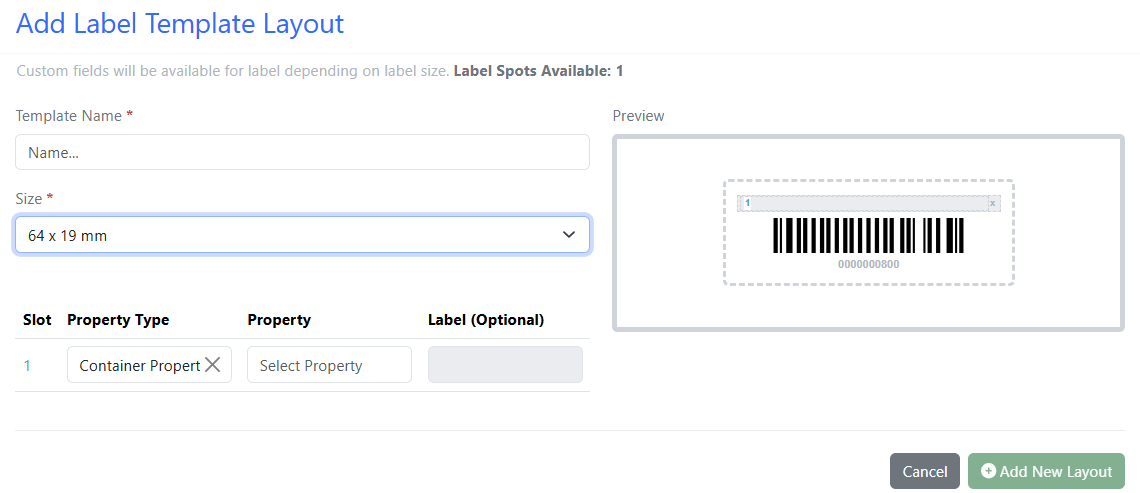
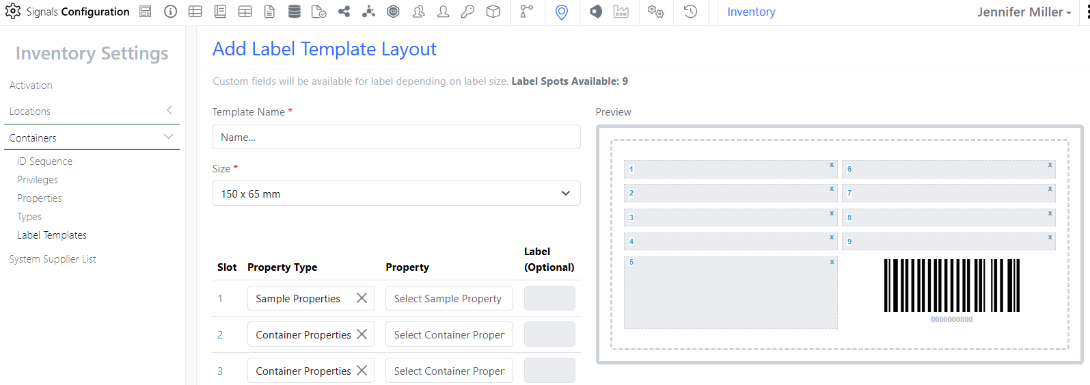
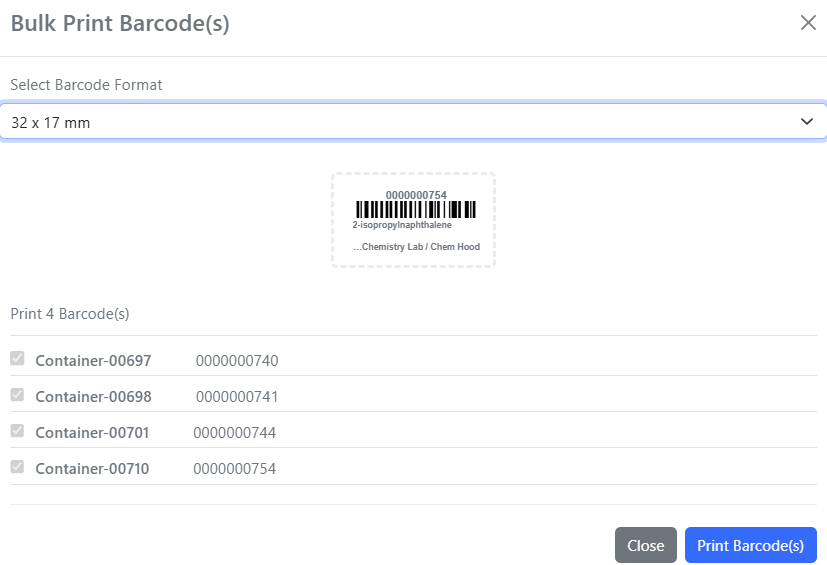
We have added a 64 by 19 mm label:

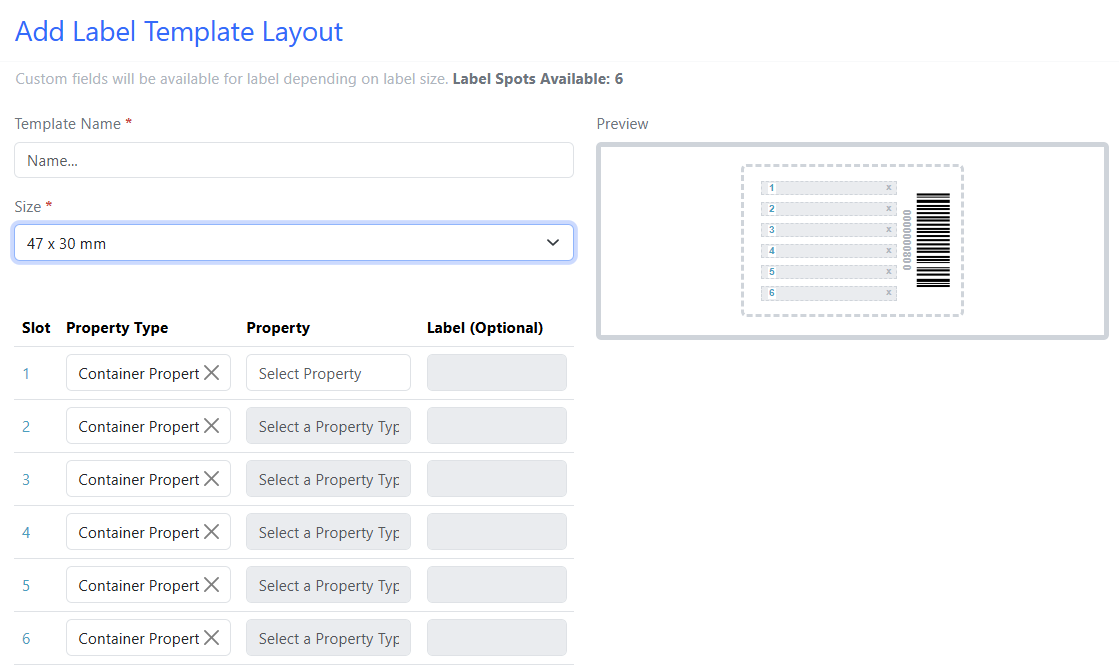
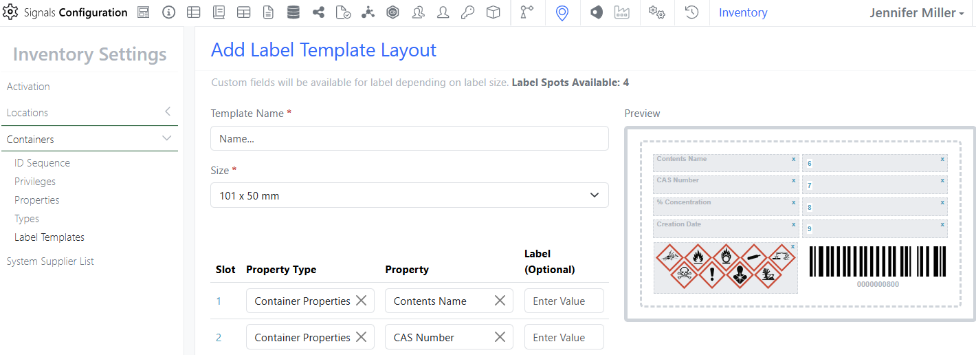
A 47 by 30 mm label:

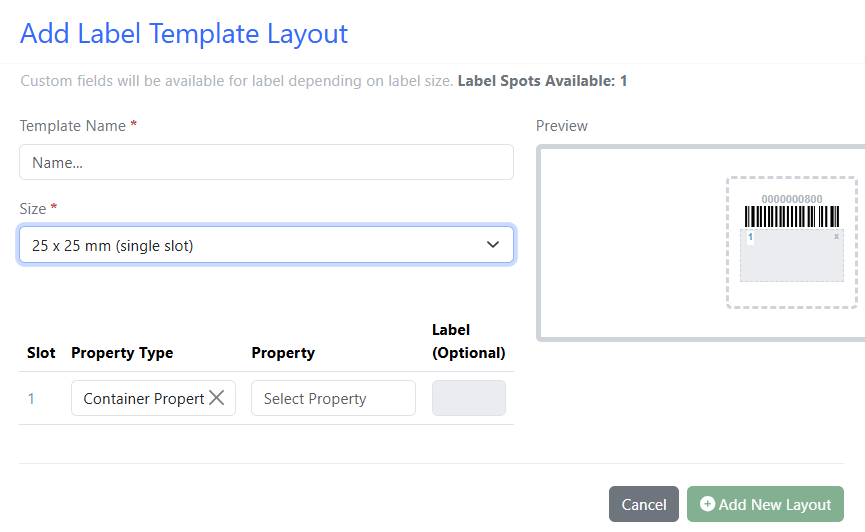
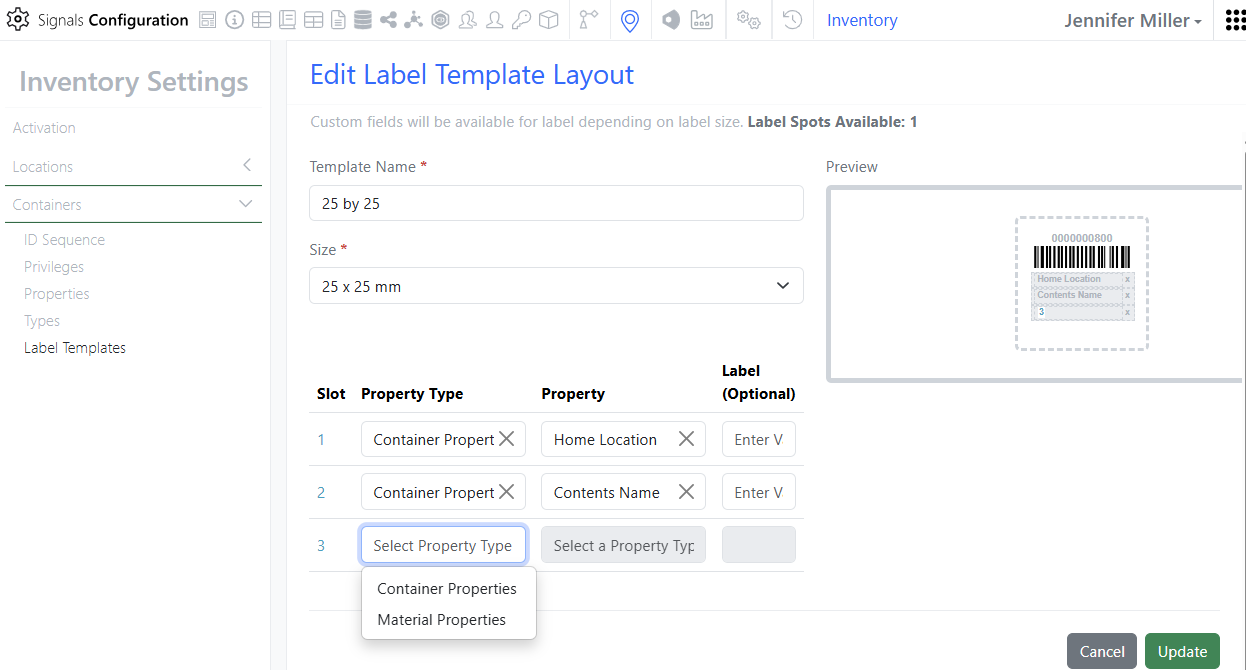
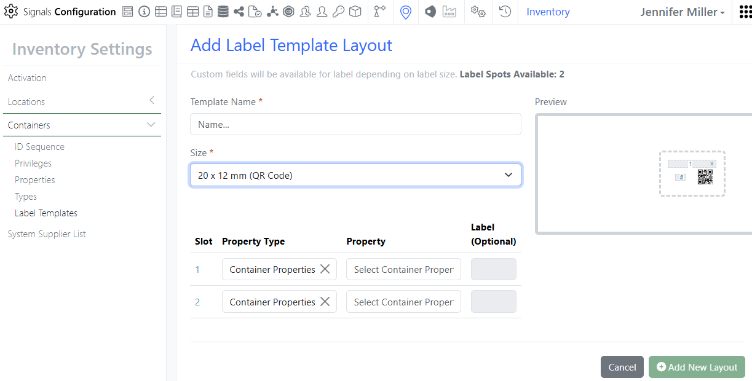
And a 25 by 25 mm option with 1 slot:

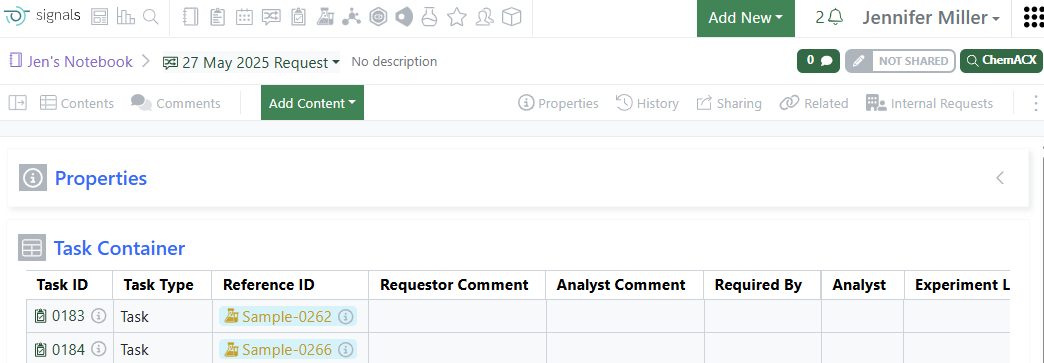
Requests support Internal Request workflow. Users can now use the Internal Request workflow from inside of a Request in the Task and Request workflow:

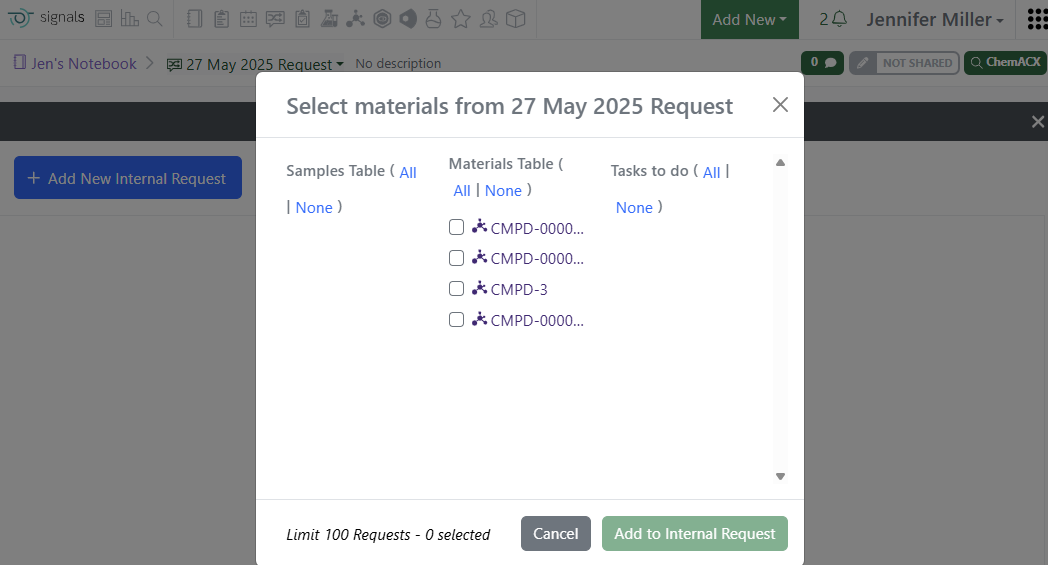
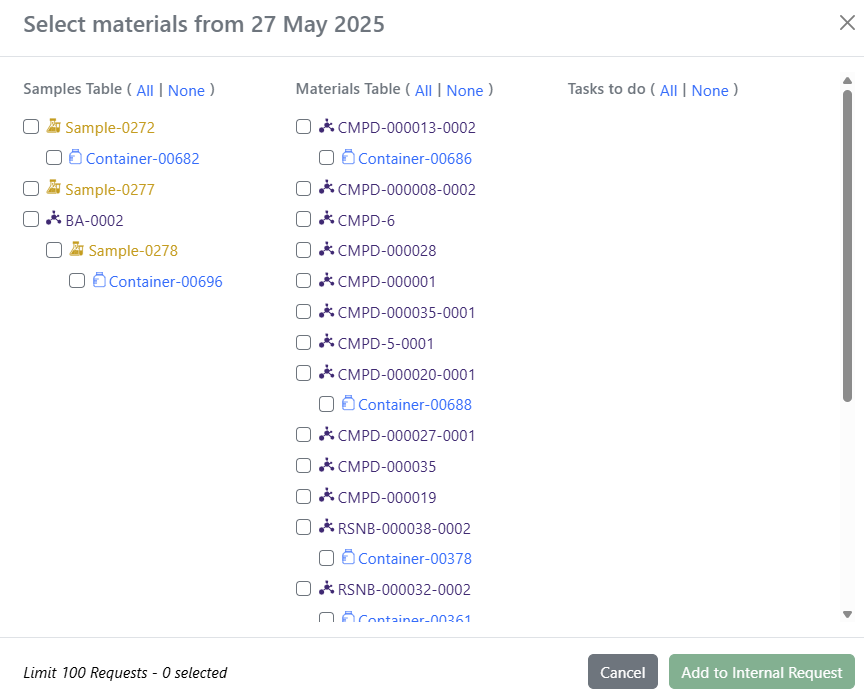
Adding an Internal Request will allow users to choose materials from the Samples, Task To Do or Materials Tables:

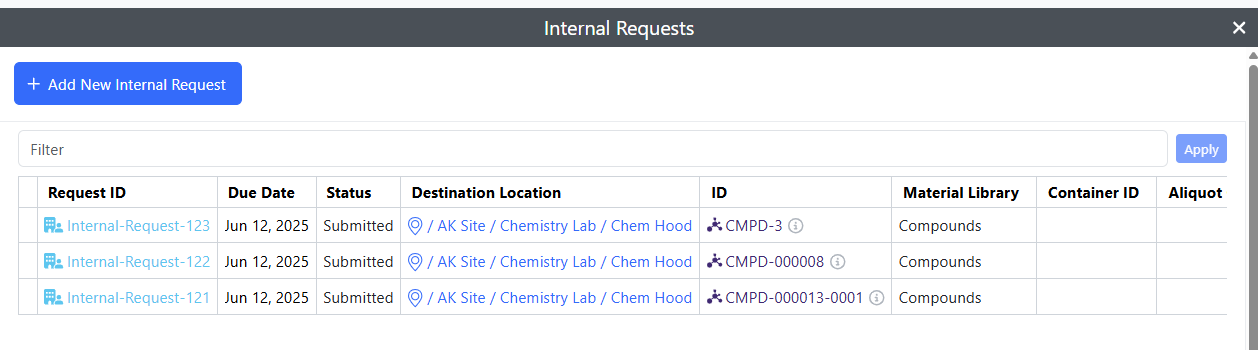
The Internal Request will be available from inside of the Request:

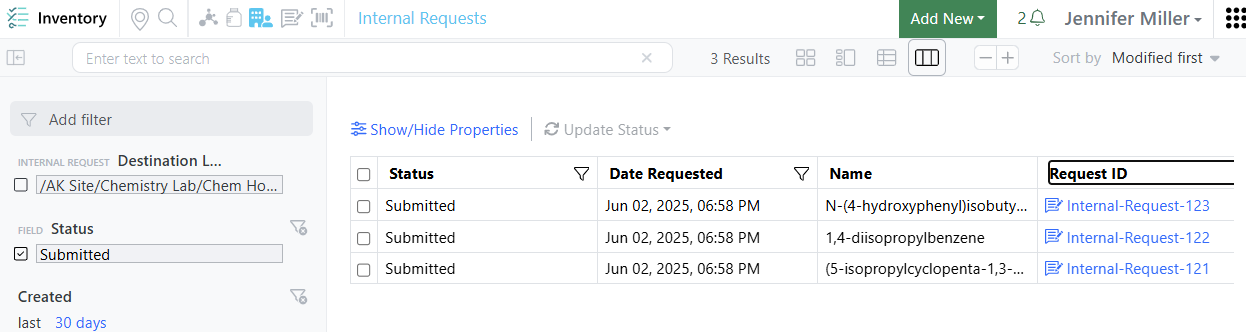
And can be seen in the Internal Request Table:

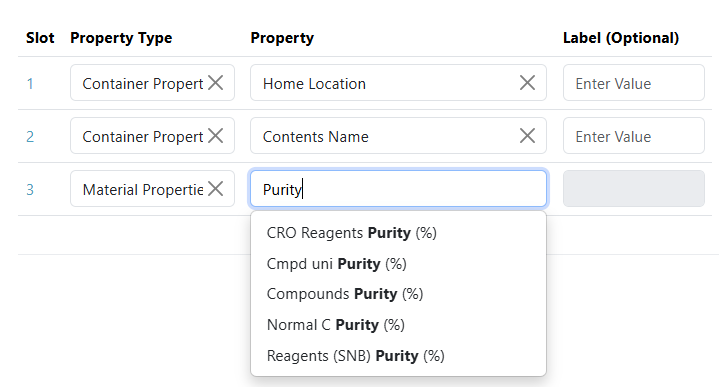
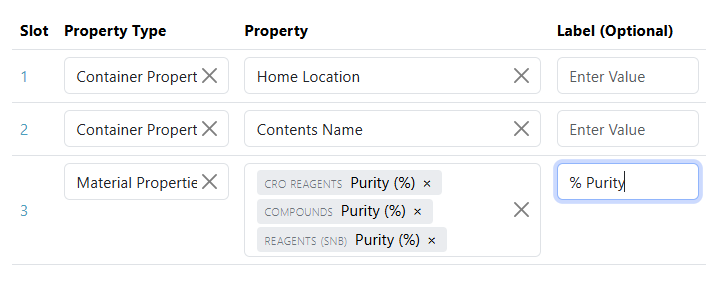
Add Material Library properties to container labels. Some properties make sense to store on the material in the Material Library. To not duplicate data, administrators can now pull the data from Material Libraries into the container label. If multiple Material Libraries have the same property to be printed on a label (ex: purity), the administrator can select the property to be added to the label from multiple Material Libraries in one slot on the label:

Materials

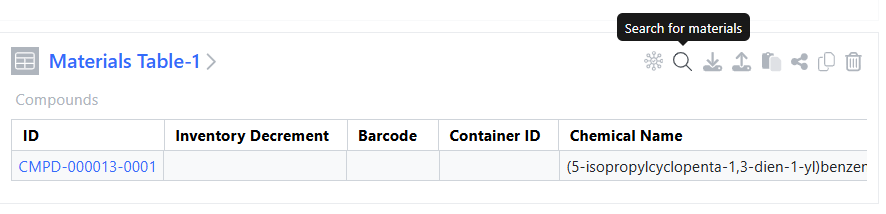
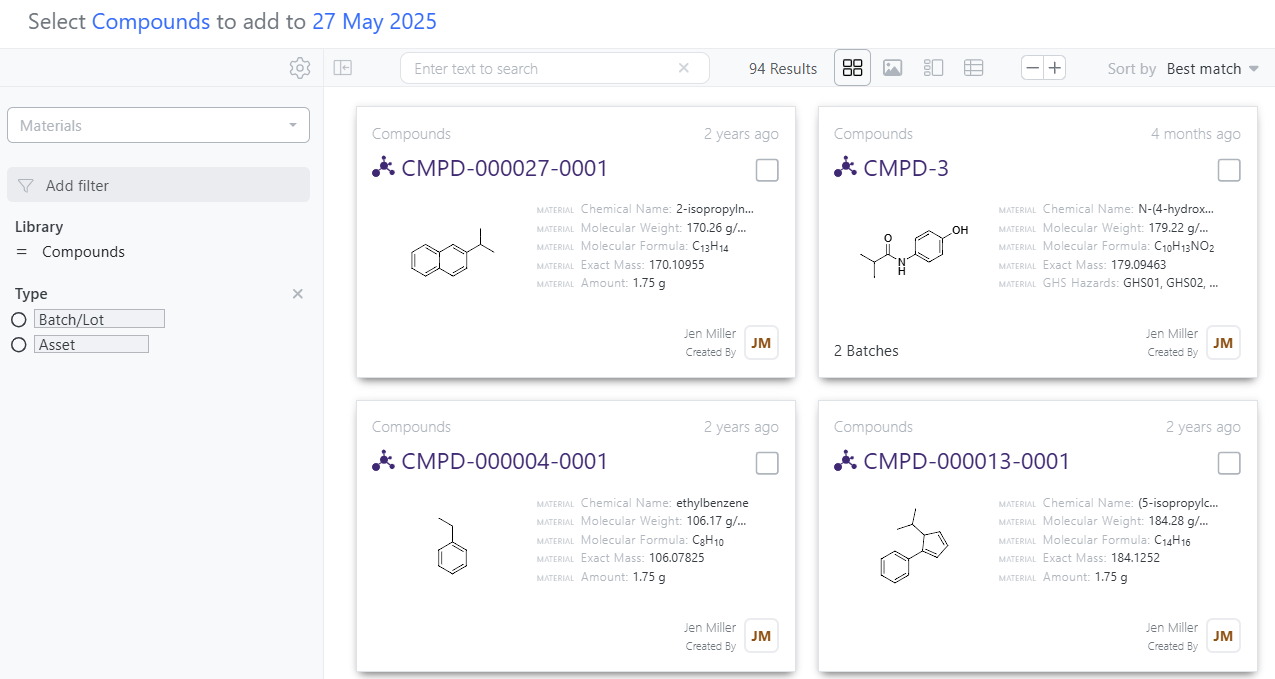
Updates to the Material Table materials selection. Users can now select the asset or the batch/lot to be added to a Materials Table:

Users can select the Batch/Lot or Asset option in the filter on the left to narrow the selection:

Both Assets and Assets with Batch/Lots will be added to the table:

Change the batch/lot of a selected material. If users have selected a specific batch/lot of a material, they can update the batch/lot to a different one:

If a batch/lot is not currently selected, one can be selected:

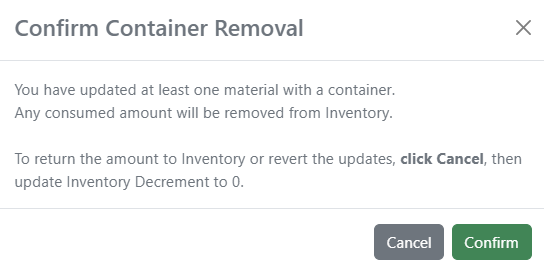
If a container has already been selected and a decrement has been entered and the user wants to update the batch/lot, a message will appear:

If a container has already been selected and a decrement has been entered and the user wants to update the batch/lot, a message will appear:

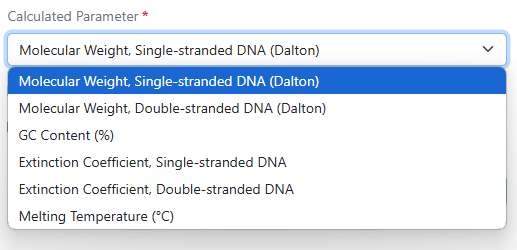
Calculated properties are now available for DNA and RNA material types and in the preconfigured Primers and Plasmids libraries. Molecular weight, GC content, extinction coefficient, and melting temperature are available for single-stranded and double-stranded molecules.

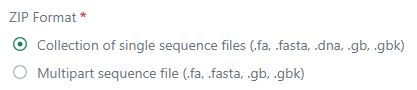
Multipart GenBank and FASTA files can now be bulk imported into a DNA or RNA materials library. Workflows are available to bulk import a collection of single sequence files (current capability), a single multipart GenBank or FASTA file and corresponding meta-data (via .zip folder), or a single multipart GenBank or FASTA file with fixed values (via multipart .gb or .fa file).

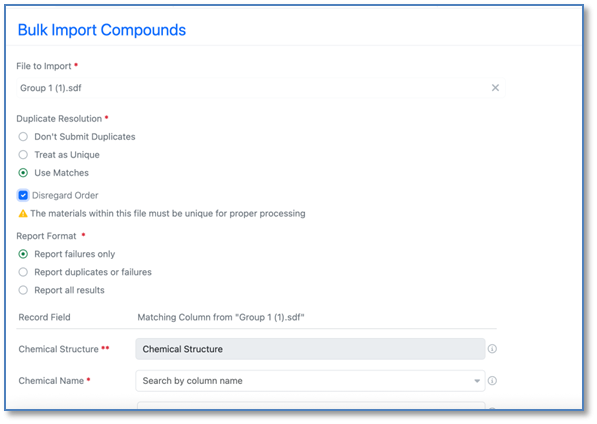
There is a new option that allows for the parallelization of Material import while still utilizing matching against materials already stored in SNB. It is critical to note that for uniqueness checking to occur correctly there can be NO DUPLICATE values within the file to be uploaded as these values will be parallelized for import and checked against values within the system.

Administration

The Signals Research Suite license is now renamed Signals One and can be seen in the Users pages within Signals Configuration. The bulk update user file and integrations such as APIs are unchanged.

Admins are now able to manage the chemistry autotext. Under System Settings, there is a new Chemistry Autotext option that allows the admin to select which properties available in the Stoich grid appear in the Chemistry Autotext. Admins are now able to include custom admin defined stich properties in their Chemistry Autotext.

Integrations & APIs

This update brings additional endpoints for our Synergy product. New APIs have been added to fetch and create CRO users. CRO users may be fetched by CRO using the CRO or you may fetch the CRO a user belongs to by user ID.

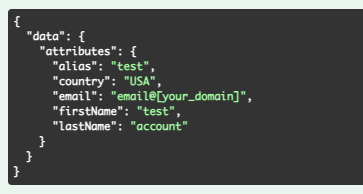
To create a user as member of a CRO the CRO must be specified as part of the URL parameters by CRO ID. The request body should contain the details of the CRO user.

As a reminder CRO IDs can be fetched using GET /synergy/cros.

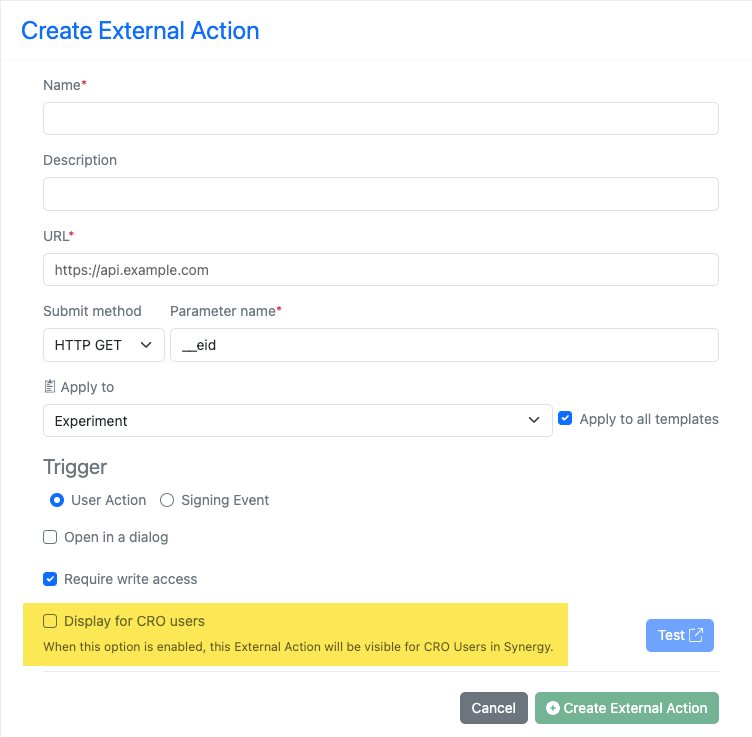
Additionally, External Actions may now be configured by an Admin to be displayed or not to CRO users similar to External Data Sources. This is specific to each External Action and toggleable during creation or while editing an existing External Action. Existing External Actions and newly created ones will default to not display for CROs.

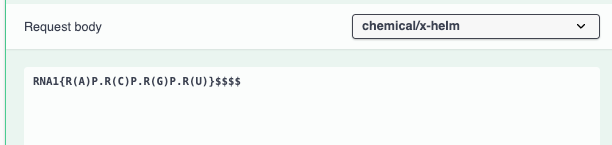
POST /entity/children/{filename} has been enhanced to allow for using HELM strings for creating child chemical drawings. The content-type should be specified as chemical/x-helm and send a request body containing a HELM string.

POST /materials/{libraryName}bulkImport has been enhanced. You may now specify a reportFormat via URL parameter when creating a bulkImport job: 'FAILURES_ONLY', the report only includes the materials which failed to import. This is the default value; 'DUPLICATES_AND_FAILURES', the report includes the materials which failed to import or duplicated.; 'ALL_RESULTS', the report includes the materials which imported successfully, failed to import or duplicated.

The API now allows for matching the available behavior for report generation via UI.

An API has been added to fetch the report by the jobID returned by the bulkImport request.

A new API has been added to fetch worksheet field definitions via API by a worksheets entity ID. This behaves similar to fetching ADT column definitions.

Further Details 

The following capabilities are in beta and are available for users, administrators and developers on the Signals platform upon request. Please contact your account representative or our support team if you would like access to the following features.

AI

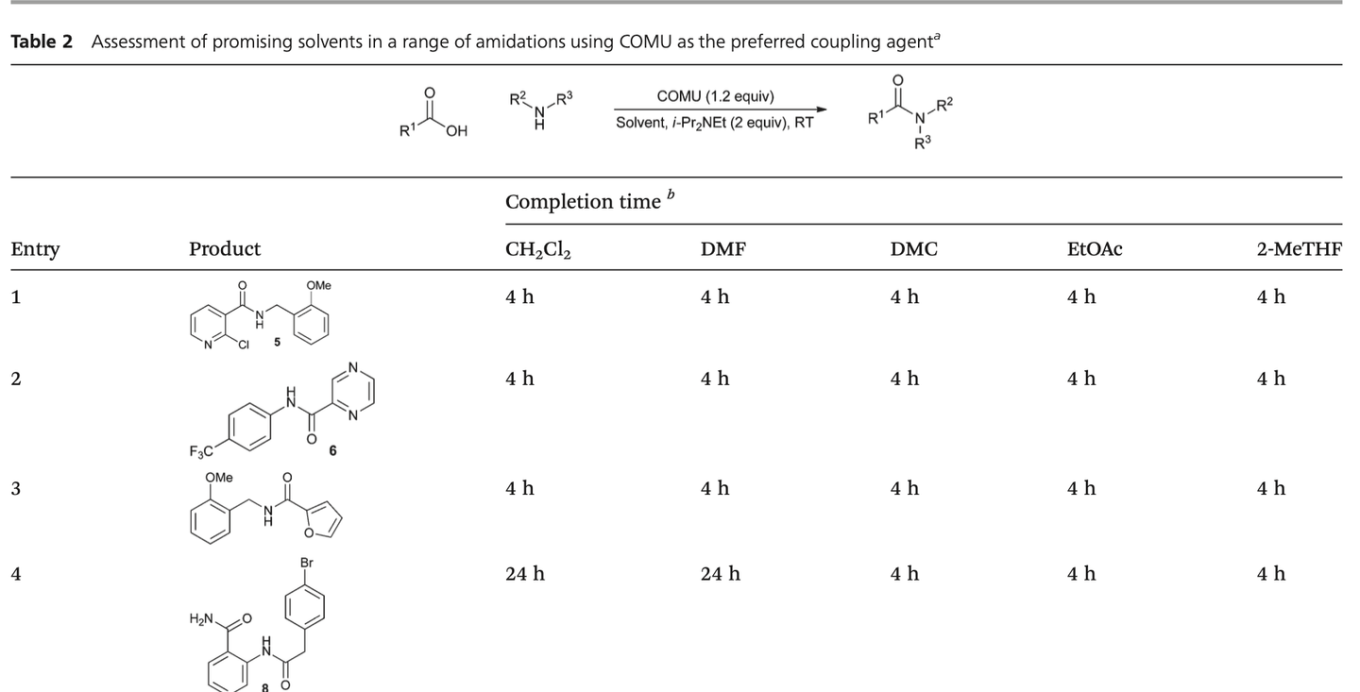
For tenants with a Signals One license, users will now be able to utilize AI to extract and search by text from uploaded Images. This includes files of JPEG, PNG, and TIFF. This will apply to newly uploaded images only. Should a user load an image similar to the one shown here they would be able to search for it using keywords from the image like DMF, DMC, etc.

SAR & Decisioning

As part of the Data Factory beta, enhancements to mapping and reporting are now available.

Data Factory Publication Reports now include downloadable summaries for successful publications, providing key metadata such as file details, project information, and publication date.

The Publish Results to Data Factory app introduces convenient mapping controls including automapping, filtering options for mapped/unmapped columns, and the ability to reset to default mapping

Inventory

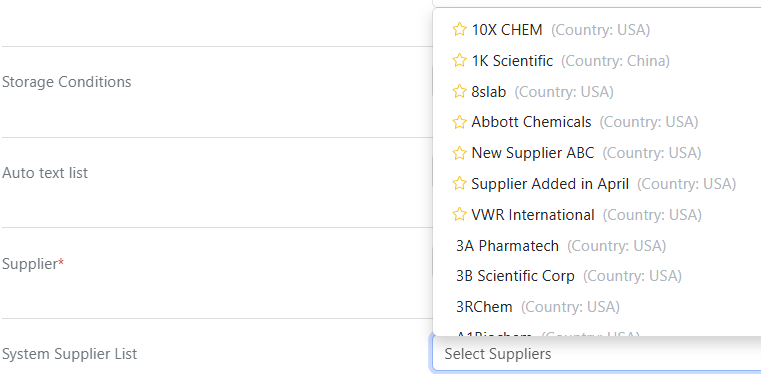
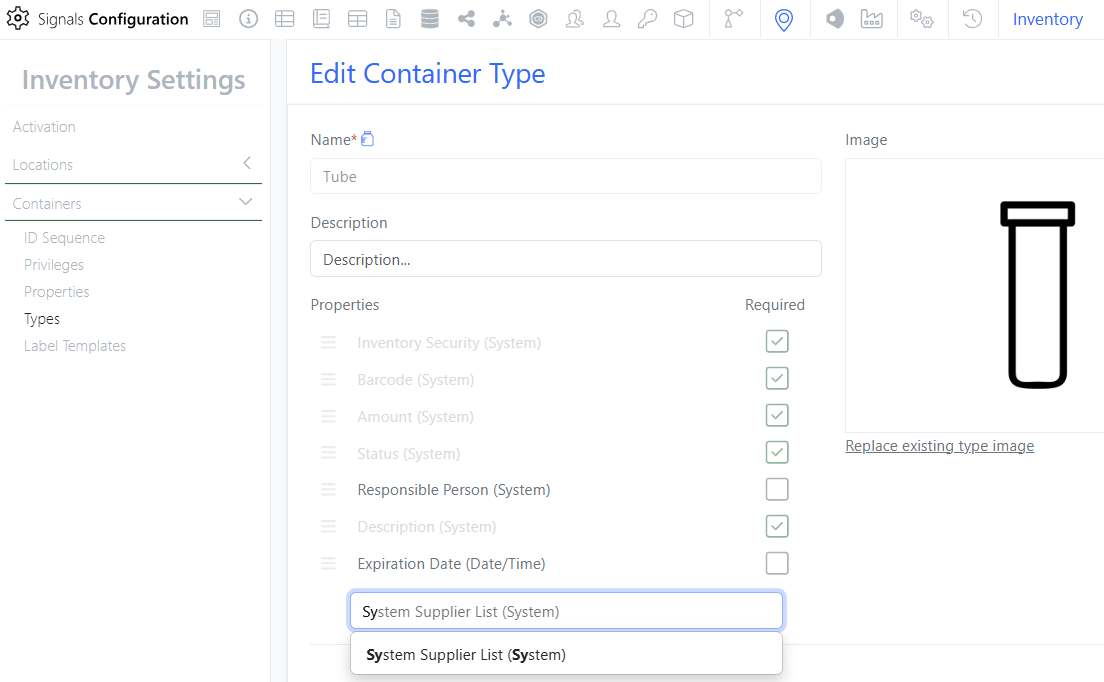
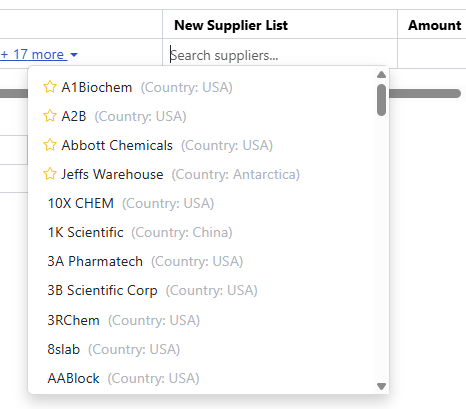
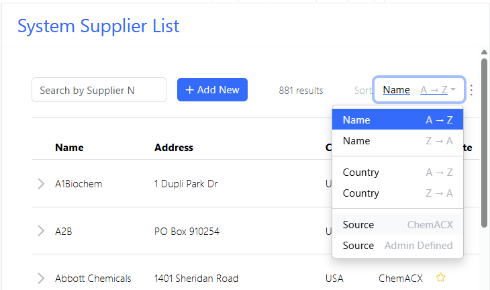
System Supplier List available in new container creation workflow:

Administrators of existing systems can update the Container Type by selecting the System Supplier List to be added to the Container Type:


What’s New

The latest release of Signals brings significant improvements to the ChemDraw+ application. Users can now enjoy an enhanced drawing experience with the ability to customize structure appearances using 'Drawing Settings'. Additionally, a new 'Analysis' panel has been introduced, allowing users to analyze structures and biopolymers and obtain basic chemical properties based on their selection. The auto-pair tool has been expanded with new capabilities, and a new selection behavior provides clearer visualization of selections on the ChemDraw canvas. Export options within the application have also been expanded. This release also includes several bug fixes, further improving the overall user experience.

The following improvements are available for users of Signals ChemDraw. Certain features may only be available with enablement by an administrator.

ChemDraw+

  • Drawing settings are now customizable
  • Basic properties are now accessible in the Analysis panel
  • Auto-pair tool now accepts RNA/DNA strands with pendant Chem or peptide monomers 
  • Enhanced selection behavior for atoms, bonds and structures
  • Attach Data can now be added as chemically significant
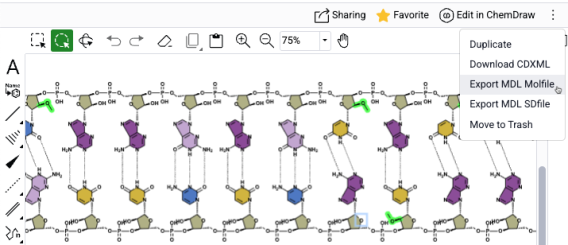
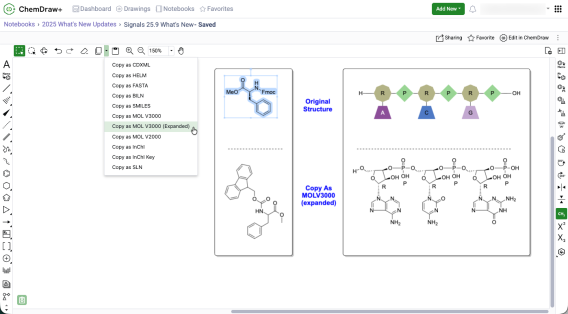
  • Drawings can now be exported as molfile and SDfile (v3000)


ChemDraw+

Drawing Settings are now customizable

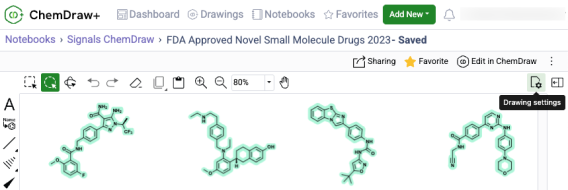
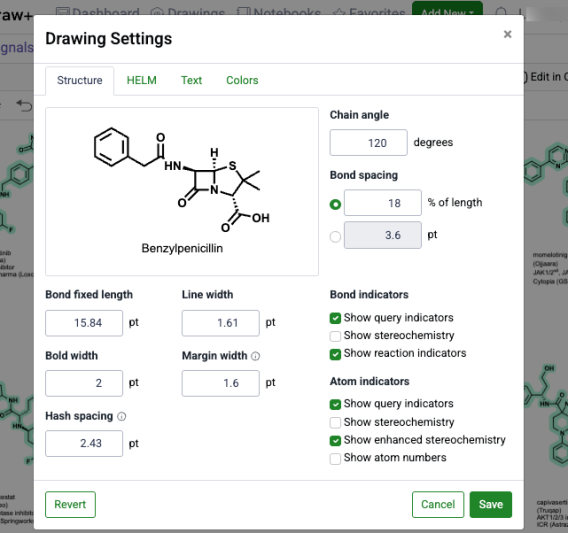
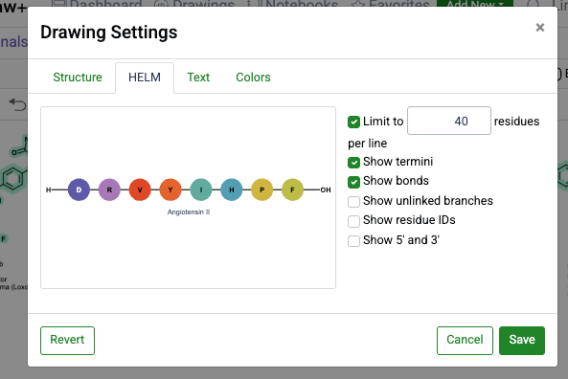
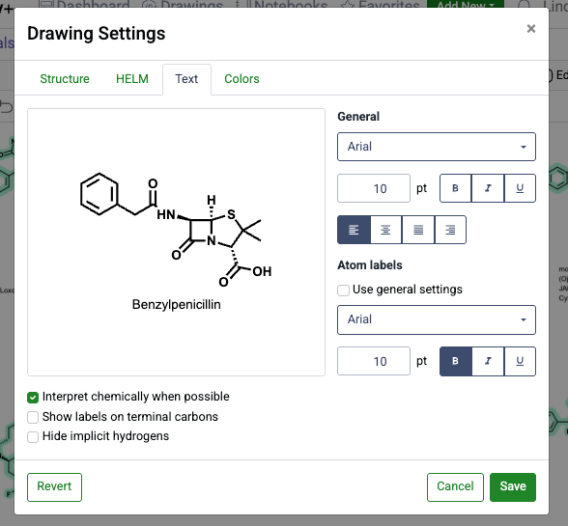
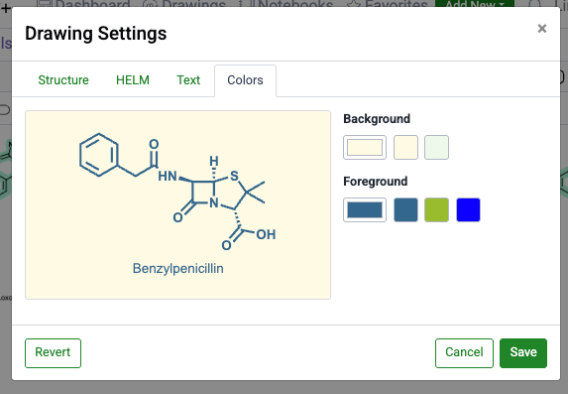
Users can now customize drawing settings in ChemDraw+, providing enhanced control to create drawings tailored to specific formatting needs. These settings are accessible from a new 'Drawing Settings' tool in the top right of the toolbar, which opens a dialog with tabbed sections that allow for customization of structure and HELM settings, as well as text and color settings. Each section contains a preview of a structure or biopolymer that reflects the current settings. When changes are made, the preview dynamically updates to display these changes. 

In the "Structure" tab, users can adjust various drawing settings to change how a structure looks on the canvas. They can modify bond lengths and widths, as well as chain angles. Users can also set other preferences to match their preferred drawing style, such as showing stereochemistry or atom numbers.  

In the 'HELM' tab, users can adjust various drawing settings that change how biopolymers are displayed on the canvas. These settings include the option to limit the number of residues per line and showing or hiding termini, bonds, unlinked branches, residue IDs and the 5' and 3' ends of oligonucleotides.

In the 'Text' tab, users can modify text properties such as font, text size and style to ensure text captions and atom labels are presented exactly as required.

In the 'Colors' tab, users can customize the foreground and background colors of the drawing, creating visually distinct drawings that align with their preferences and needs.


Basic chemical properties are now accessible in the Analysis panel

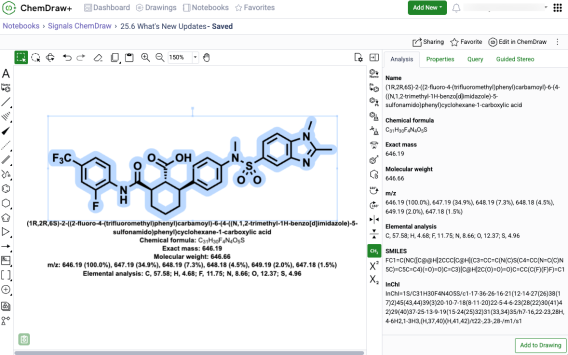
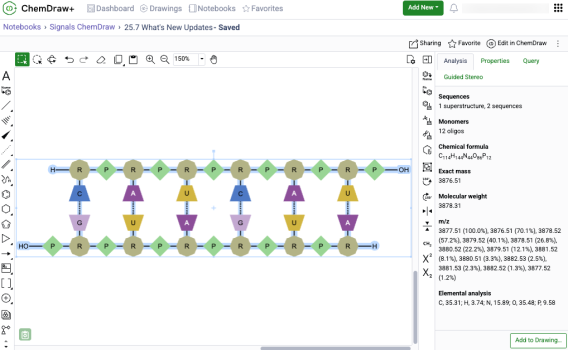
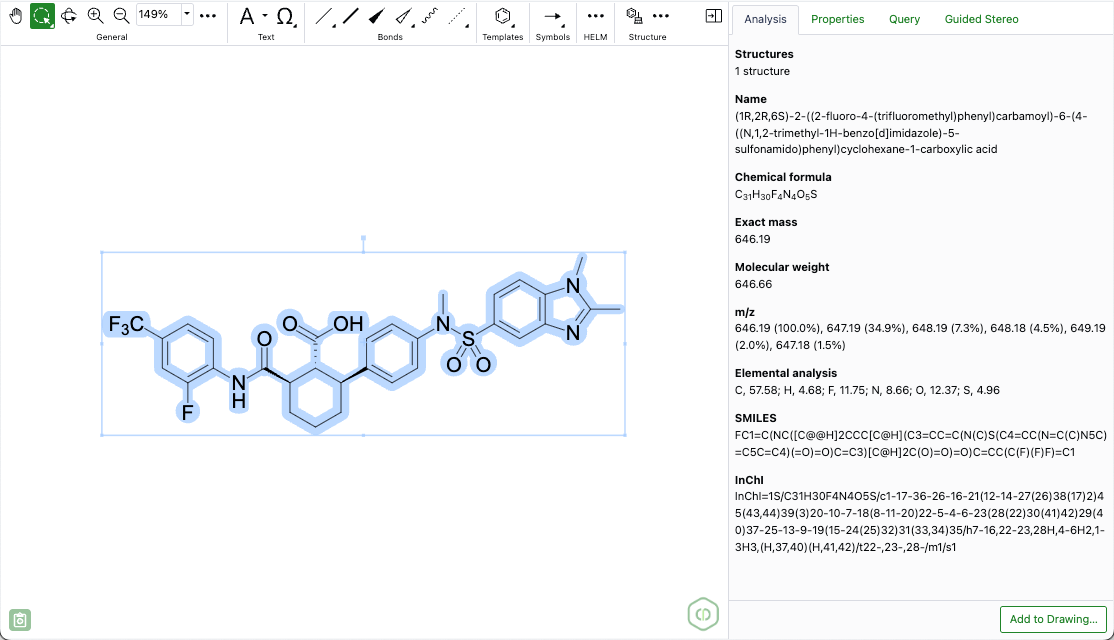
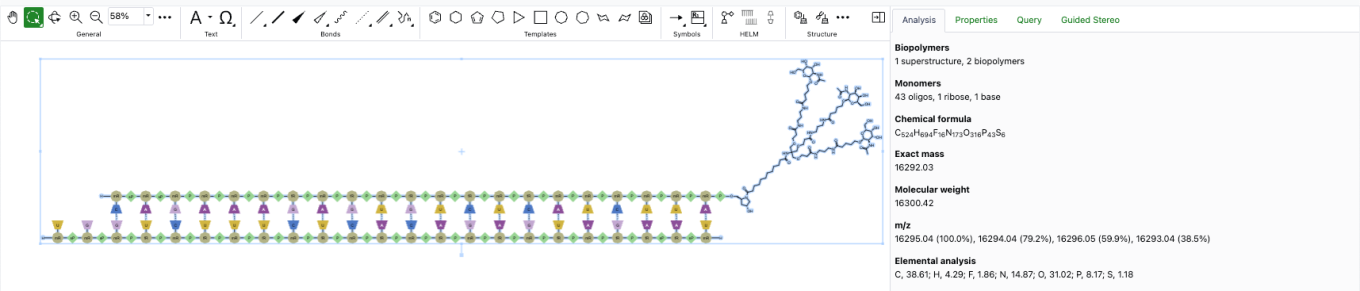
A new 'Analysis' panel in the ChemDraw editor now displays basic chemical properties for structures and biopolymers. These properties are context-sensitive, based on the selection on the canvas, and include information such as chemical name, molecular weight, molecular formula, and exact mass. Users can also add a selection of these properties directly to their drawing by using the 'Add to Drawing' button located at the bottom of the panel. 

Auto-pair tool now accepts RNA/DNA strands with pendant Chem or peptide monomers

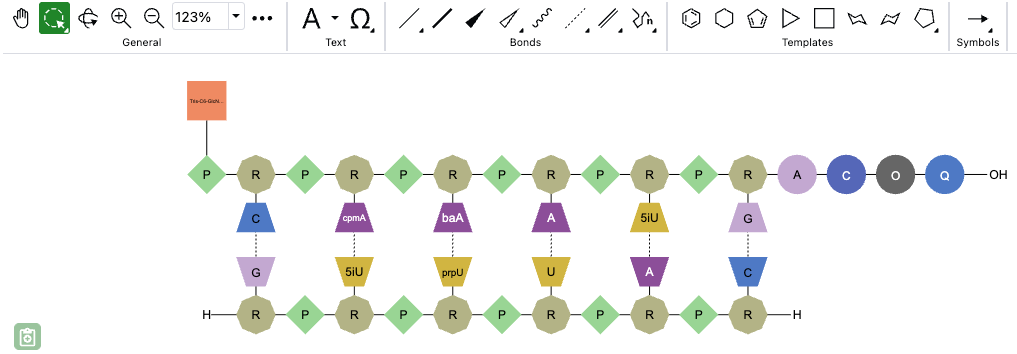
The auto-pair tool has been improved to work with a wider range of RNA and DNA strands. This enhancement allows strands that include additional Chem or peptide monomers when finding the complementarity between strands and placing hydrogen bonds between them. 

Enhanced selection behavior for atoms, bonds and structures

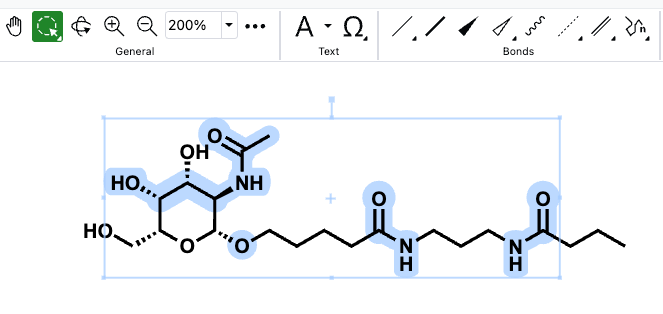
There is now enhanced visualization in ChemDraw when atoms, bonds and structures are selected on the canvas. ChemDraw now individually highlights all the atoms, bonds and structures that are part of the selection, in addition to the selection box that appears upon selection on the canvas. This new behavior provides a clear distinction between selected and unselected elements on the canvas.

Attach Data can now be added as chemically significant

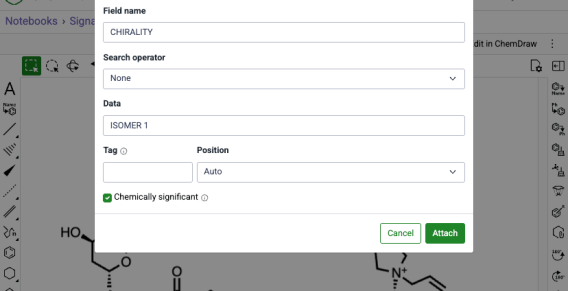
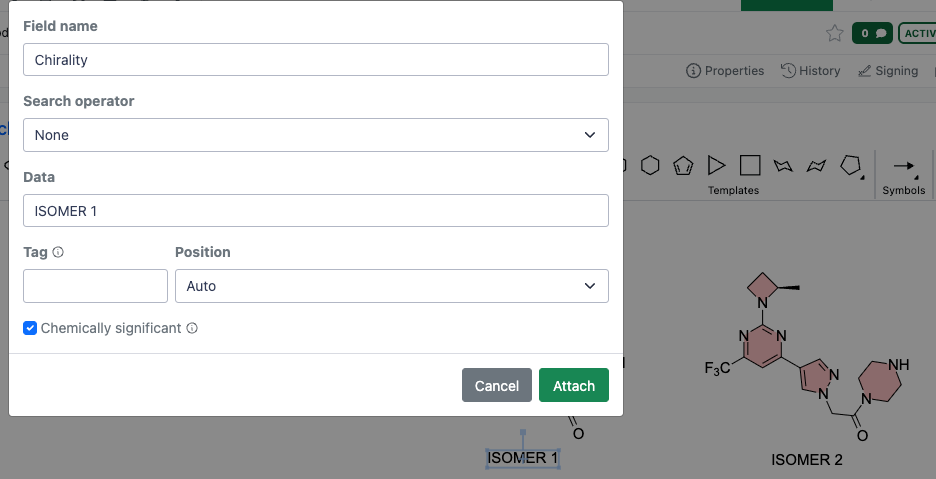
When annotating a molecule or stereocenter in ChemDraw using the 'Attach Data' capability, annotations can now be specified as 'chemically significant'. When this option is selected, annotations become chemically significant and are recognized and honored in chemical searches. Additionally, users can now edit existing annotations by selecting them and reopening the 'Attach Data' dialog in ChemDraw.

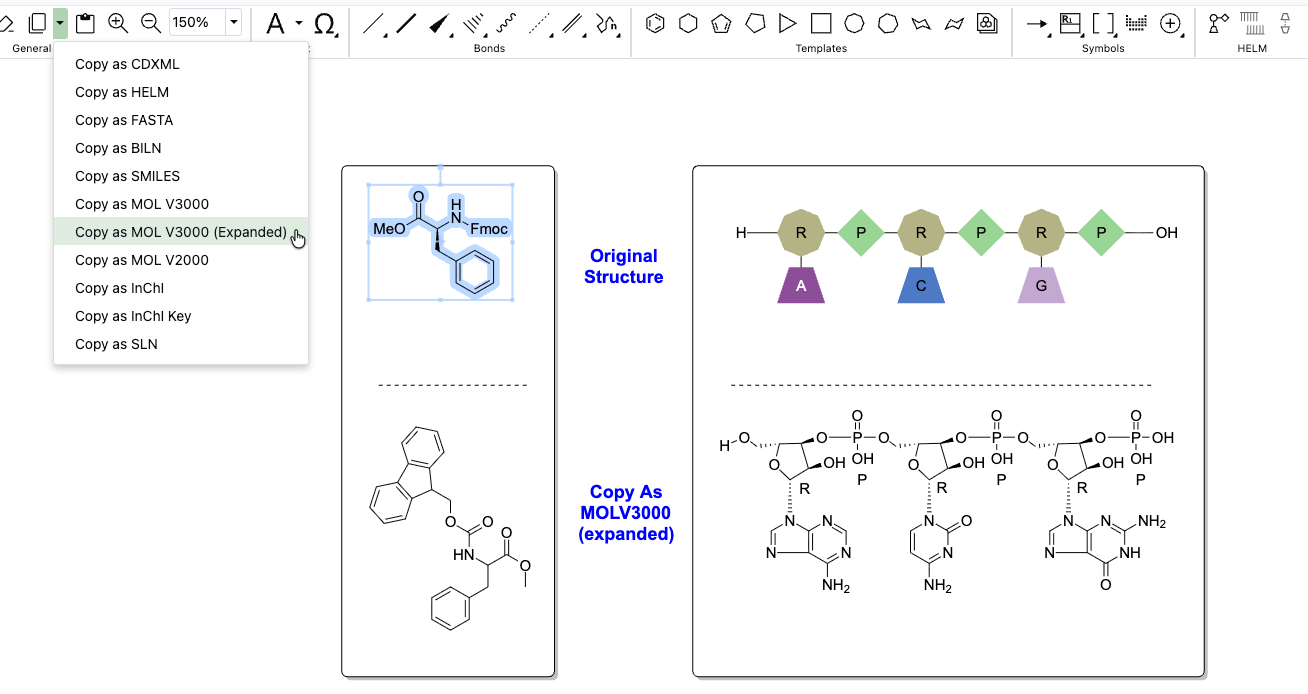
Drawings can now be exported as molfile and SDfile (v3000)

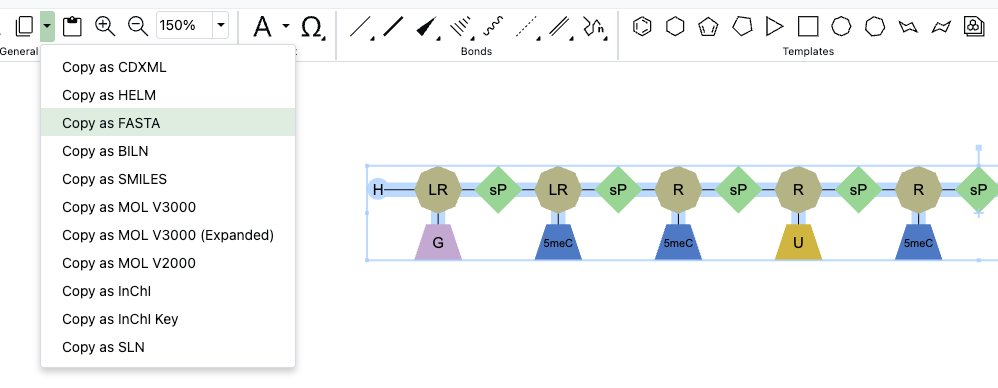
ChemDraw+ now offers more ways to export drawings. Users can now save their work as V3000 molfiles and sdfiles.

What's New

We are delighted to release our new version of Signals, 25.6. This release brings enhancements in audit trials, Synergy, Inventory, Variation Tables and Inventa amongst others. We have a new beta capabilities of an In Vitro Analysis object, and extended beta capabilities around publishing results to Data Factory. The beta capabilities around Internal Data Sources in Text Elements are now available to all systems. Finally, we have also fixed a number of small bugs.

The following improvements are available for users, administrators and developers on the Signals platform. Certain features may only be available with appropriate licensing and/or with enablement by an administrator.

  • Fundamentals
      –Audit trail captures the initial state of content upon copying a system template, experiment, or personal template
     
  • AI
      –Schema Updates to support SDK Generation
     
  • Data Workflows & Analytics 
      –In Vitro Analysis (beta)  
  • SAR & Decisioning
      –Internal References support in Inventa Analyses 
      –Integrated Summary App supports “Is Any Of” for numeric attributes 
      –Automapping improvements in Publish Results to Data Factory app (beta) 
     
  • Synergy
      –Support for Normalized Compounds in Synergy Designs and Reference Tables
      –Duplicate check Designs against both Designs and Materials of the same material type
      –Search and filter Designs by Assigned CRO
      –Capture Design ID on Reactants, Products, and Samples created from Designs
      –Synergy Experiment properties can be configured to inherit from Collaboration properties
      –Share Synergy Experiment Templates to CRO Department(s)
      –Append Template to Synergy Experiments for CRO users
      –Configuration Transfer support for Reference Table definitions 
      –Publish Admin Defined Tables from Synergy Experiments to Inventa – available to all systems” 
     
  • Chemistry
      –Show/hide residue IDs of biopolymers
      –Auto-pair tool now accepts RNA/DNA strands with pendant Chem or peptide monomers
      –Enhanced selection behavior for atoms, bonds and structures
      –Attach Data can now be added as chemically significant
     
  • Admin Defined Tables & Variation Tables
      –Include Component Headers in Variant Calculations
      –Update to Publish Variation Table to support variable measures in headers and columns
      –Variation Table Vertical View update for variant hidden rows
     
  • Samples
      –Moles calculation in Samples utilizing Radioactivity
     
  • Plates
      –Addition of Mass (g) to Amount Annotation Layer in Plates
     
  • Inventory
      –New label
      –Update to Internal Request workflow to include Material ID of registered Samples
     
  • Materials
      –Bulk import with multipart GenPept and Swiss-Prot files
     
  • Administration
      –Spotfire for Signals Access Workflows privilege available
      –Internal Data Sources now available in Autotext available to all systems
      –IDS checkbox to allow admin to specify which sources are available in text element
     
  • Integrations & APIs
      –API for Sequence pairing from two chemical drawings
      –API enhanced to export plates as CSV
      –API to modify CRO users
      –API to fetch CSV example for bulkImport
      –API with additional criteria for Data extraction from SDF
     

We also fixed several small bugs in this release. Details of the enhancements are described below.

Data Factory Administrators should be aware that the maximum number of measurement attributes has been increased to 7000 

Data Factory Administrators should be aware that Dataset warnings are now presented in reverse-chronological order (up to 100) 

Data Factory Administrators should be aware that the primary API GET /job-service/job has been deleted 

Administrators are recommended to subscribe to the channels within our support news site found at https://support.revvitysignals.com/hc/en-us/categories/360004446171-Support-News which contains more information about releases and other pertinent product information.

This content is anticipated for release on our Production E3 environments, and for Private Cloud customers on our deferred release schedule, in November 2025.
 

Further Details 

The following improvements are available for users, administrators and developers on the Signals platform. Certain features may only be available with appropriate licensing and/or with enablement by an administrator.

Fundamentals

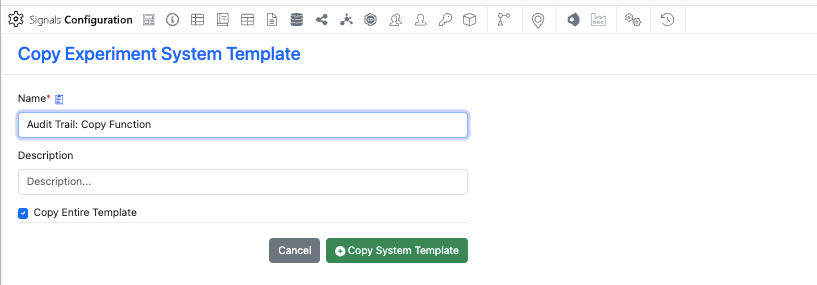
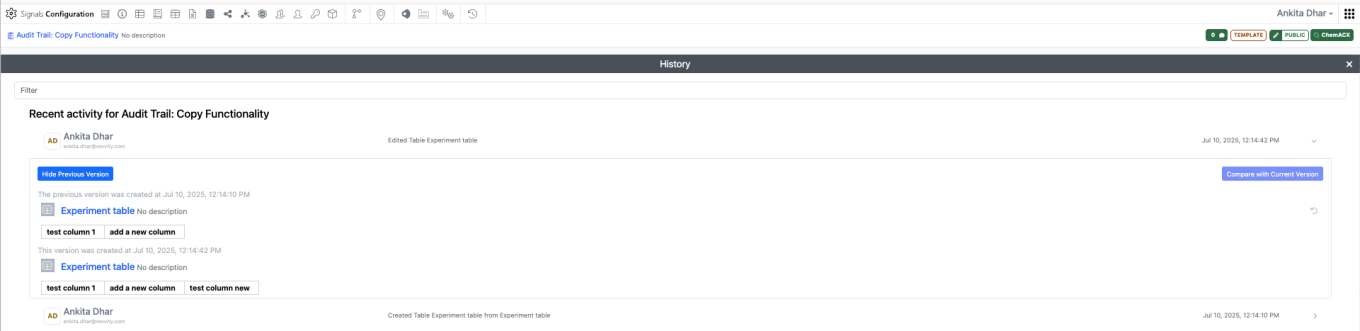
The audit trail now captures the initial state of content when copying a system template, experiment, or personal template. When content is copied, the audit trail logs both 'created' and 'edited' records showing the previous version with the initial content. This enhancement applies only to newly created content and is not retroactive.

AI

The Swagger page for Notebook APIs has been enhanced with better Schema information for API responses. This is in preparation for providing access to YAML files to facilitate SDK Generation through OpenAPI tools.

SAR & Decisioning

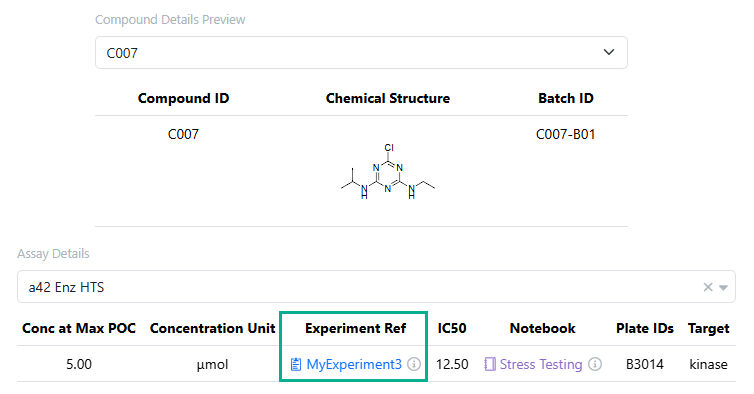
The Assay Details preview section of Inventa Analyses now supports the display of internal references

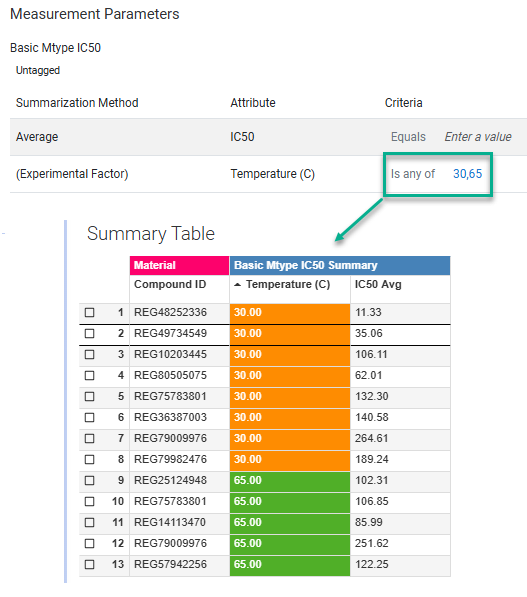
Integrated Summary App support “Is Any Of” for numeric attributes, allowing users to search for a set of numeric criteria.

Synergy

Normalized Compounds are now supported in Synergy for both Designs and Reference Tables. The Normalized Compounds libraries facilitate the registration of materials with a salt-stripped structure as an asset, while still retaining the original raw structure for the batches associated with that asset. Salt stripping is valuable when working with CROs that deliver compounds. To enable a material library of type Normalized Compounds, activate the library for Synergy in Signals Configuration and then configure Designs and Reference Tables in Synergy Configuration.

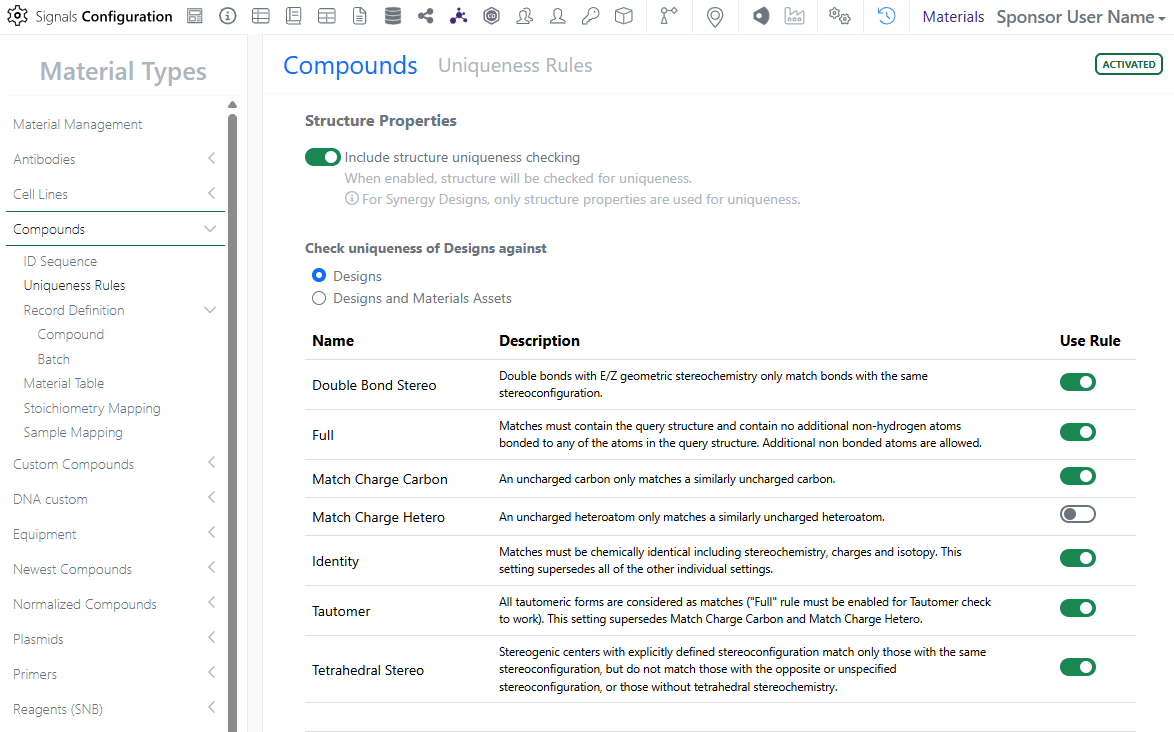
Release 25.6 also brings several new features in Synergy related to Designs. First, when creating or importing Designs, Designs can be checked for uniqueness against Designs only or Designs and Material Assets of the same Material type. The Administrator can change this setting under the Uniqueness Rules for each Material type in Signals Configuration.

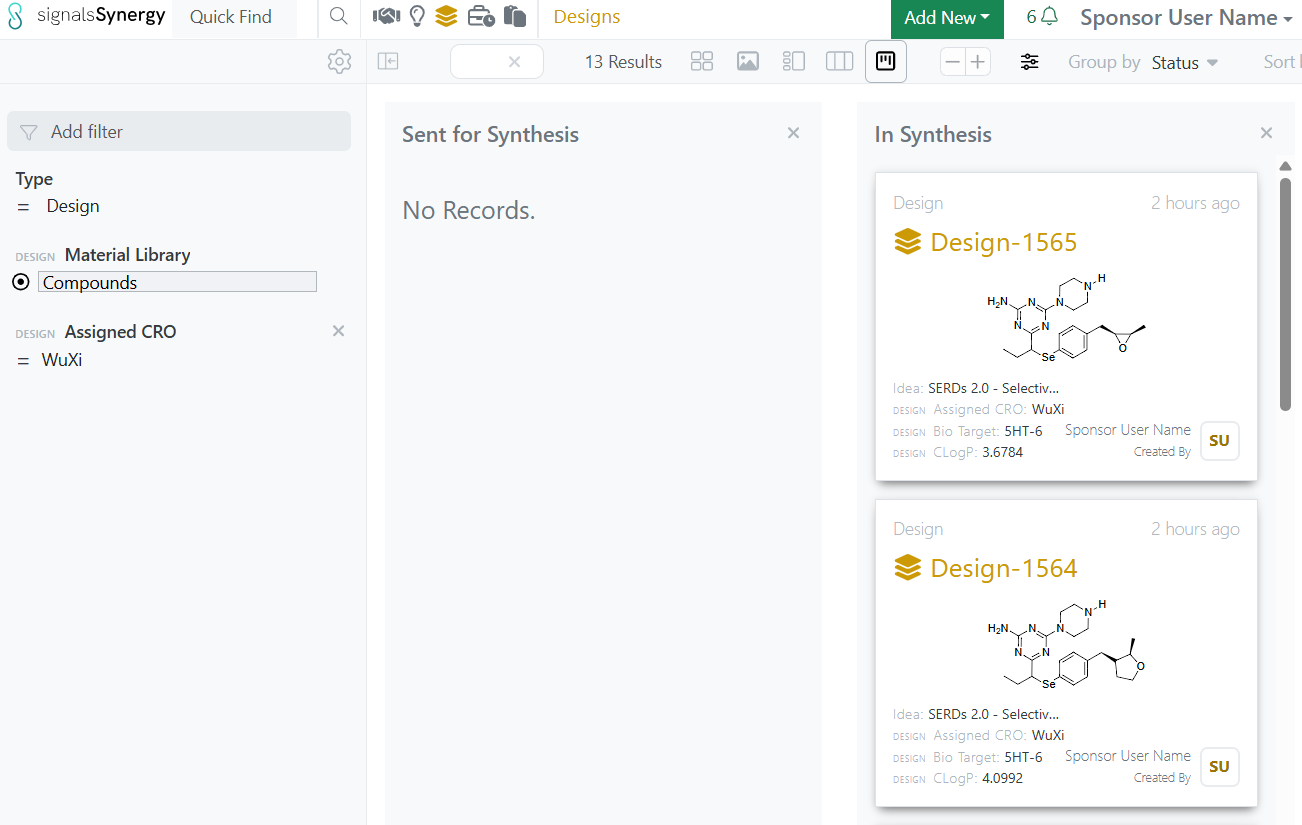
Designs have a new property called Assigned CRO. Assigned CRO is automatically captured when a Design is added to a Work Order for a CRO. Designs can be searched and filtered by Assigned CRO in both Advanced Search.

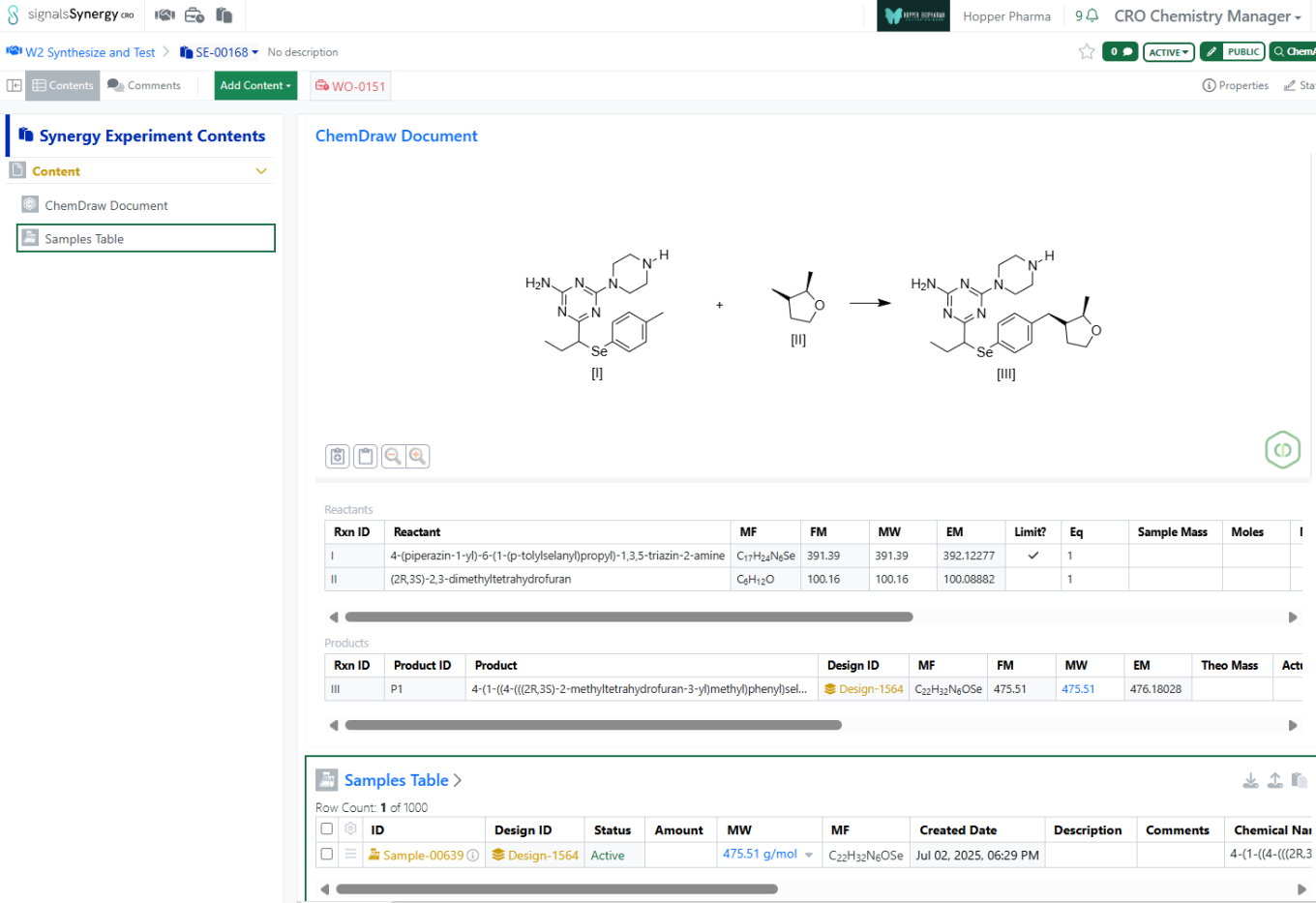
When a CRO user or Sponsor user adds a Design to a Chemical Drawing as a Product or Reactant, the Design ID is captured in the Design ID property in the stoichiometry grid. The Design ID is propagated to subsequently created Samples. If the Sample is then registered, the Originating Design will be added to the Material and the Design status updated to Synthesis Complete. If the Design is added as a Product, the Design ID is also added to the Reference from W.O. property of the Synergy Experiment for ease of search for related Synergy Experiments.

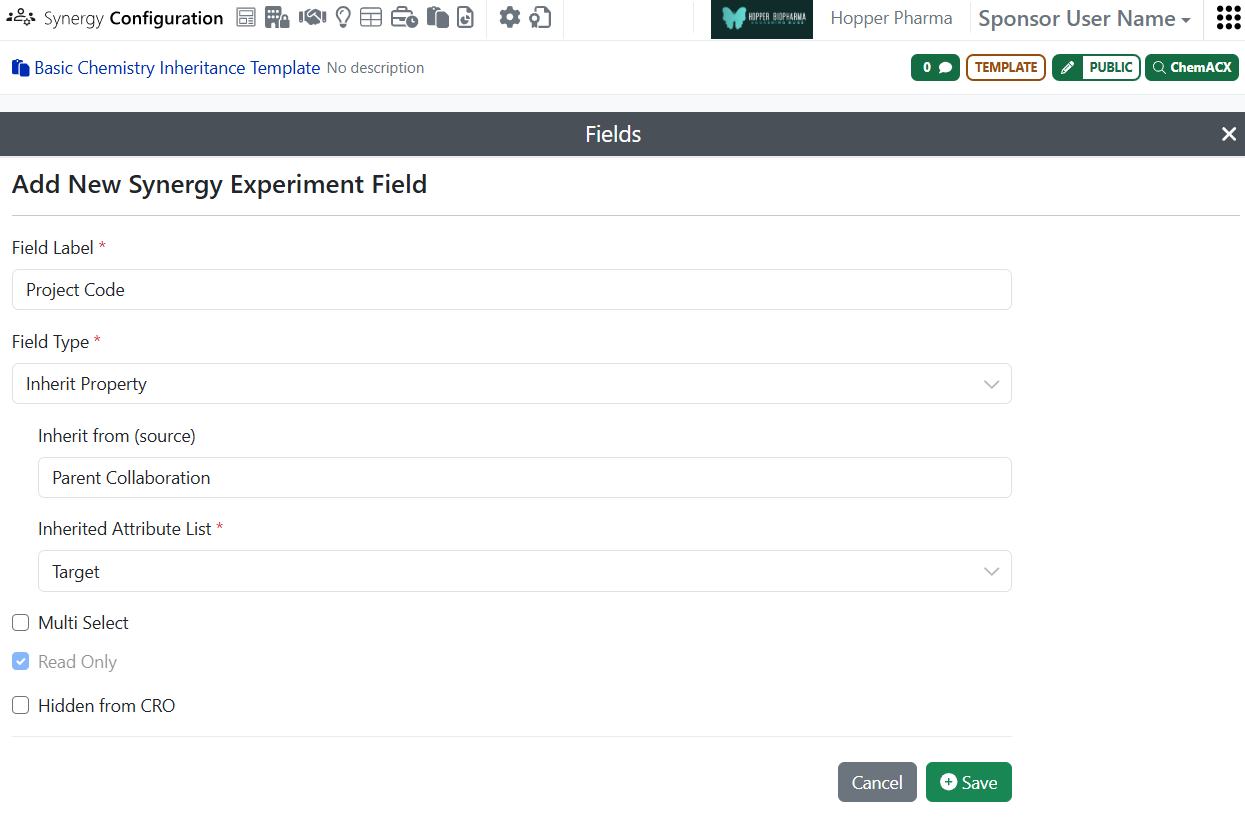
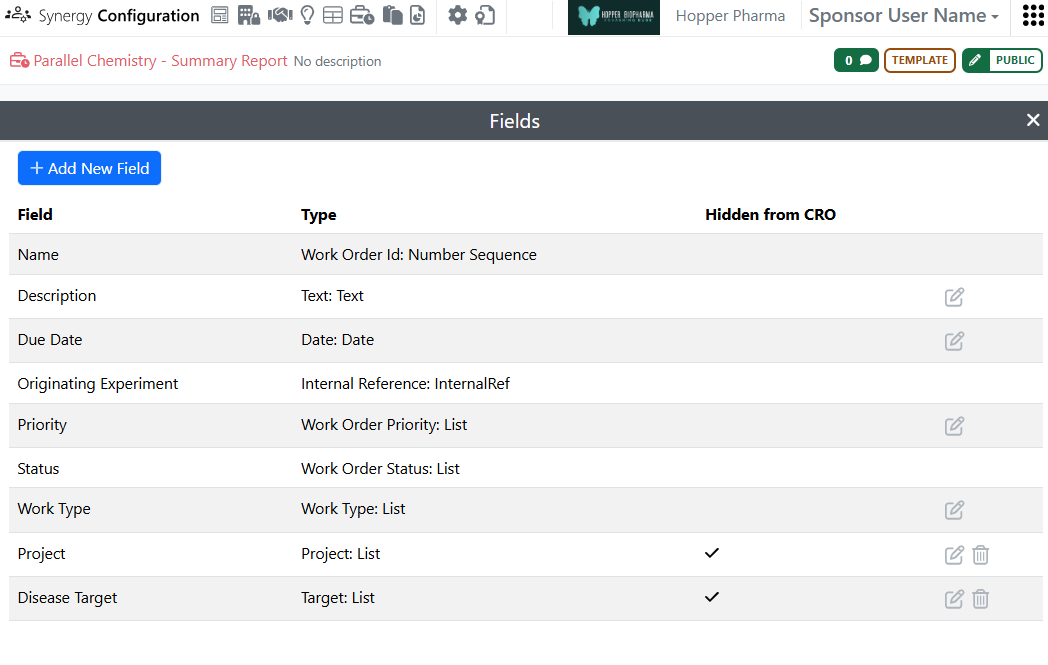
Synergy Experiment Template attribute list fields can be configured to inherit the property from the parent Collaboration. If a field is set to inherit, the field will be automatically populated with the corresponding value from the parent Collaboration on the Draft Synergy Experiment and all subsequent Synergy Experiments created by the CRO users. As a result, the Sponsor or CRO user does not have to repeatedly populate the same property, such as Project Code or Disease Target.

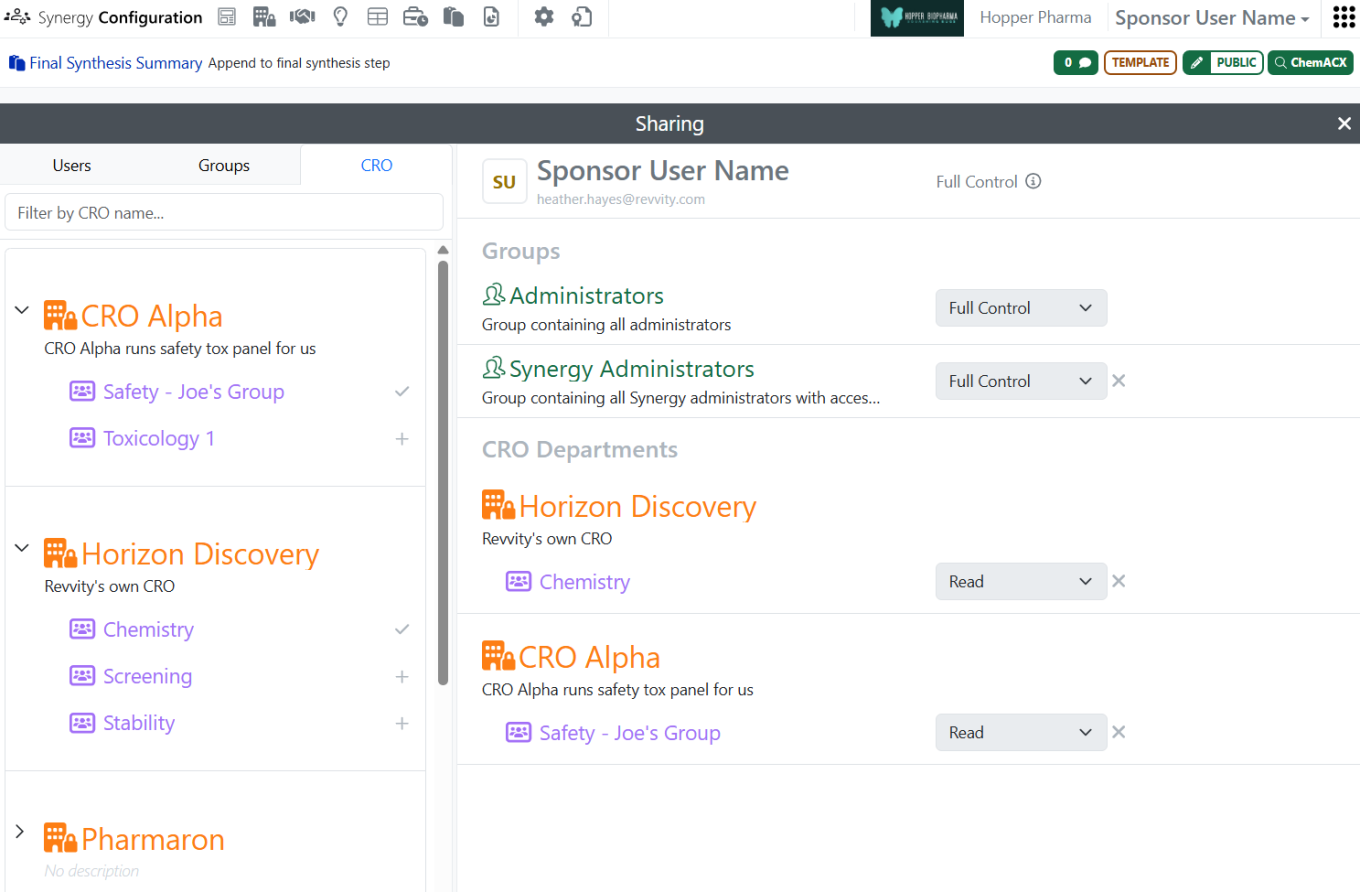
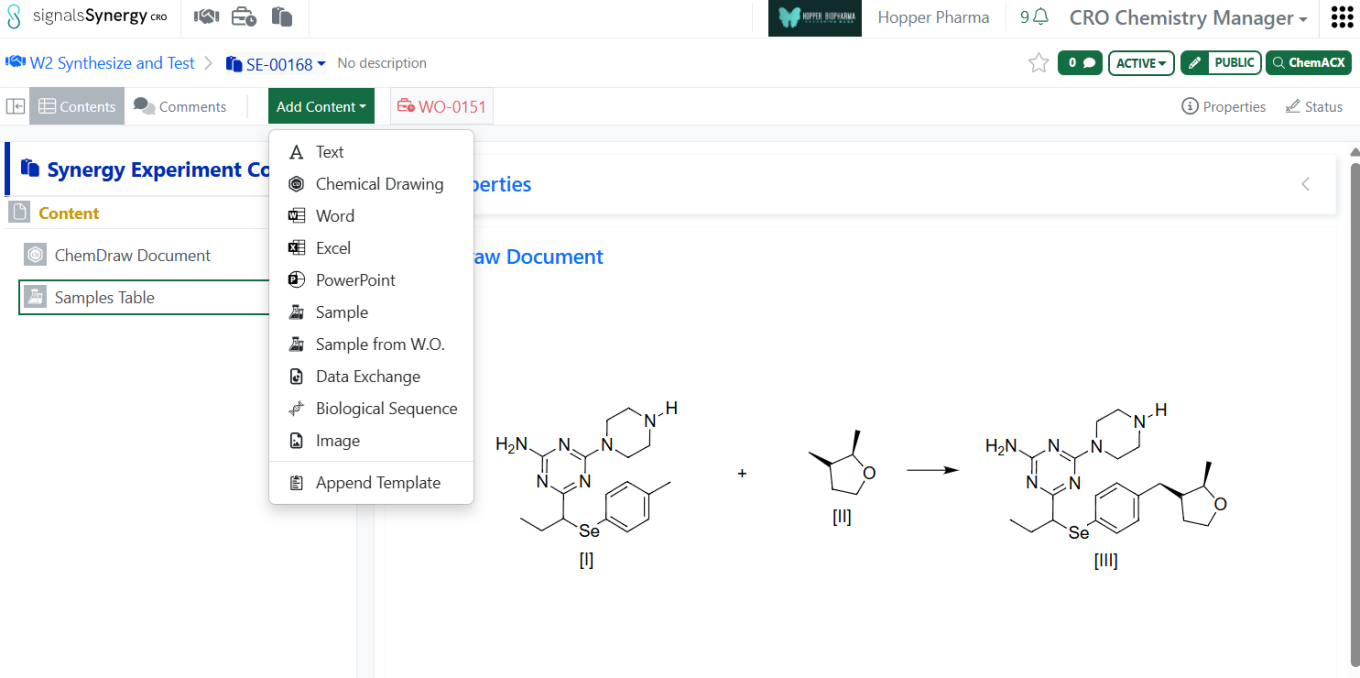
CRO users can now Append Template to a Synergy Experiment. This allows CRO users to add additional content for specific use cases. The Synergy Administrator can share Synergy Experiment Templates to CRO Department(s).

Finally, Configuration Transfer now supports the transfer of Reference Table configuration settings.

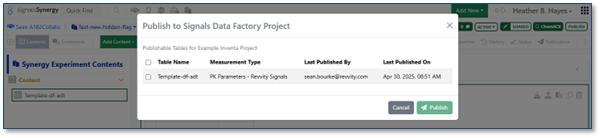
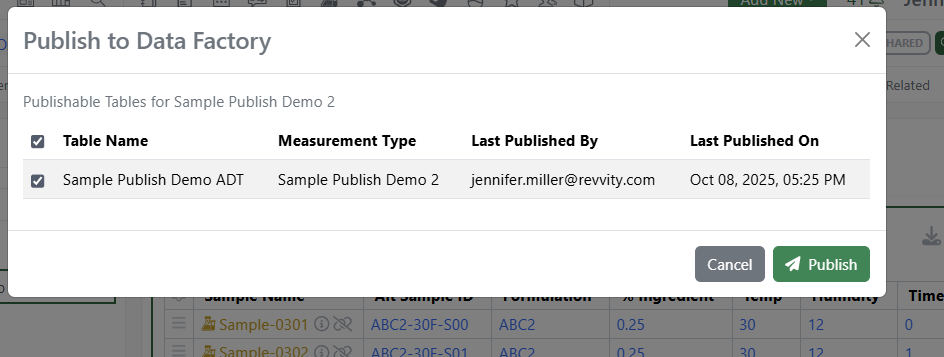
The ability to publish Admin Defined Tables (ADTs) to Data Factory from Synergy Experiments is now available to all systems. Similar to the publication functionality in internal Experiments. Properties of the Synergy Experiment, including those that are Hidden from CRO, and columns of the Tables can be mapped to measurement type attributes in a specified Data Factory project and published by the Sponsor user.

Chemistry

The auto-pair tool has been improved to work with a wider range of RNA and DNA strands. This enhancement allows strands that include additional Chem or peptide monomers when finding the complementarity between strands and placing hydrogen bonds between them.

The auto-pair tool has been improved to work with a wider range of RNA and DNA strands. This enhancement allows strands that include additional Chem or peptide monomers when finding the complementarity between strands and placing hydrogen bonds between them.

There is now enhanced visualization in ChemDraw when atoms, bonds and structures are selected on the canvas. ChemDraw now individually highlights all the atoms, bonds and structures that are part of the selection, in addition to the selection box that appears upon selection on the canvas. This provides a clear distinction between selected and unselected elements on the canvas.

When annotating a molecule or stereocenter in ChemDraw using the 'Attach Data' capability, annotations can now be specified as 'chemically significant'. When this option is selected, annotations become chemically significant and are recognized and honored in chemical searches. Additionally, users can now edit existing annotations by selecting them and reopening the 'Attach Data' dialog in ChemDraw.

Admin Defined Tables & Variation Tables

Headers in Components in Variation Tables can now be used in calculations in Variants. The Variant Headers can be found in the selectable properties or can be entered manually.

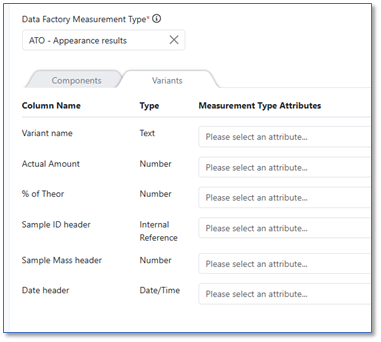
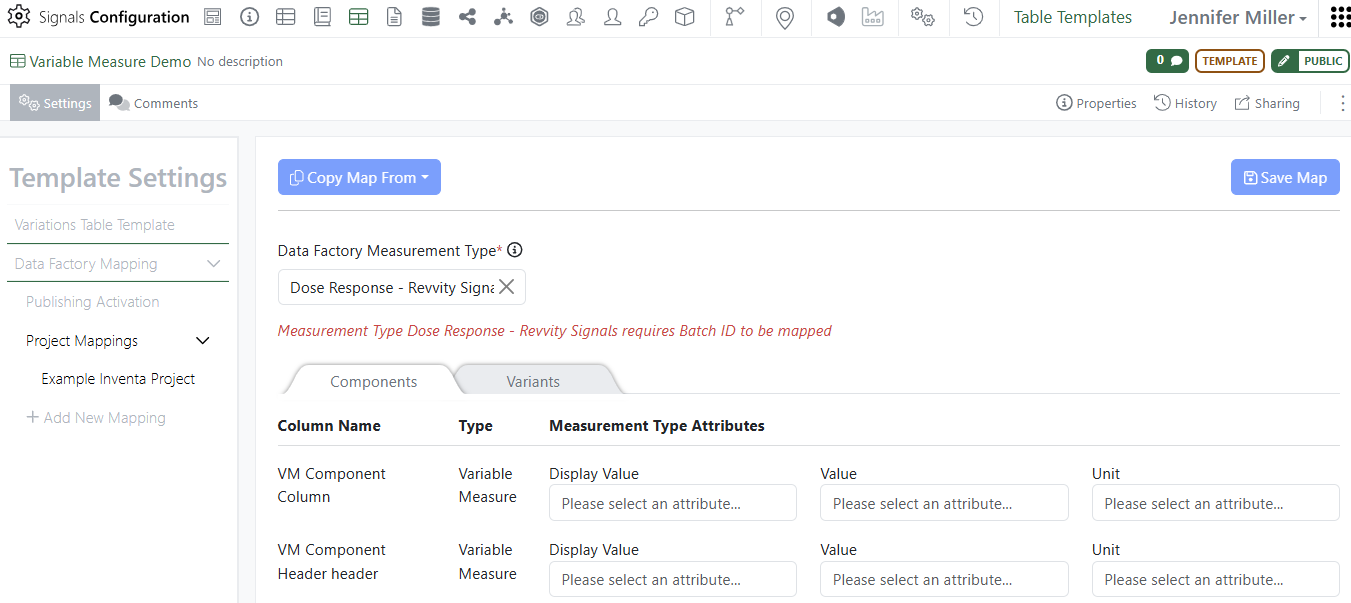
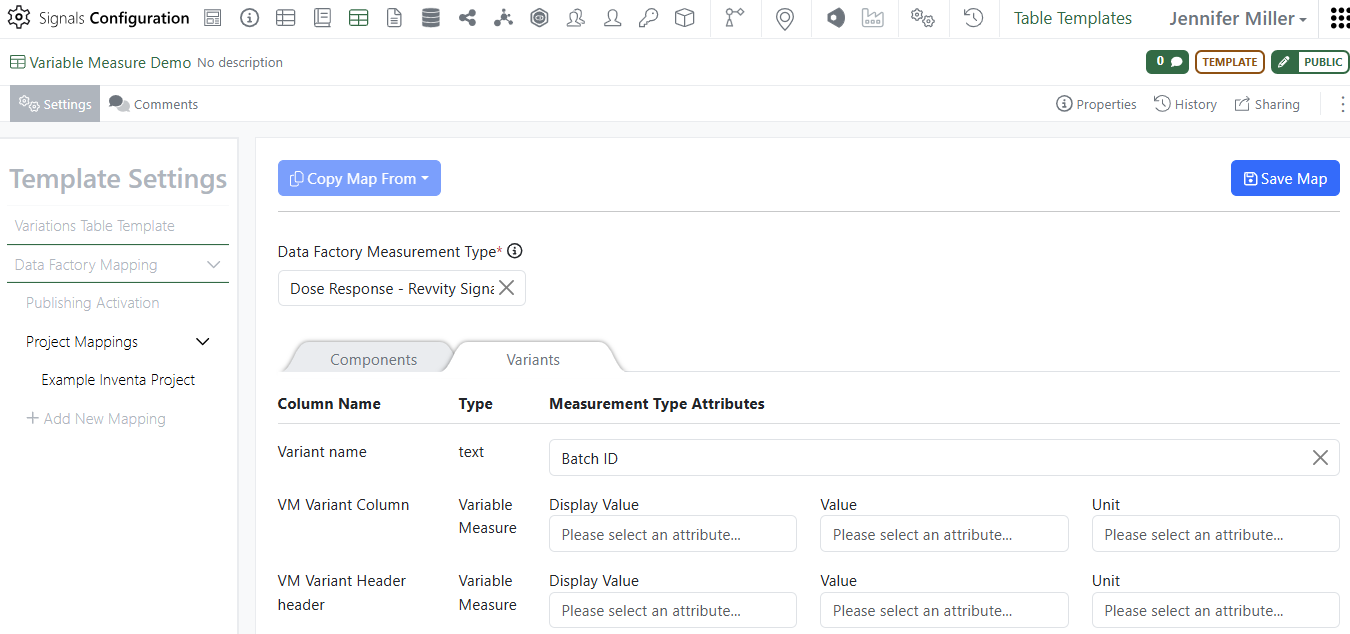
Update to Publish Variation Table to support variable measures in headers and columns. Administrators can now map variable measure field(s) from both columns and headers for both Components and Variants:

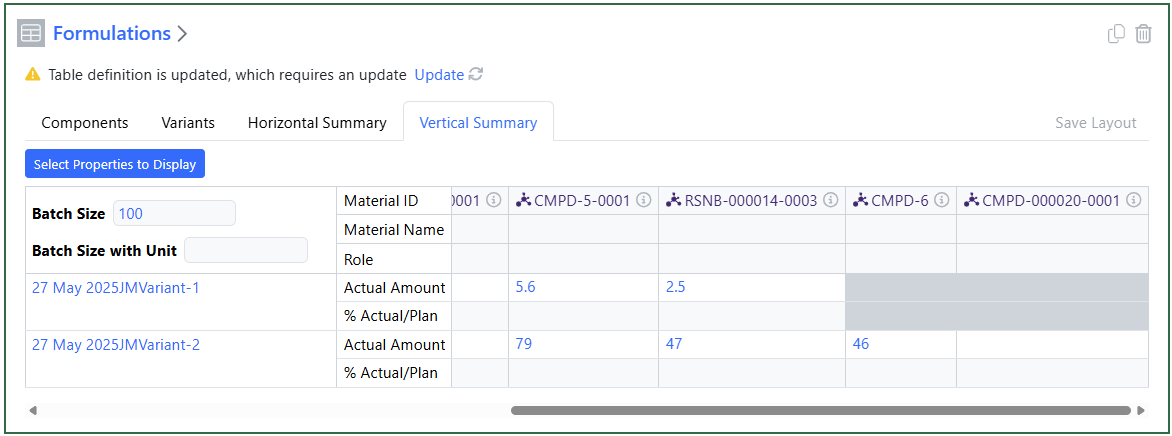
Variation Table Vertical View update for variant hidden rows now is darker gray and will not allow users to type in cells associated with hidden rows:

Samples

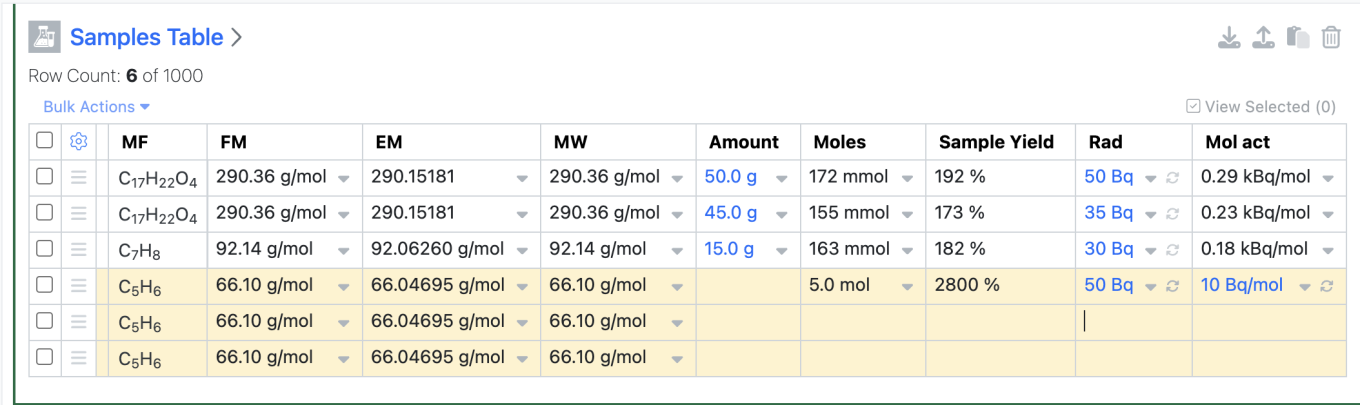
A new Moles calculation in Samples utilizing Radioactivity and Molar Activity is now available. If the user enters Radioactivity and Molar Activity values for a Sample, Moles is calculated as “Moles = Radioactivity / Molar Radioactivity” 
If the user subsequently enters an Amount on the sample, Moles will be recalculated using the Amount and FM as is standard.

Plates

Users can now enter values in the Amount annotation Layer utilizing Mass (g). Values with this new unit are included in the table and export just as the previously available volume amounts.

Inventory

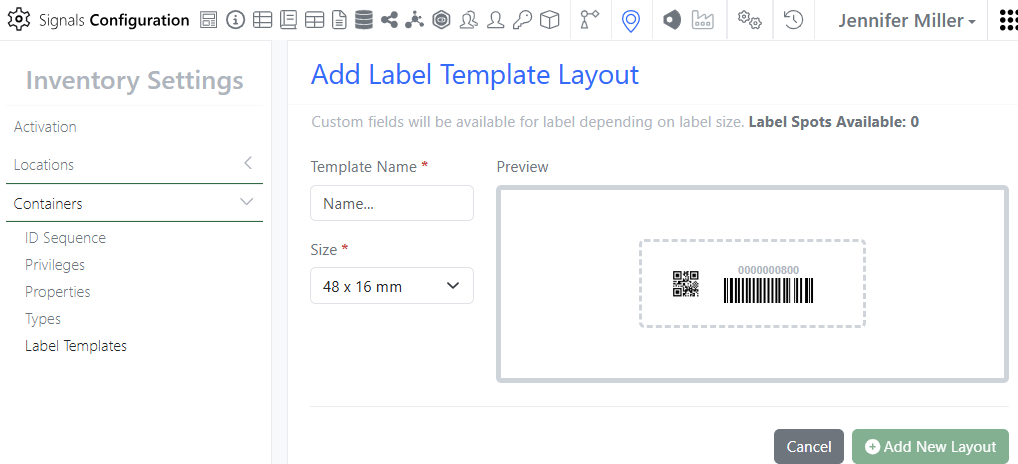
A new 48 by 16 mm label is designed to have the QR code fit inside of a circle that can be added to the top of a tube. The 1-D barcode was designed to fit on a rectangle label next to the circle label and put on the tube vertically:

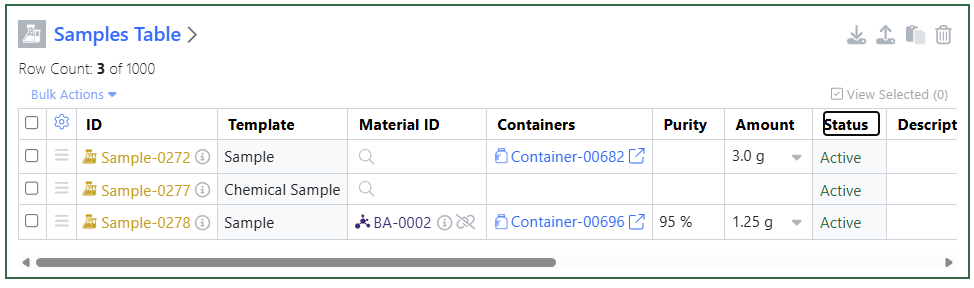
Update to Internal Request workflow to include Material ID of registered Samples. When users register a Sample from the Samples table the Material ID will automatically be filled in.

Now in the Internal Request, users will see the Sample ID, the Containers and the Material ID as an option to select from:

Materials

Multipart GenPept, FASTA, and Swiss-Prot files can now be bulk imported into a Proteins material library. Workflows are available to bulk import a collection of single sequence files (current capability), a single multipart file and corresponding meta-data (via .zip folder), or a single multipart file with fixed values (via multipart .gb or .fa file).

Administration

Spotfire for Signals Access Workflows privilege available to control which users can access and substantiate a Spotfire for Signals Workflow. Also controls who can import and export workflows. Users without this privilege can still leverage Workflows embedded within shared DXPs.

Internal Data Sources now available in Autotext available to all systems. Additionally, Admins are now able to select which Internal Data Sources are available for use in the text element by selecting the checkbox on the IDS in the SN Config.

Once the Admin Enables the IDS in the text element, users will be able to select the IDS to utilize in snippets or in the text element.

Integrations & APIs

This update brings new APIs to support modifying CRO users in Signals Synergy. Synergy Users for a provided CRO may be updated in bulk. This is an asynchronous API that allows the bulk update status to be checked once initiated via the POST API. The POST API takes a CSV files with User ID,Email,First Name,Last Name,Country,Alias,Licenses. Field are optional as when applicable.

Plates can now be exported as CSV via the External API. To download the plate as a CSV set the “format” URL parameter to “csv”. The default format will be a JSON file if not specified.

The example zip for material bulk import can now be specified to contain a CSV example. To download the zip with a CSV example set the “dataFileType” url parameter to “csv”. The default data type will be SDF if not specified.

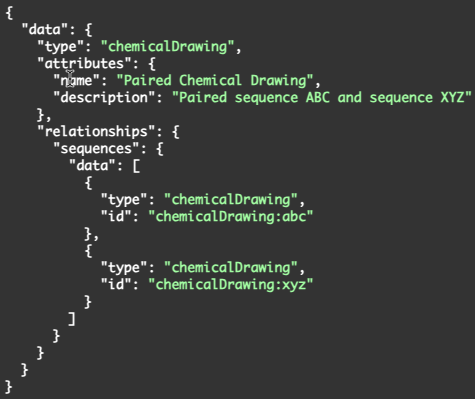
A new API has been added to pair two single oligonucleotide sequences and create a chemical drawing of the paired sequence.

The request takes an eid of a parent as a URL parameter and the body takes two chemical drawings each containing a single oligonucleotide sequence as well as a parent entity. If the pairing is successful a chemical drawing of the resulting pair is added to the provided parent entity.

The parent entity must be capable of having a child chemical drawing.

Two new endpoints have been added to Signals Data Factory for exporting data from projects. 

These endpoints will all or a specific measurement type data by Project. 
 

The request will allow for, and the response will contain a search ID and last document id. Providing these in subsequent requests will allow for pagination, and to only capture data that has comes after the provided last document id. 
 

An optional request body can be used to filter the results further.
 

For all measurement types you can filter on: Entity, Attribute(s), and Tag(s) as well as specify which fields you want returned in the results.
 

For individual measurement types you can filter on: Entity and Attribute(s) as well as specify which fields you want returned in the results.
 

Further Details 

The following capabilities are in beta and are available for users, administrators and developers on the Signals platform upon request. Please contact your account representative or our support team if you would like access to the following features.
Data Workflows & Analytics

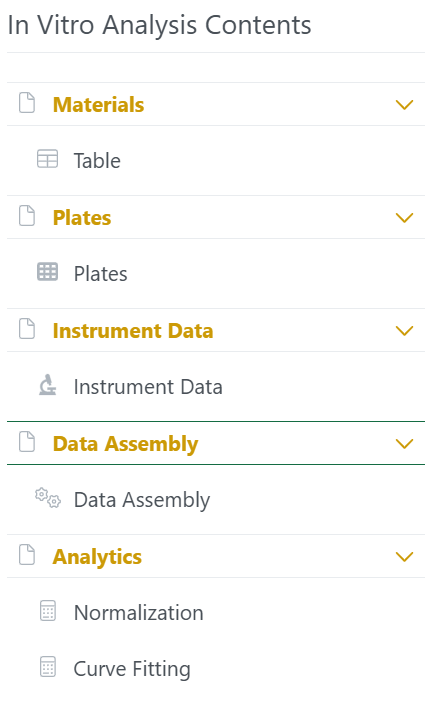
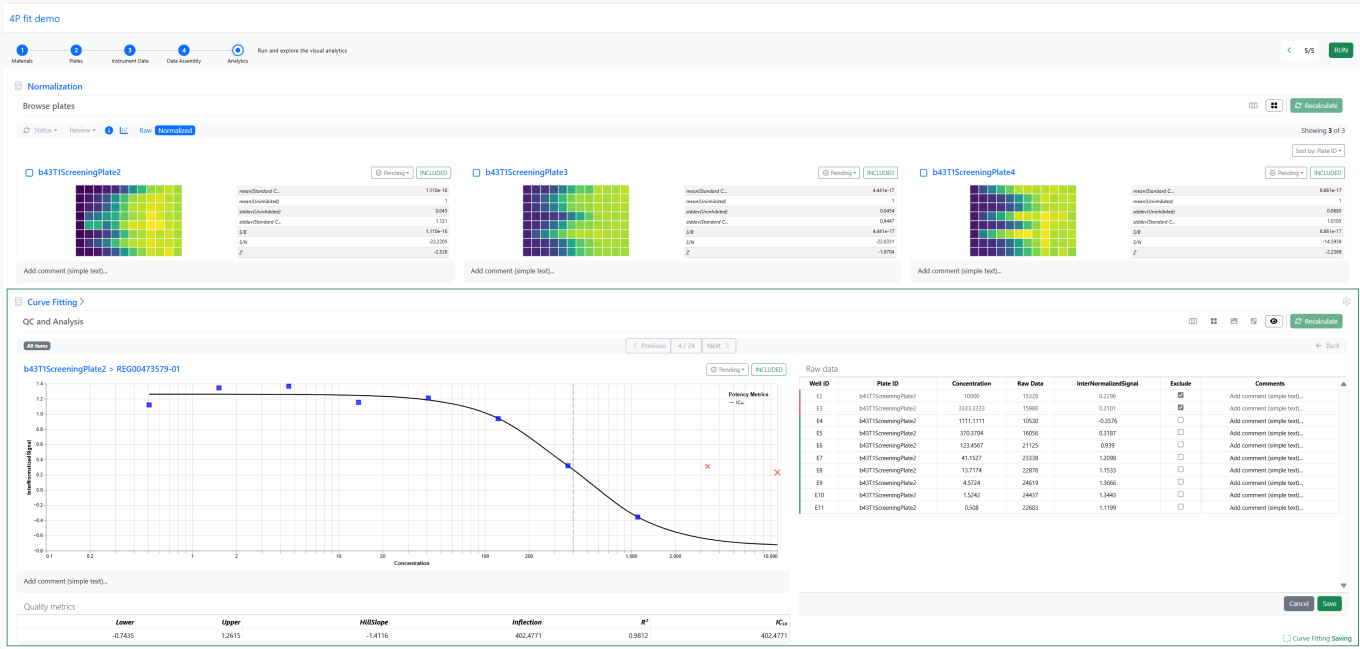
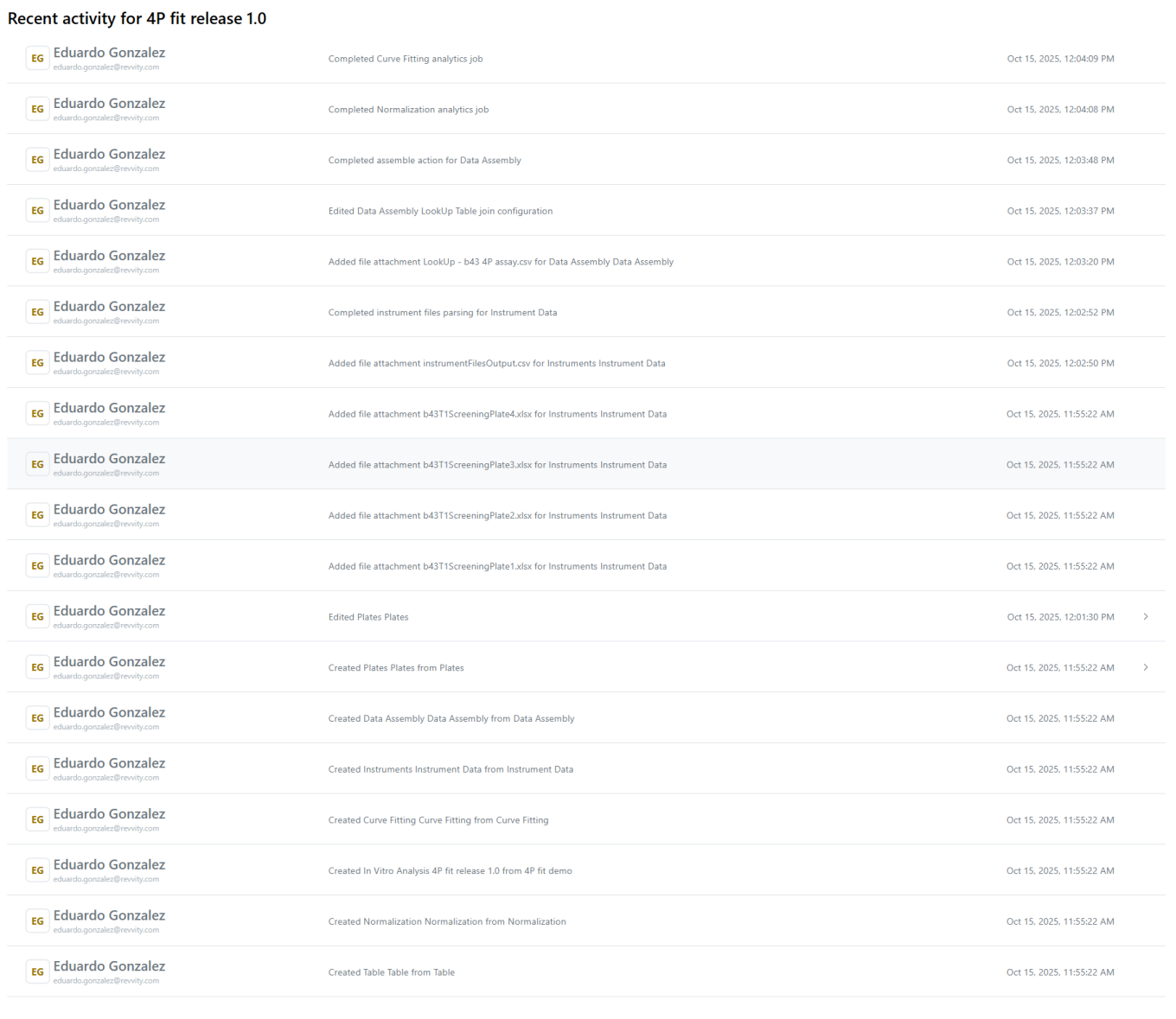
For tenants with a Signals One license, users will now be able to perform In Vitro (screening, assays) data analysis, visualization and results quality control. The first curve fitting method available, is the logistic 4 Parameter (4P) fit.  

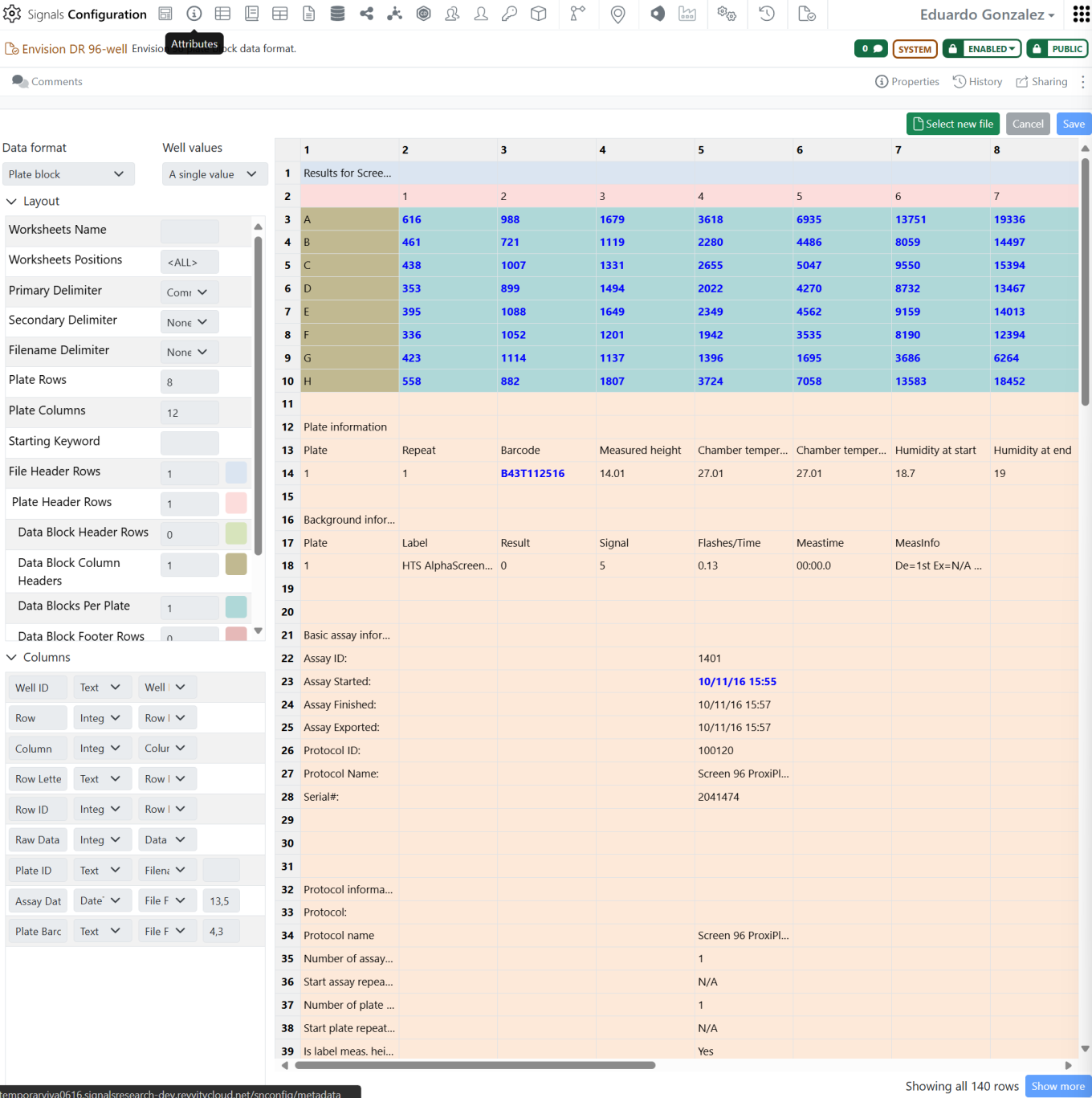
Parsing of instruments output files is now directly available in Signals One to generate analytics-ready tabular data. Some System parser definitions for Revvity plate readers (e.g. EnVision, EnSpire, Operetta,…) are provided out of the box:

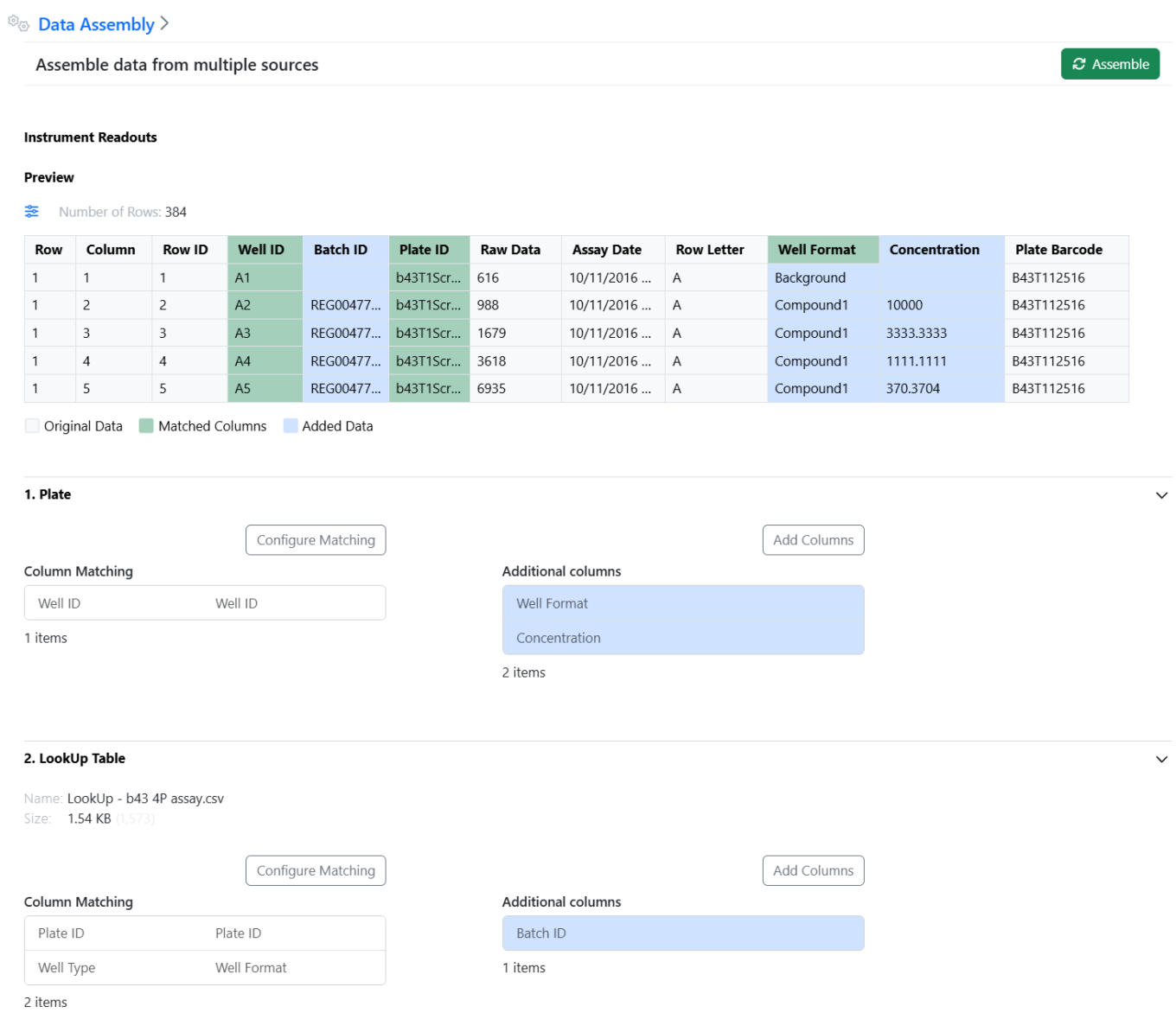
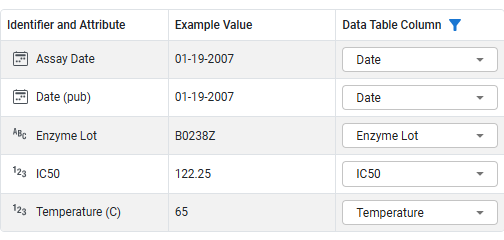
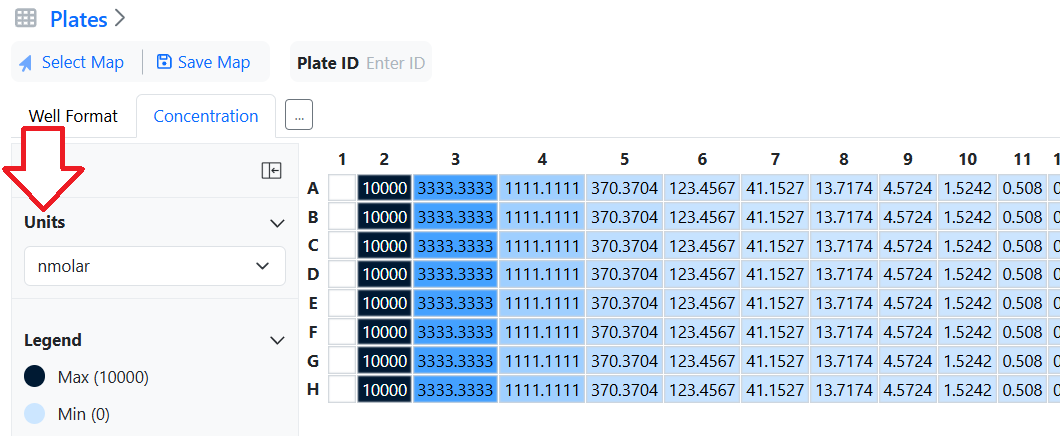
The data from the instrument output files can be enriched with the information about the plate format and the materials tested to provide all the information required for the visual analytics steps:

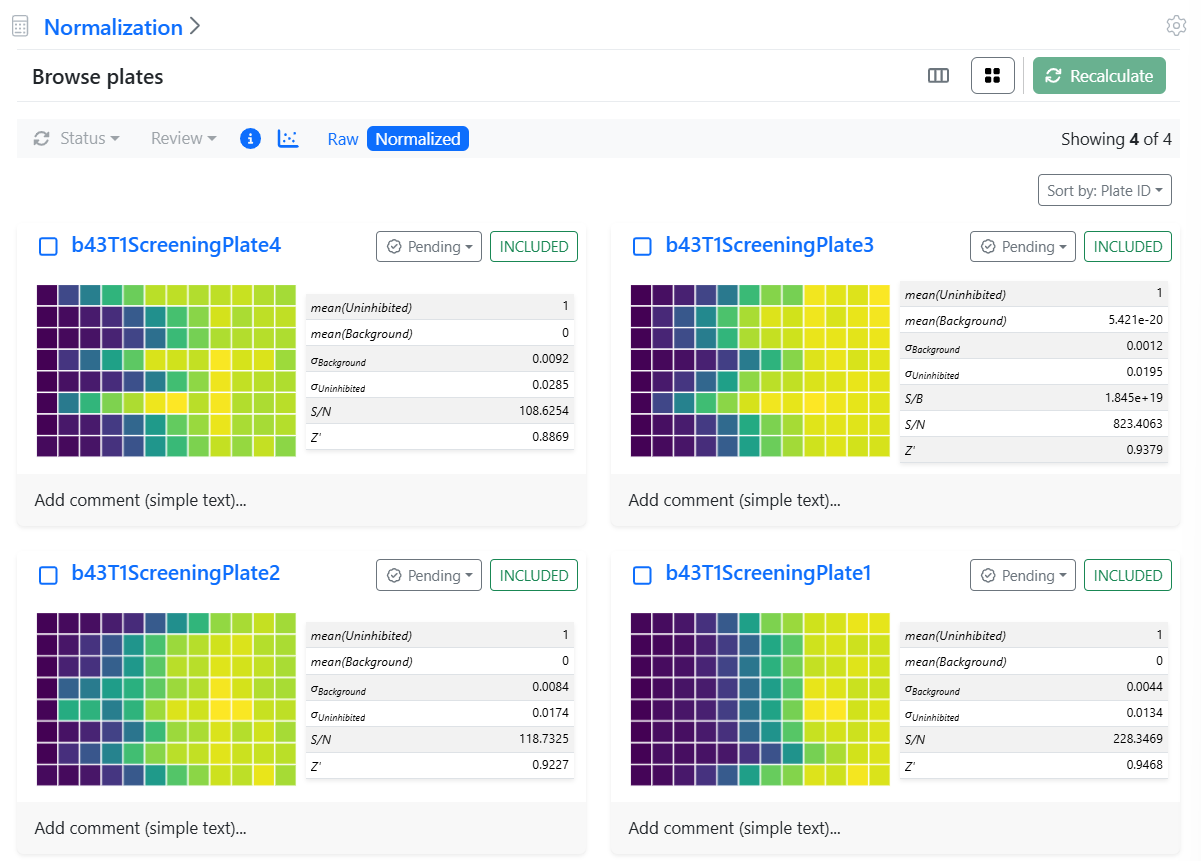
The analysis and visualization is organized in steps. Currently, normalization:

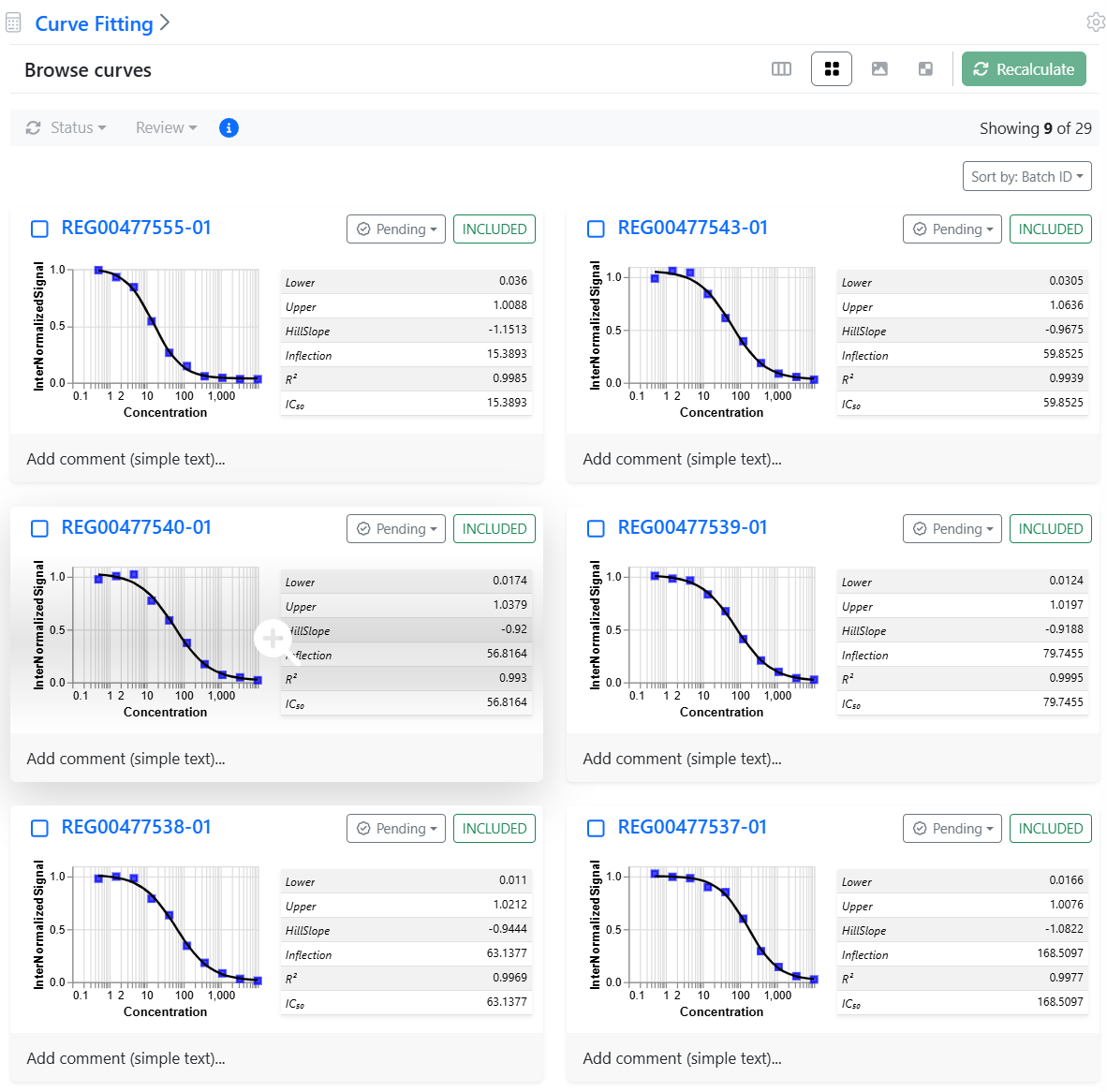
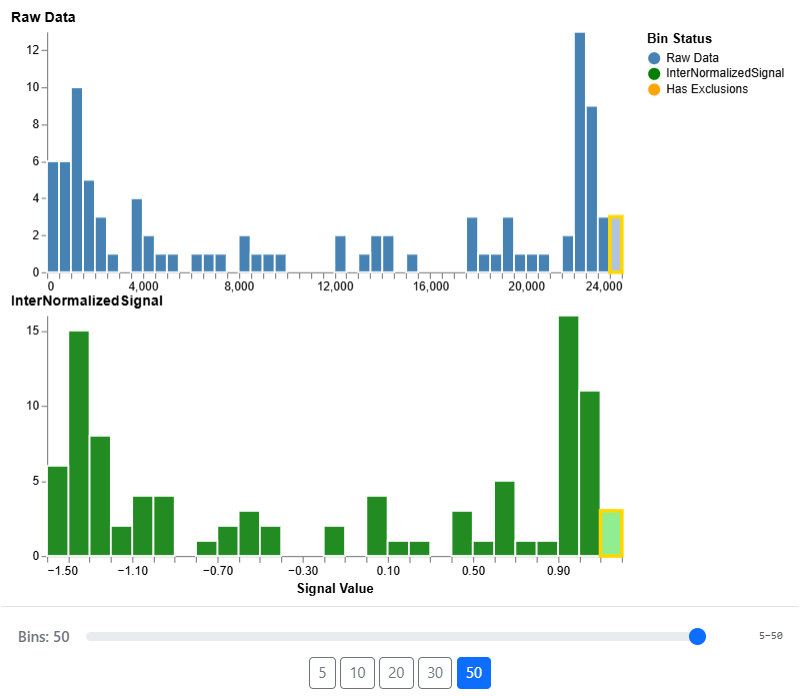
and 4P curve fitting steps are available:

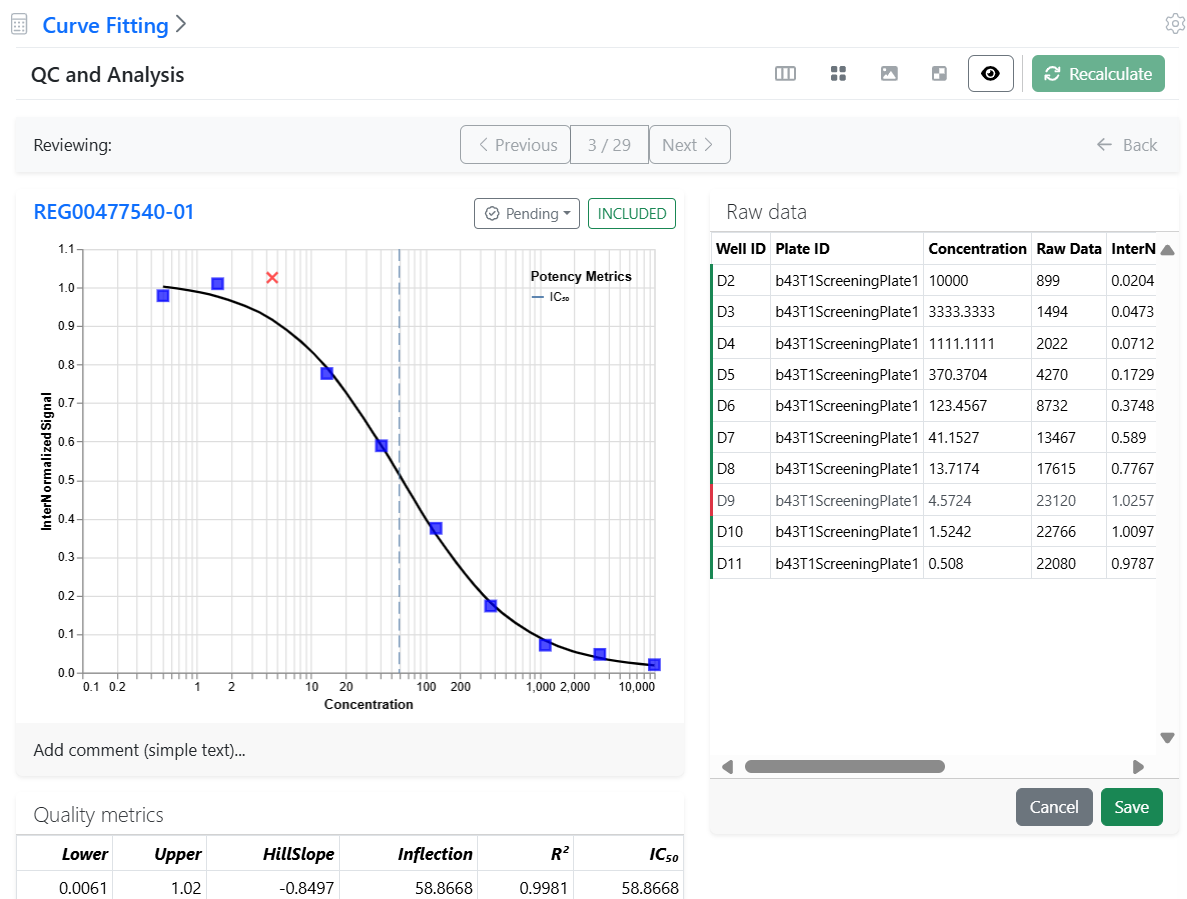
Each curve can be controlled in detail and outliers excluded from the analysis at the level of the data points or even whole curves:

SAR & Decisioning

Minor automapping enhancements were introduced to the Publish Results to Data Factory to prioritize the optimal match, even if the same data table column is associated with multiple attributes.


What’s New

The latest release of Signals brings improvements to the ChemDraw+ application. Basic chemical properties of structures and biopolymers can now be selected for addition to a drawing from the Analysis panel. Additionally, hydrogen bonded fragments are now recognized as a single structure. This release also includes several bug fixes, further improving the overall user experience.

The following improvements are available for users of Signals ChemDraw.

ChemDraw+

  • Enhanced property selection control when adding to drawings
  • Hydrogen-bonded fragments are treated as a single structure


ChemDraw+

Add selected chemical properties to the ChemDraw canvas

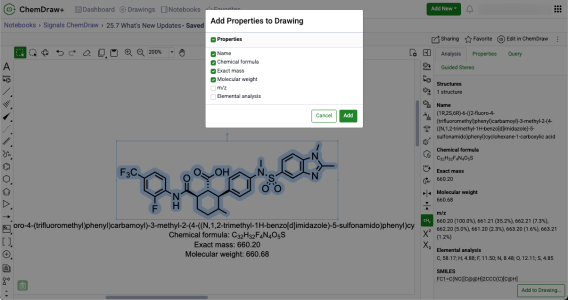
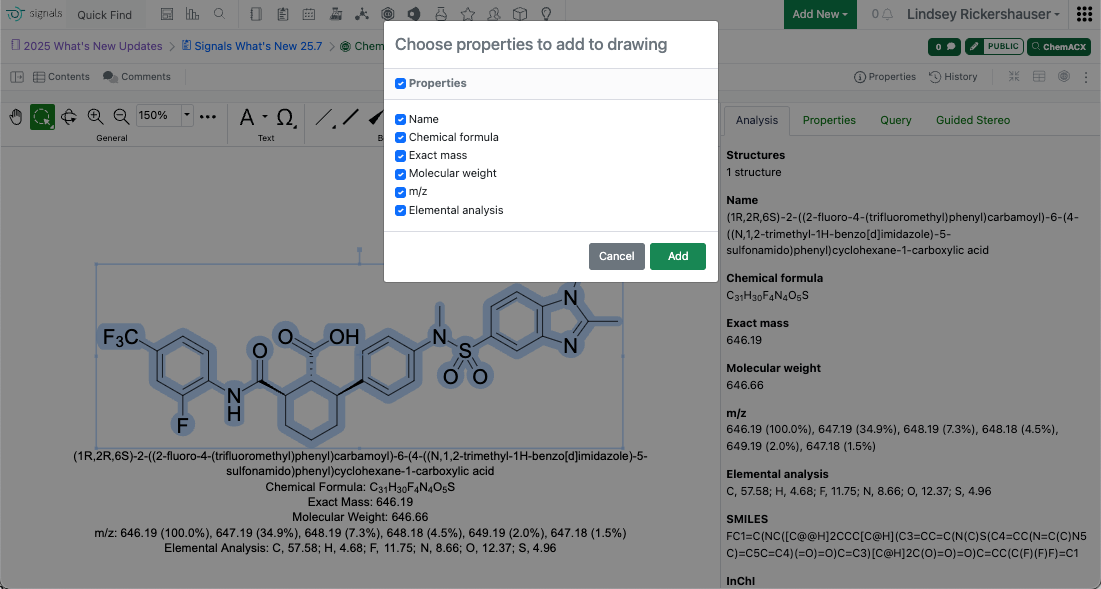
The Analysis panel now offers improved flexibility when adding chemical properties to drawings. Users can now choose which properties to add to their drawing when using the 'Add to Drawing' button located at the bottom of the Analysis panel. Selecting this button now opens a window where properties can be selected to be pasted onto the canvas.

Hydrogen-bonded fragments are treated as a single structure

Hydrogen bonded fragments in ChemDraw will now be recognized as a single structure with properties such as molecular weight, molecular formula and exact mass being calculated accordingly.

What's New

We are delighted to release our new version of Signals, 25.7. This release brings enhancements in Signals Synergy, our ChemDraw sketcher, Tables, Samples, History, Inventory, Plates and Materials. We have new beta capabilities enabling Semantic Search and extended beta capabilities around the in vitro analysis object, updated data factory and supplier lists. Finally, we have also fixed a number of small bugs.

The following improvements are available for users, administrators and developers on the Signals platform. Certain features may only be available with appropriate licensing and/or with enablement by an administrator.

  • Fundamentals
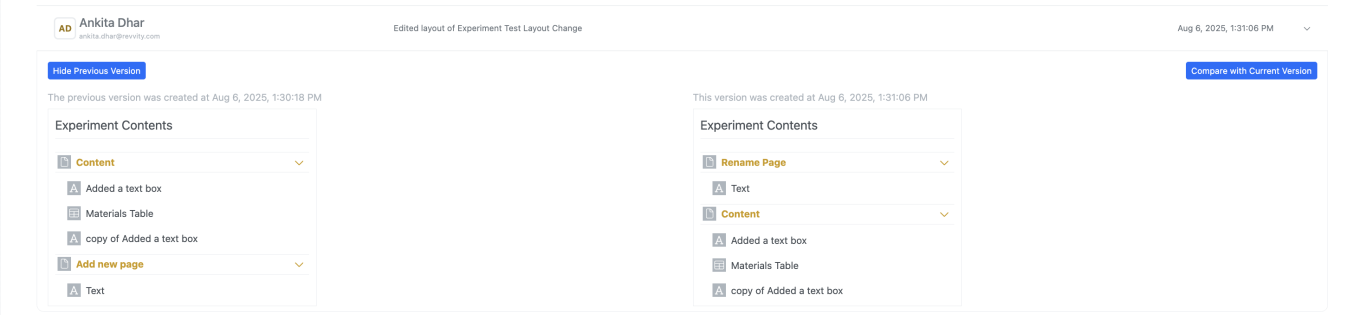
      –The audit trail for System Templates and Experiments captures the previous and current versions of Layout Changes for actions including Rename Page, Add Page, Delete Page, & Reorder Page
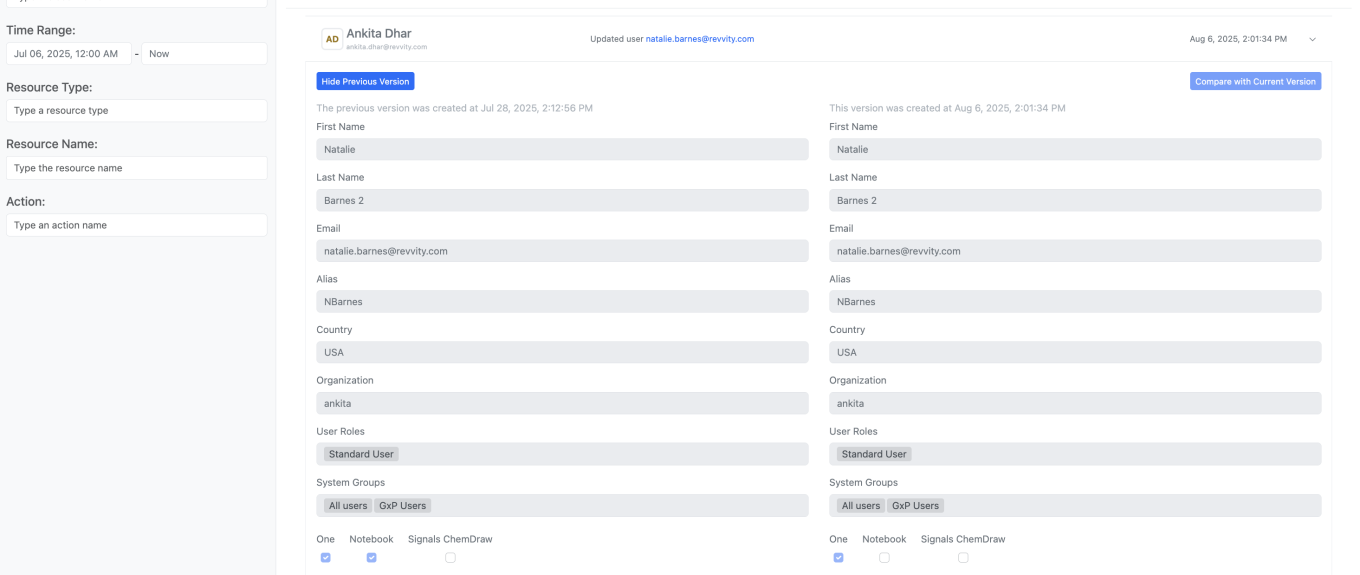
      –The “Updated User” audit record within the Admin Audit Trail displays current and previous versions of the specific changes to User metadata
     
  • AI
      –Semantic Search (beta)
     
  • Data Workflows & Analytics 
      –Preview of the assembled data in Vitro Analysis (beta)
      – Calculations can be applied when analyzing two instrument readouts in Vitro Analysis (beta)
      – Re-execution of Analytics steps in Vitro Analysis (beta)
      – Improved error handling in Vitro Analysis (beta)
     
  • SAR & Decisioning
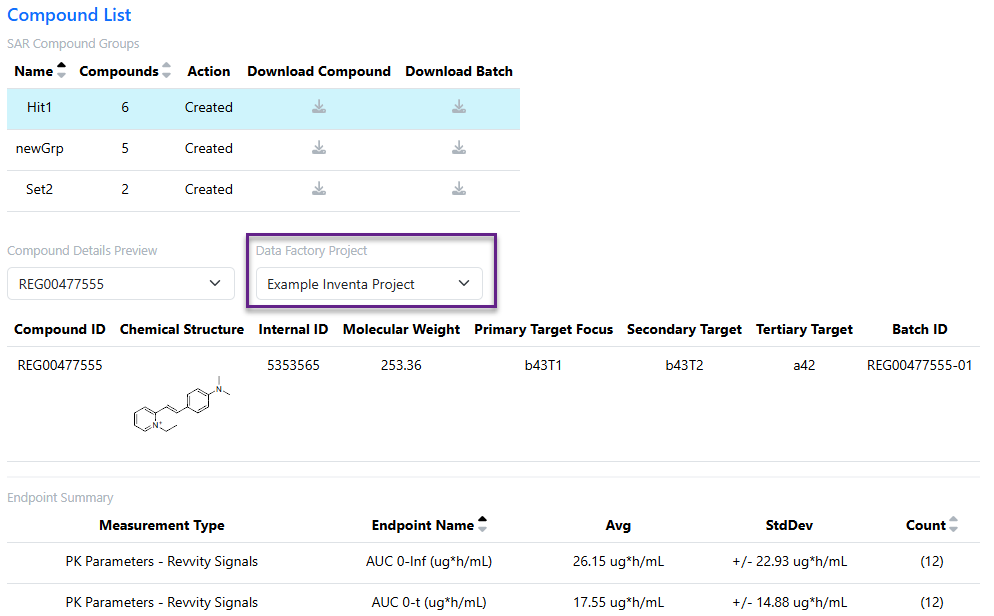
      – Inventa Analysis SAR Groups preview can now be filtered by Data Factory project
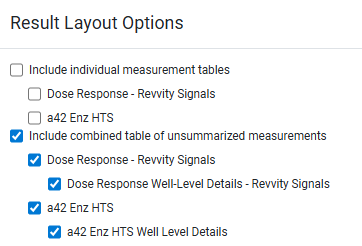
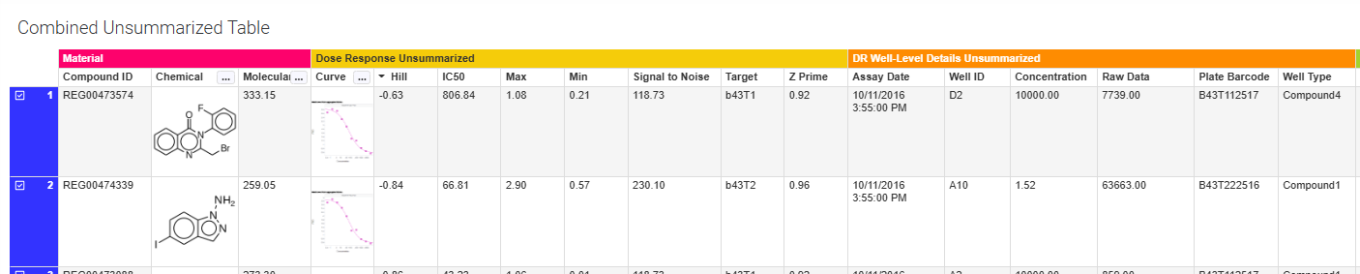
      – Integrated Summary App now supports well-level details within the combined unsummarized table.
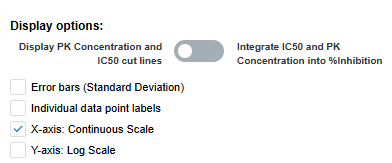
      – Target Engagement Profiler now uses “continuous” as the default x-axis
      – Data Factory projects now support Custom Entity data and Material Sync (beta)
     
  • Synergy
      – Bulk fill values in Reference Tables for selected rows
      – Sharing of batch salt information to CROs in Reference Tables
      – Status Modified field and filter for Designs and Work Orders
      – Notifications for internal users and groups assigned to Designs
     
  • Chemistry
      – View basic chemical properties in the Analysis panel
      – Add chemical properties directly to the ChemDraw canvas
      – Hydrogen-bonded fragments are treated as a single structure
     
  • Admin Defined Tables & Variation Tables
      – Update to Material selection from experiment to include Name
     
  • Samples
      – Inclusion of Reaction ID in Sample Update Modal
     
  • Plates
      – New Properties Annotation Type
     
  • Inventory
      – System Supplier List available in new Material Library (beta)
      – Exponential notation update on Container Amount on Batch/Lots
     
  • Materials
      – Bulk import of salts for compounds
      – Bulk update of salts & solvates for materials
      – 'dd-MM-yyyy' date format for bulk import
     
  • Integrations & APIs
      – New API to recall Synergy Work Order
      – New APIs to move locations to new parent locations
      – New API for creating a material from a material table
      – Download option for Notebook API Yaml Files
     

We also fixed several small bugs in this release. Details of the enhancements are described below.

Administrators should be aware that the stereochemical annotation of pseudochiral OR centers using the guided stereo tool will change to add an additional label which will interpreted as chemically significant. This change will occur in a future release and only apply to annotations made subsequent to the change, existing compounds will remain with the prior understanding until edited.

Administrators are recommended to subscribe to the channels within our support news site found at https://support.revvitysignals.com/hc/en-us/categories/360004446171-Support-News which contains more information about releases and other pertinent product information.

This content is anticipated for release on our Production E3 environments, and for Private Cloud customers on our deferred release schedule, in November 2025.
 

Further Details 

The following improvements are available for users, administrators and developers on the Signals platform. Certain features may only be available with appropriate licensing and/or with enablement by an administrator.

Fundamentals

When a user updates the Layout for System Templates and Experiment-like objects, the audit trail captures previous and current versions for the layout changes including Rename Page, Add Page, Delete Page, & Reorder Page. This change only applies to content updated after the update.

Additionally, when an admin updates metadata within a User’s profile, the “Updated User” audit record within the Admin Audit Trail displays current and previous versions of the specific changes to the user’s metadata.

SAR & Decisioning

Inventa Analysis users can now filter SAR Groups data by Data Factory project to focus on the most relevant data.

Users can now include Details-level measurement types in the Combined Unsummarized Table within the the Integrated Summary App.

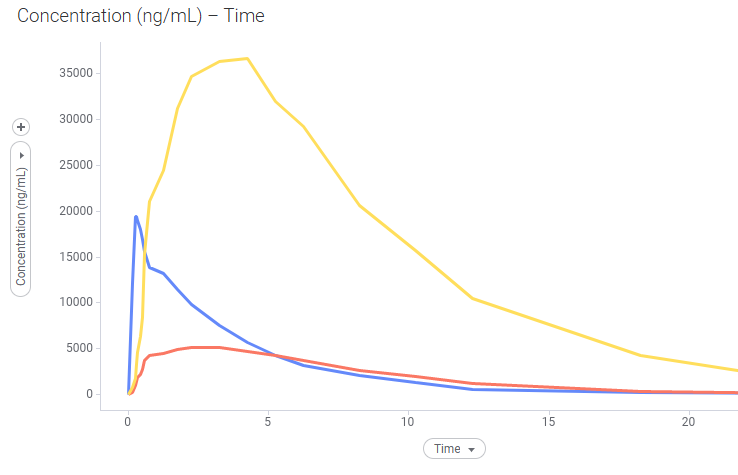
The Target Engagement Profiler now defaults to “continuous” x-axis when viewing Concentration vs. Time, within a convenient checkbox to switch to a categorical view.

Synergy

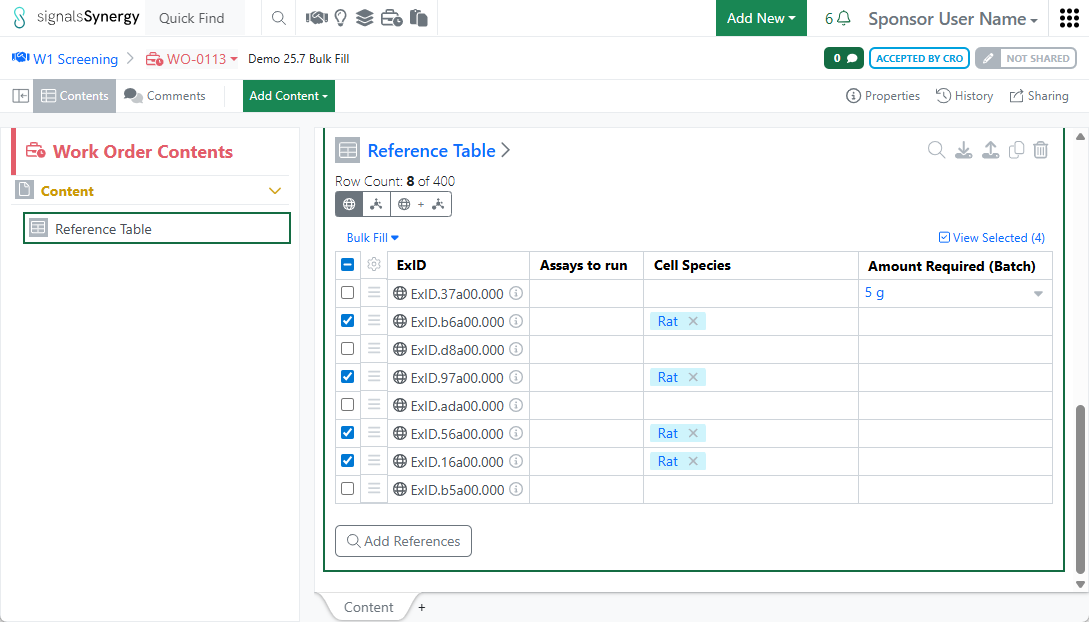
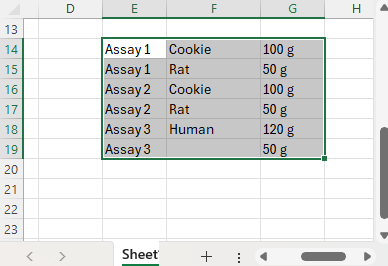
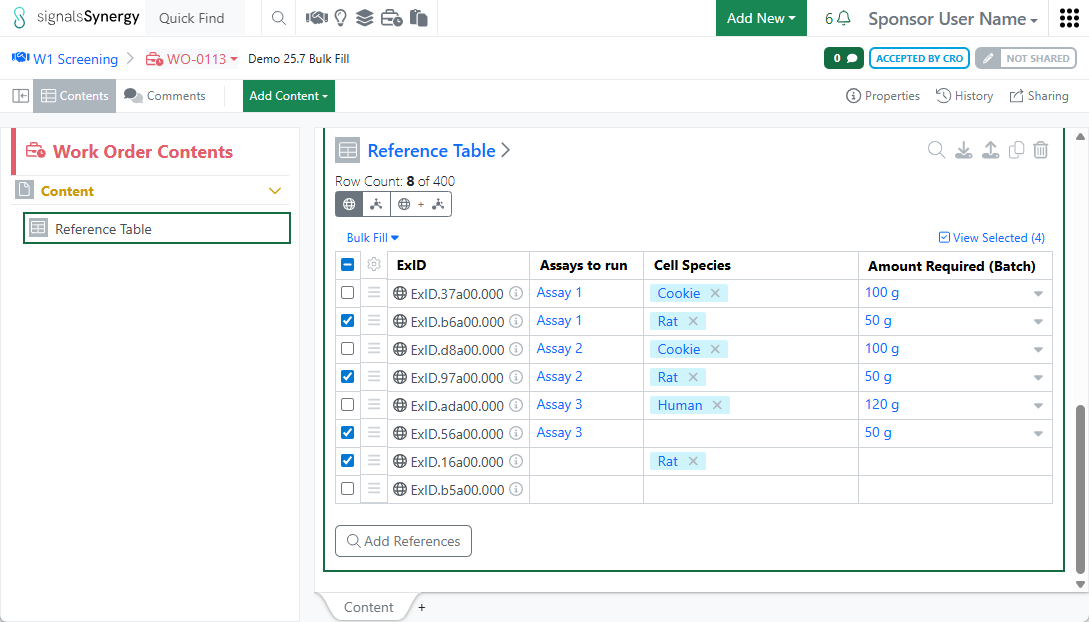
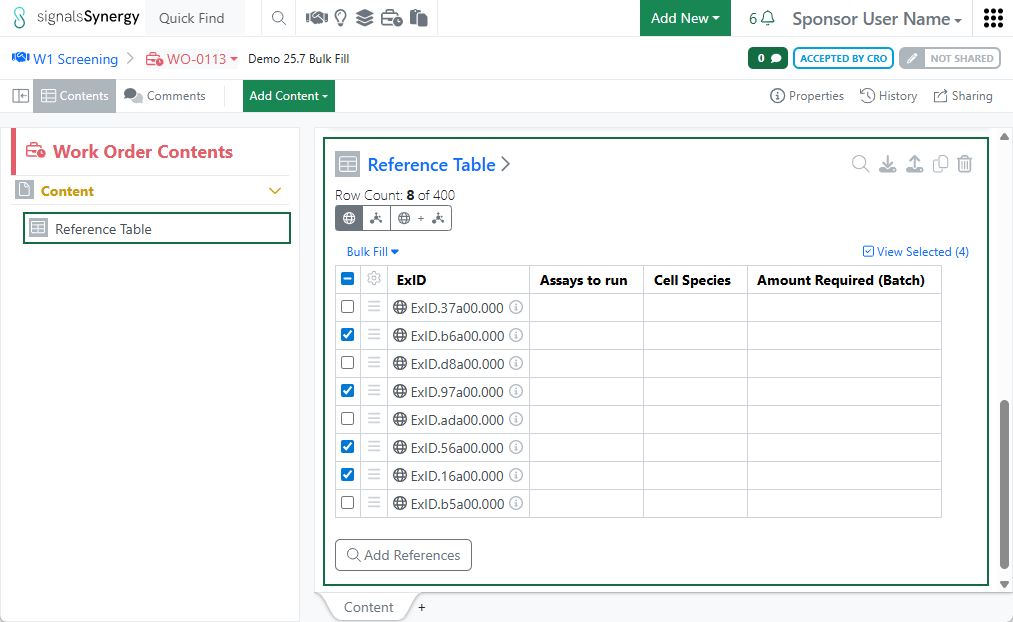
Sponsors often need to provide additional information related to a specific Design or Material (ExID) using Reference Table admin-defined fields. For example, a Sponsor may need to indicate which assays to run on specific compounds or the amount and minimum purity requested for each Design being synthesized. Sponsor users can now Bulk Fill values in Reference Tables using copy-paste from cells within the table or from an excel or csv file.

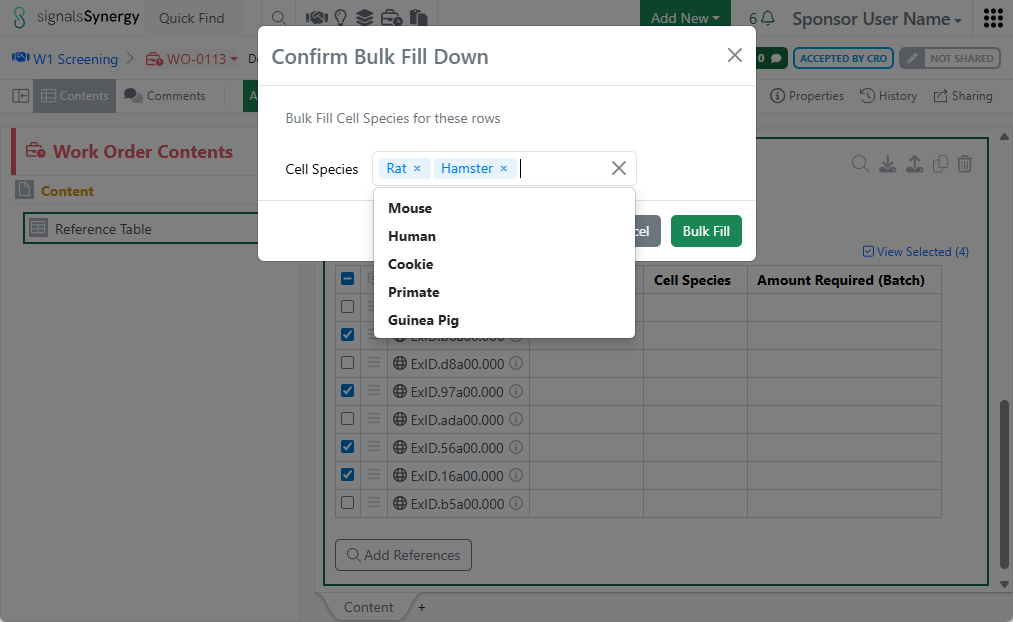
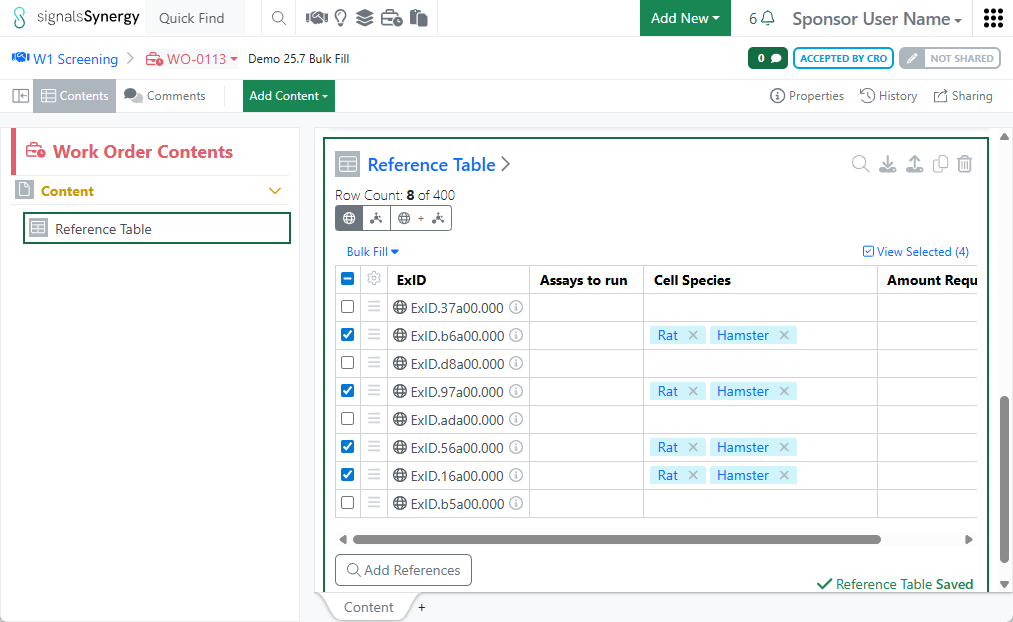
In addition, users can also Bulk Fill multiple cells in a column with the same value. After selecting a set of rows, users choose a column from the Bulk Fill menu and then enter or select a value. After pressing Bulk Fill, the same value is applied to the cells in all selected rows.

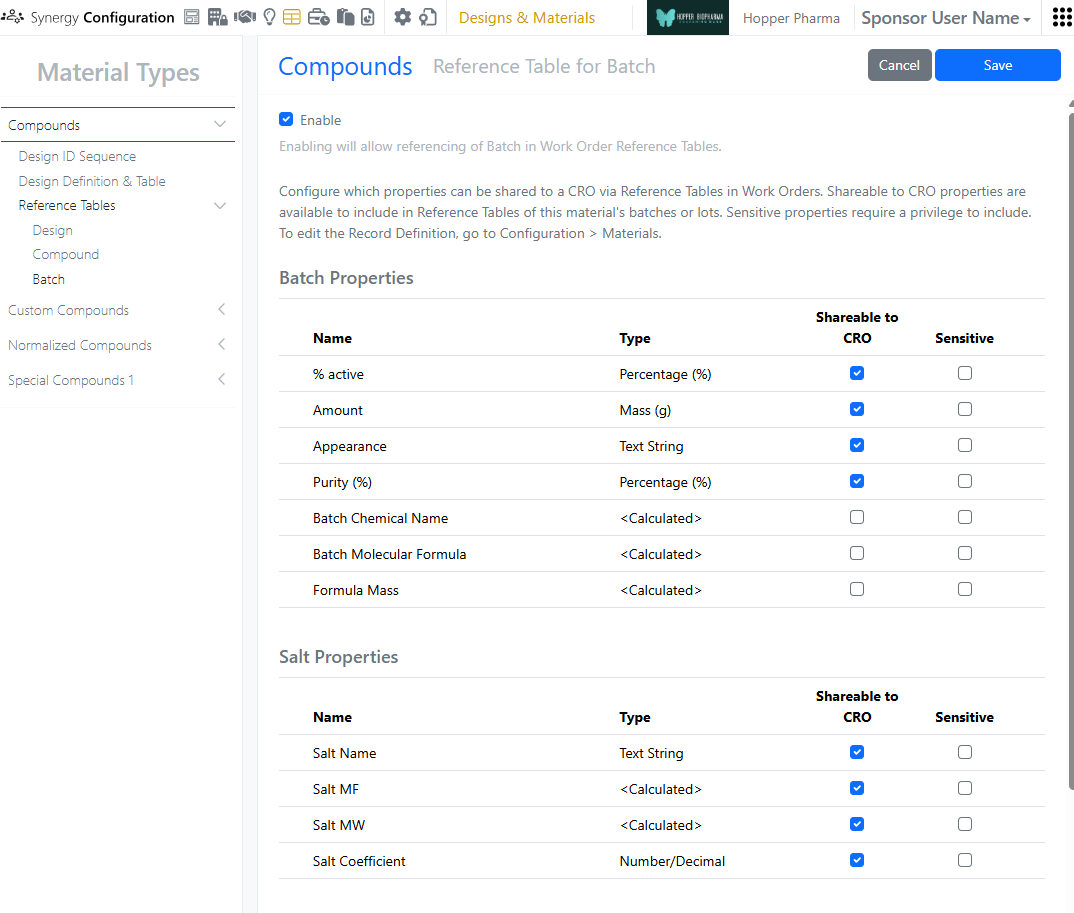
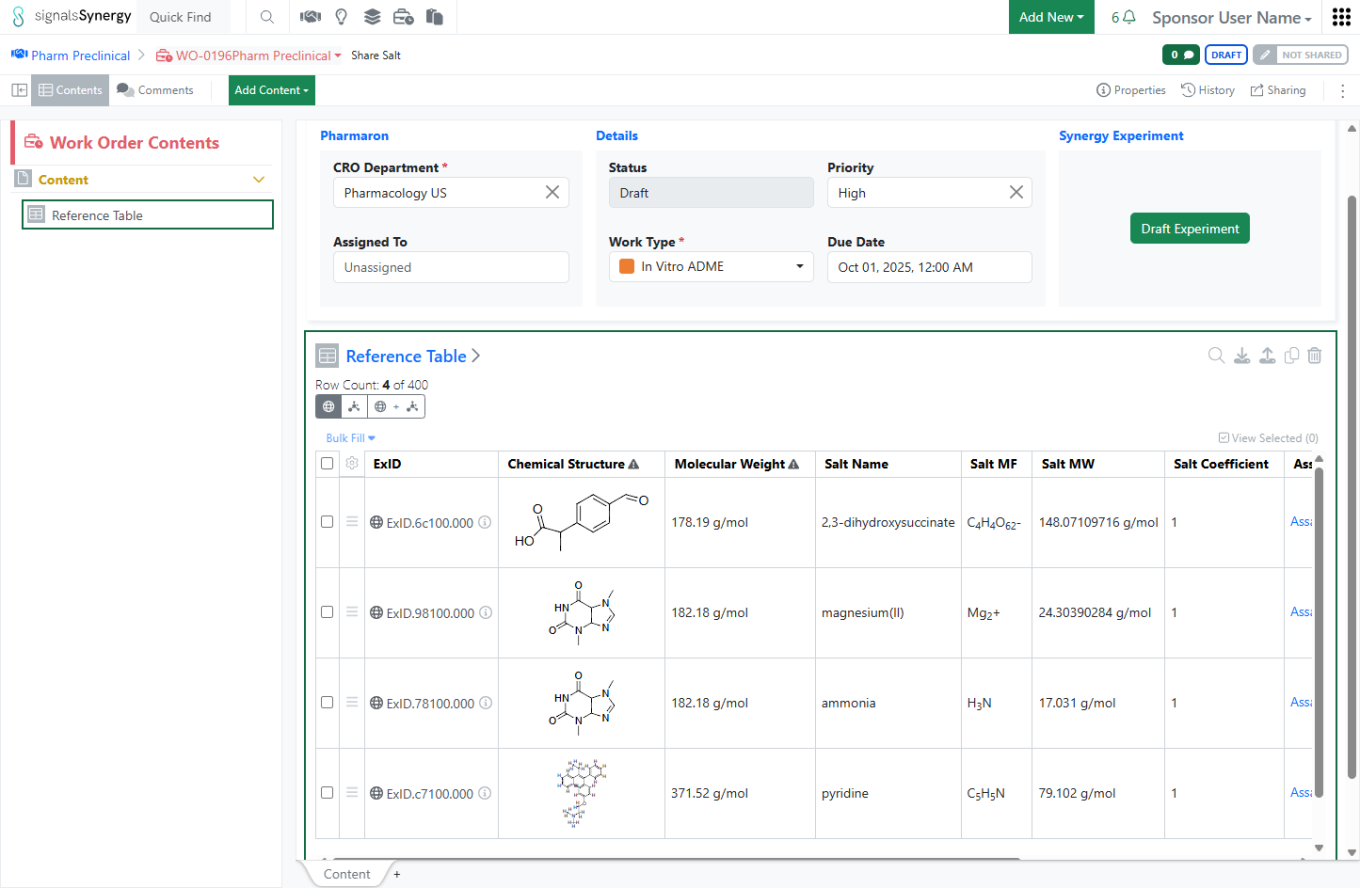
Salt information for a batch may be very important for a CRO to know when running an assay or analysis. Thus, Salt information can now be configured as Shareable to CRO in batch Reference Tables for Material libraries of type Compounds. When set to Shareable to CRO, a Sponsor can include the primary (first) Salt Name, MF, MW, and Coefficient in a batch Reference Table for a CRO Work Order.

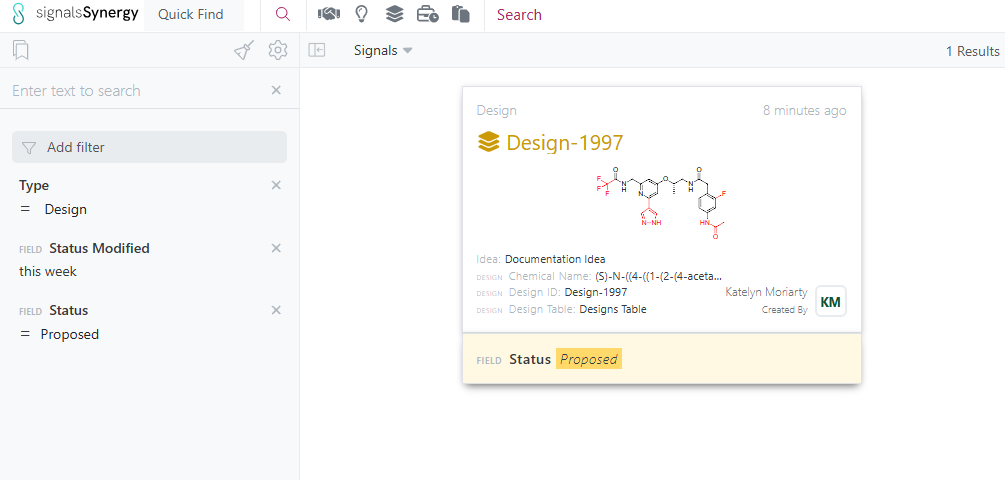
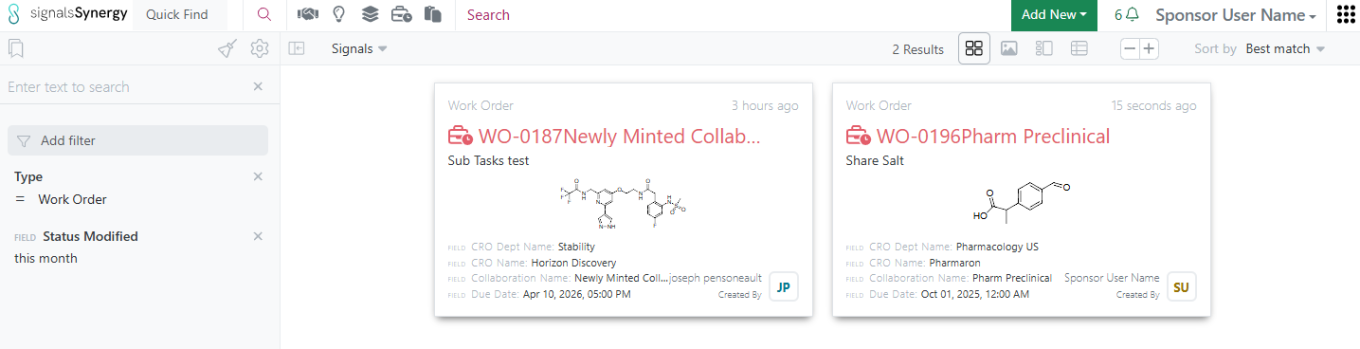
When searching for Work Orders or Designs, it may be useful to search for those that recently changed Statuses. For example, which Work Orders were recently transitioned or which Designs were Proposed or Sent in the last week. Status Modified is a new properties on Work Orders and Designs available in Advanced Search and Smart Folder filters.

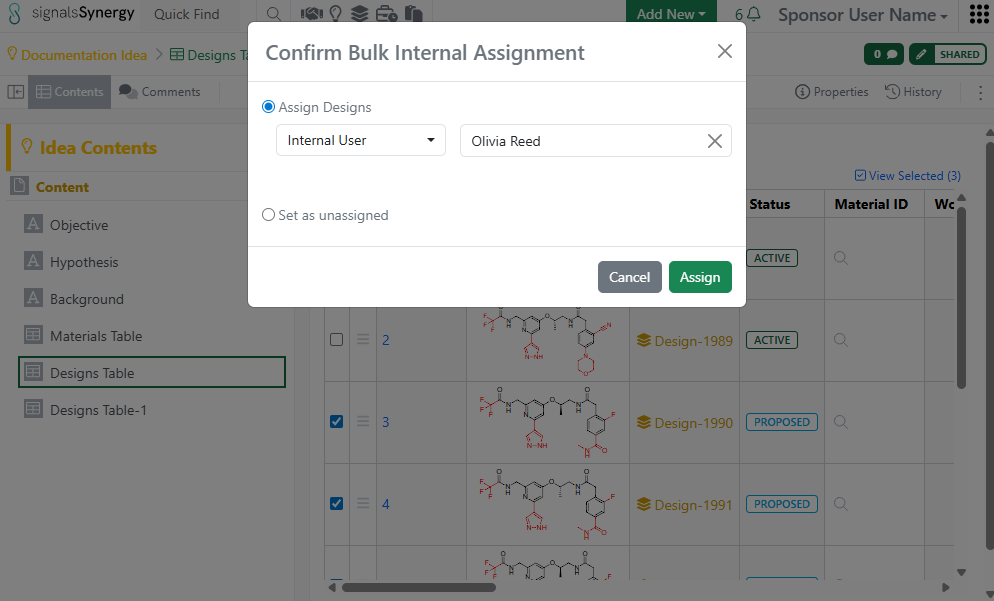
Finally, internal users and user groups now receive a notification (if configured) when a Design is assigned to them.

Chemistry

A new 'Analysis' panel in the ChemDraw editor now displays basic chemical properties for structures and biopolymers. These properties are context-sensitive, based on the selection on the canvas, and include information such as chemical name, molecular weight, molecular formula, and exact mass.

Specific properties from the Analysis Panel can be added directly to the ChemDraw canvas. Clicking the 'Add to Drawing' button at the bottom of the panel opens a window where properties can be selected and pasted onto the canvas.

Hydrogen bonded fragments in ChemDraw will now be recognized as a single structure with properties such as molecular weight, molecular formula and exact mass being calculated accordingly.

Admin Defined Tables & Variation Tables

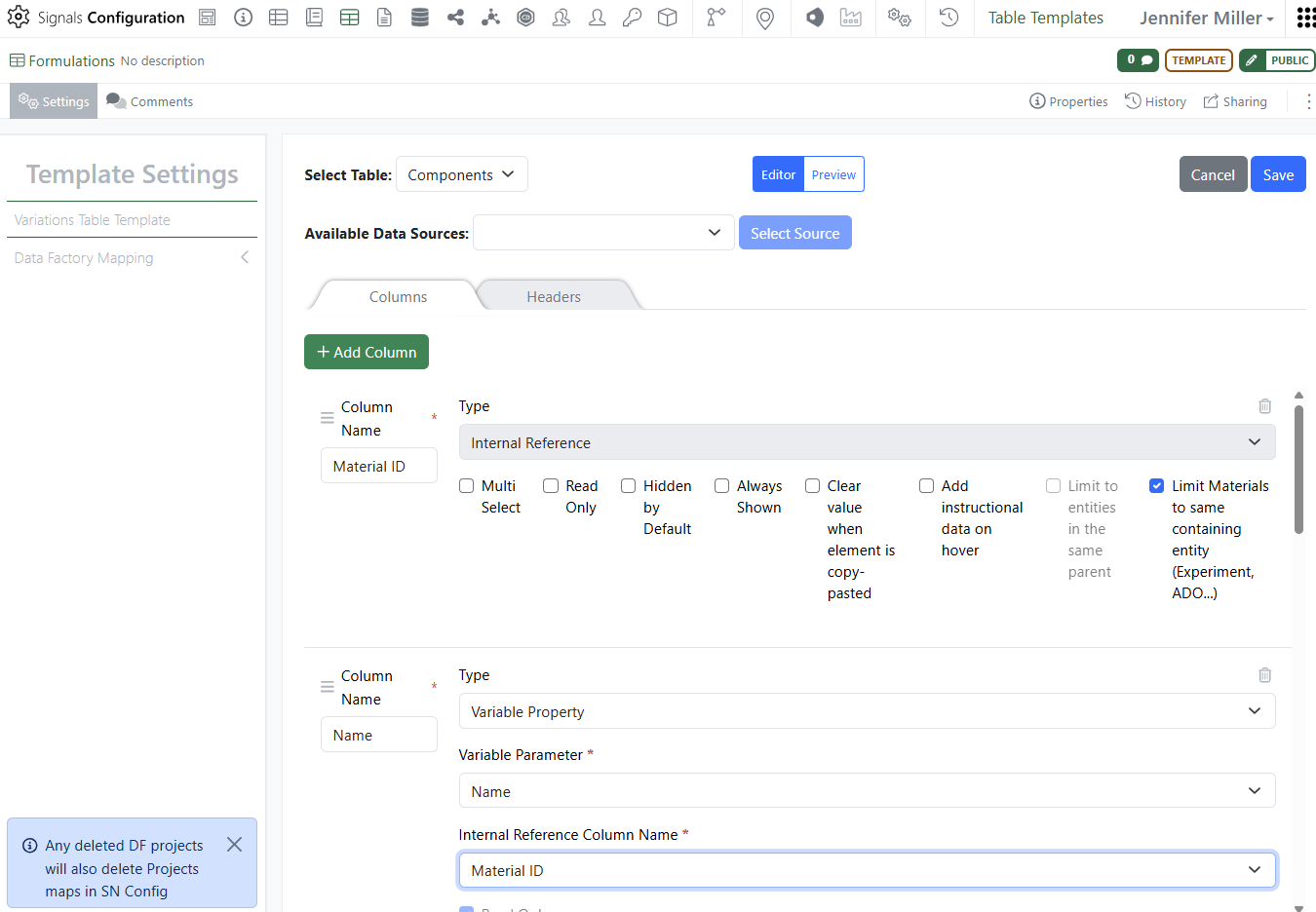
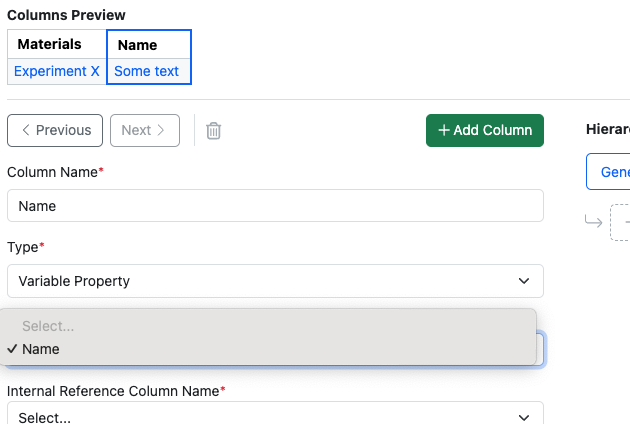
Update to Material selection from experiment to include Name in Variation Table. Administrators will need to add the Material Name field and set it to be of type Variable Property. They will then be able to select the Name for the Variable Parameter and set the Material ID as the Internal Reference Column Name:

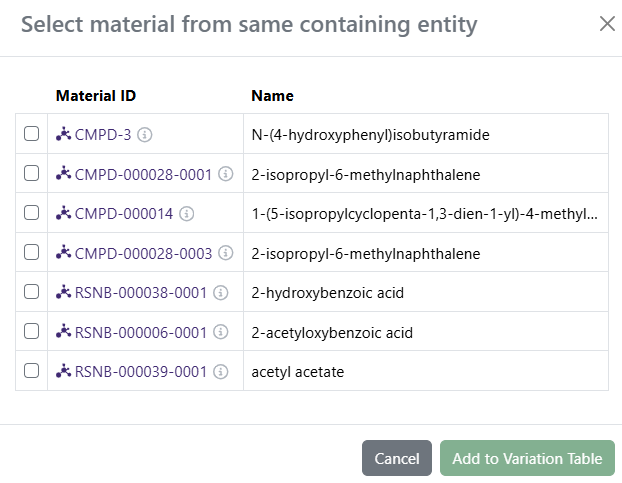
This allows the user when selecting material for the components in the Variation Table, to populate the Name (Chemical or otherwise) at the same time as the Material ID:

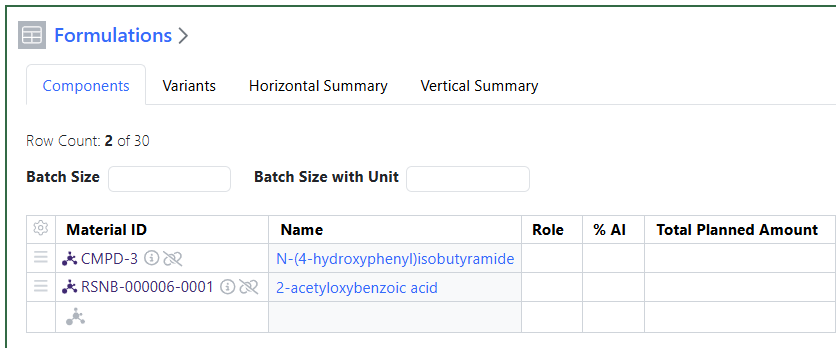
The user will see both columns fill in with data automatically:

Samples

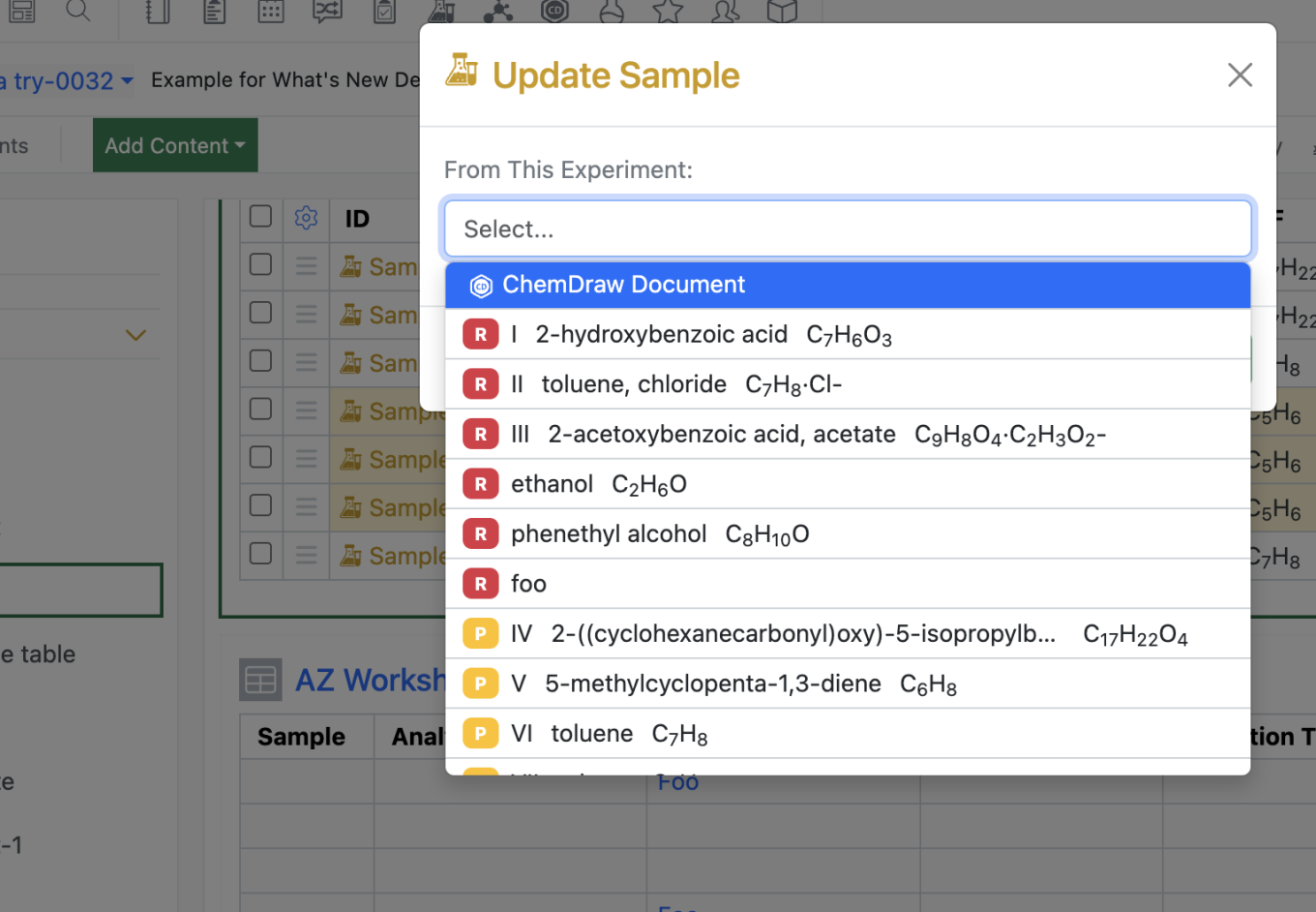
To aid users in selecting the correct structure during the sample update process, we now include the Reaction ID in the sample update modal.

Plates

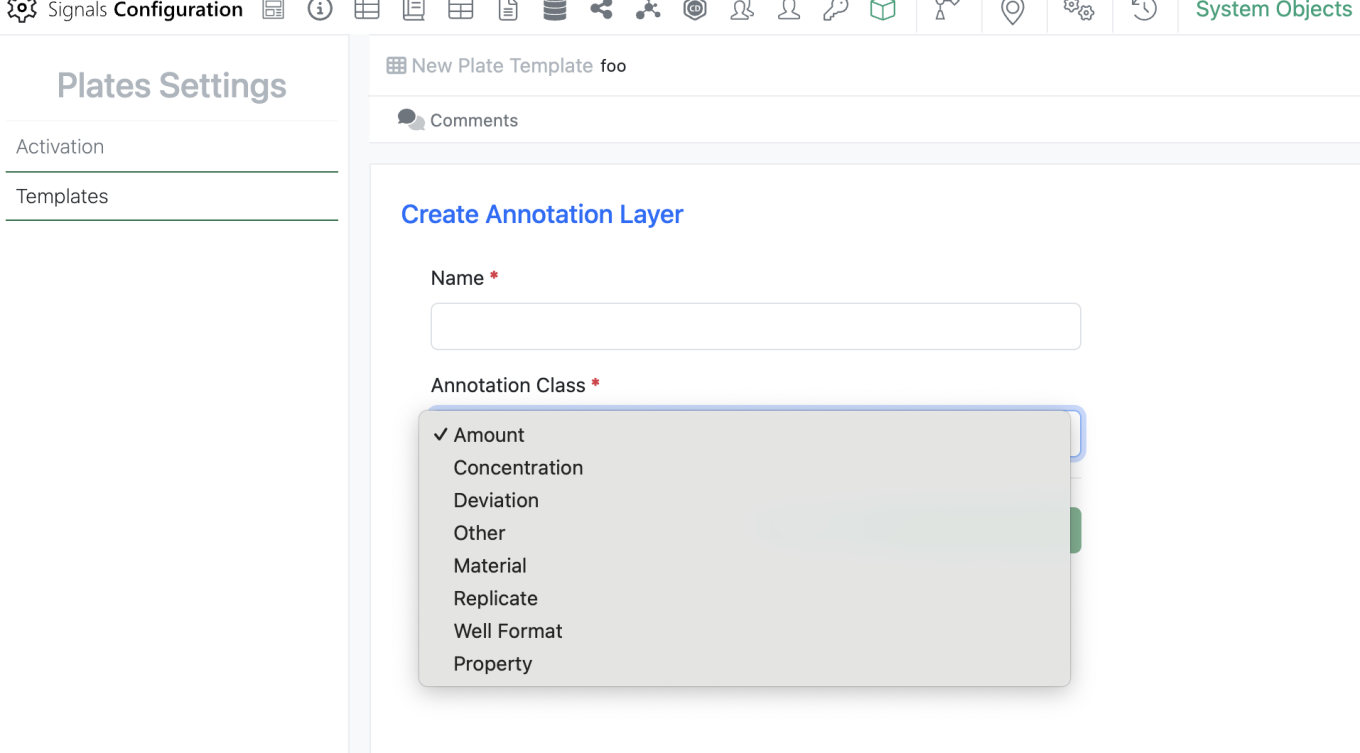
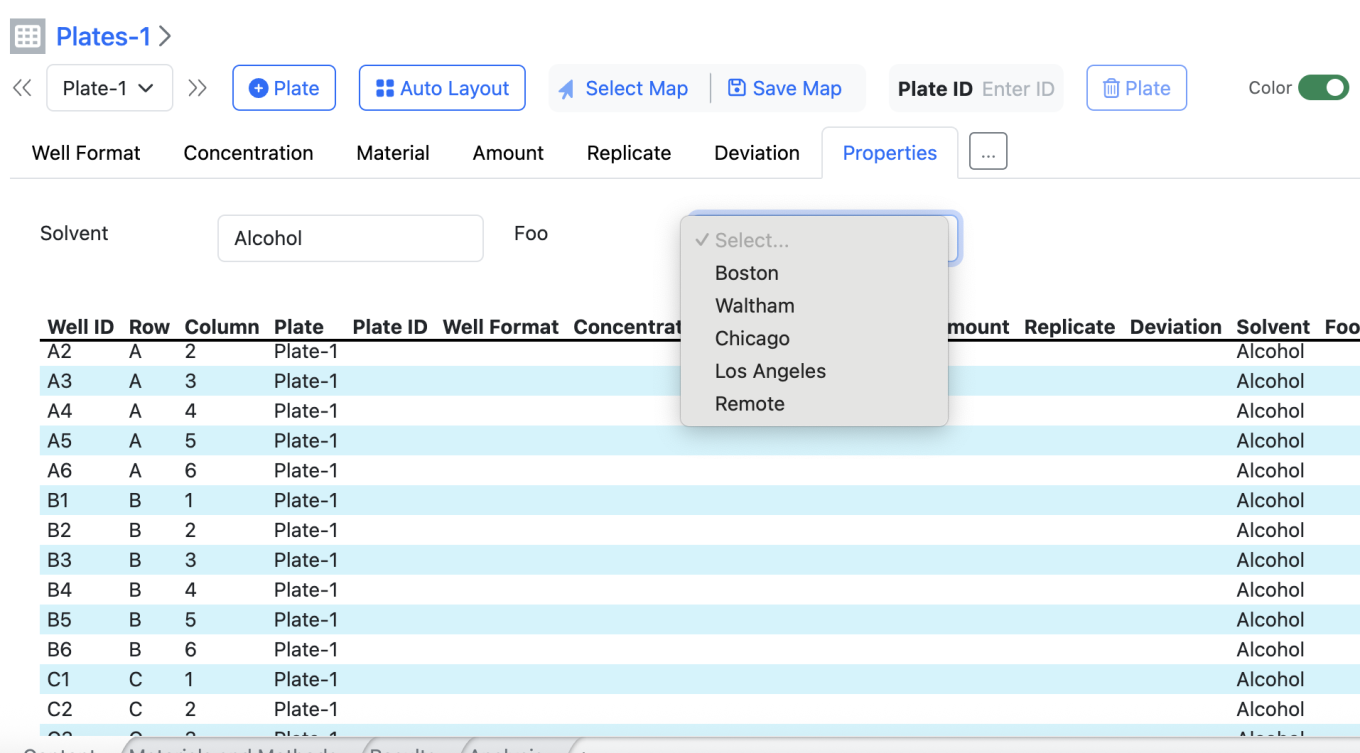
Users can now add a new Annotation layer type, Property. Annotation layers of type Property are collected in a properties tab on the plate and have a single value for every well in the plate.

Admins can add Property Annotation layers to plate templates as is currently done with other annotation layers. When end users fill in a value in a property, the value populates for every well in the plate table

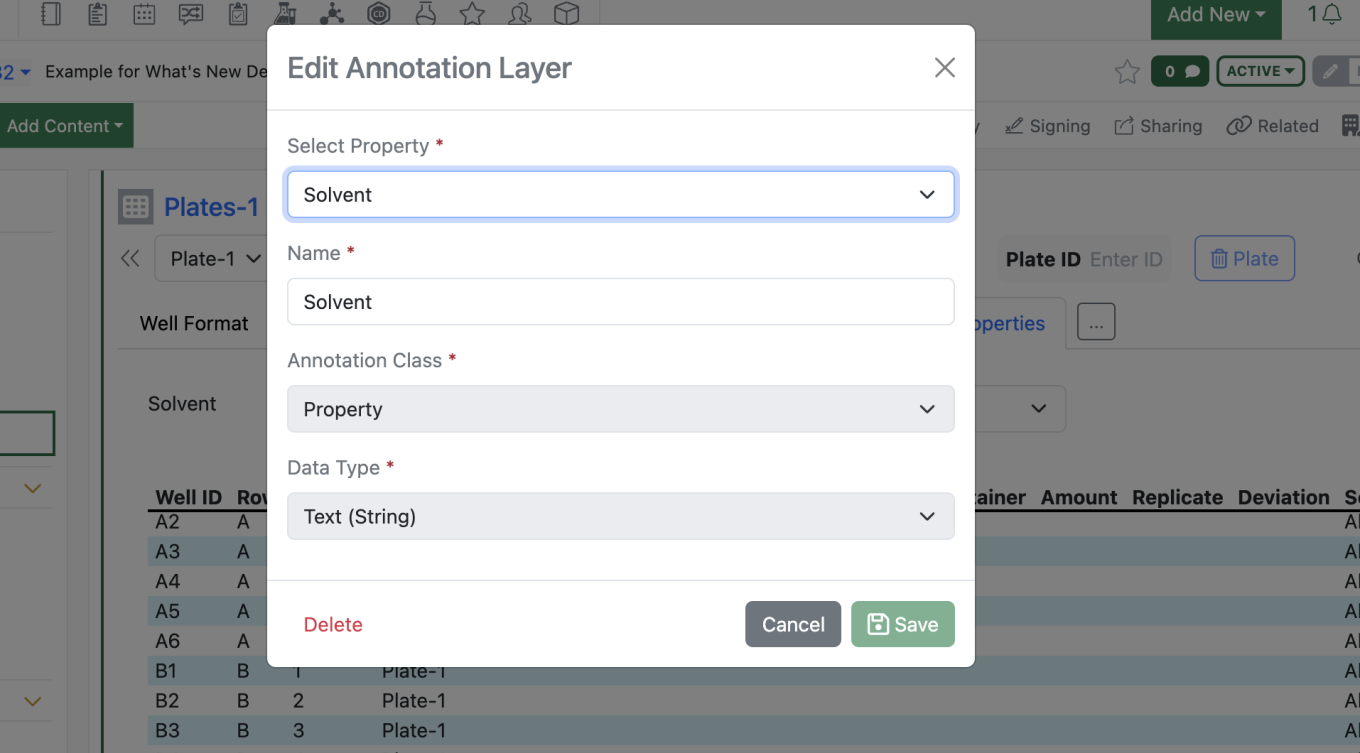
Users can hide or edit the names of the property type annotation layers.

Inventory

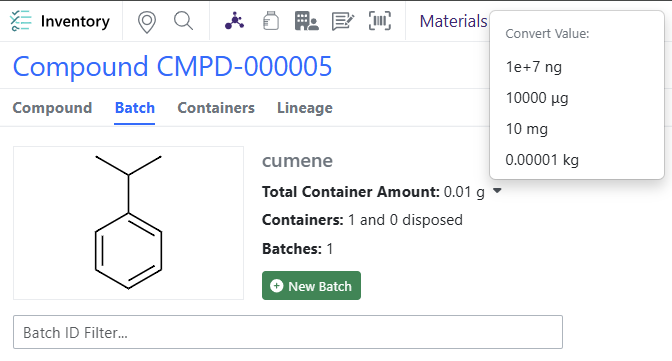
Exponential notation update on Container Amount on Batch/Lots. Scientific notation will appear only after 5 digits (ex: mg in the screenshot)

Materials

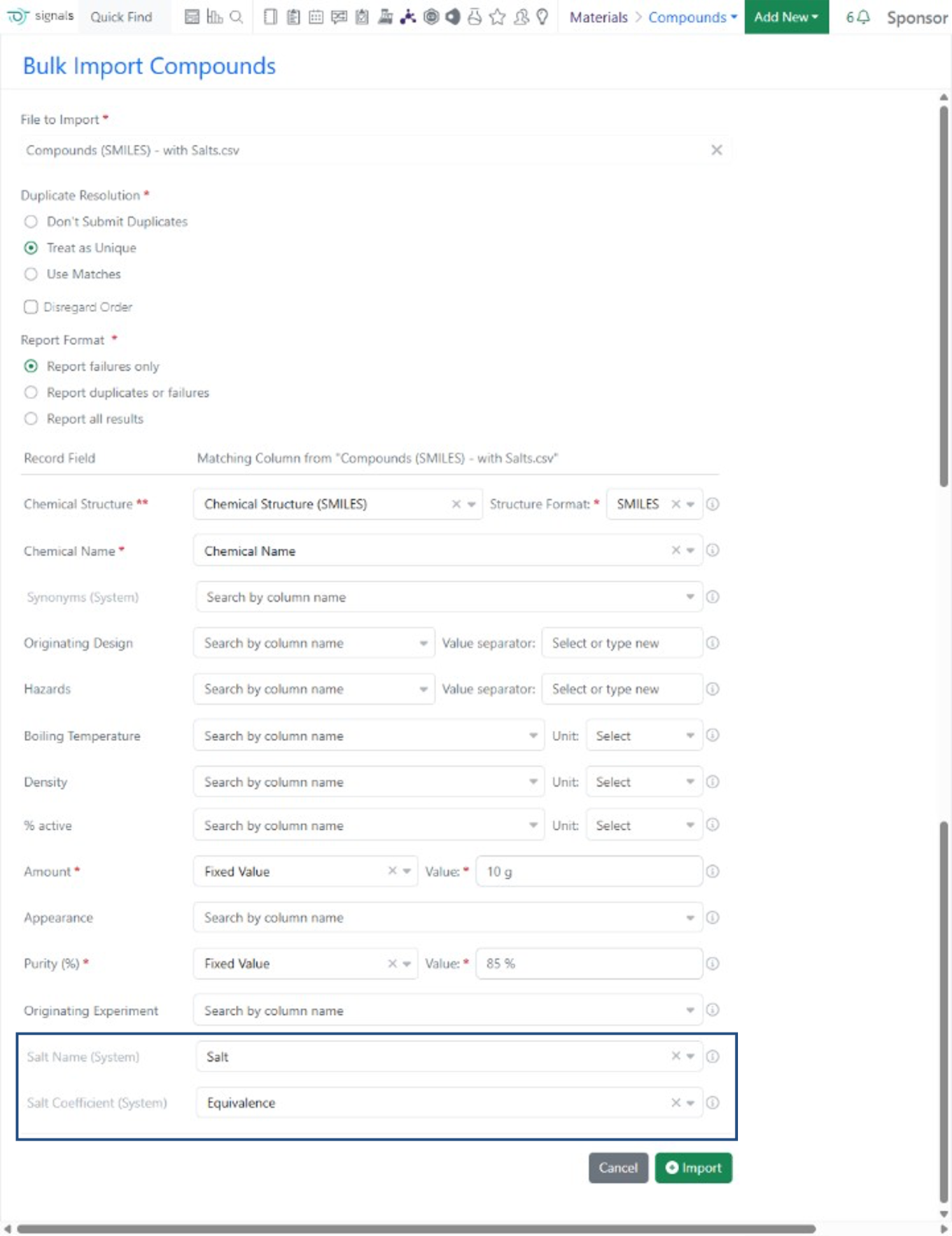
For Materials libraries of type Compounds, Salts can now be included during Bulk Import. Salt Name and Coefficient can be matched to columns in an SD or CSV file. The Salt Name must match an existing system salt (Signals Configuration > System Settings > Salts and Solvates) and only one salt per compound batch is supported.

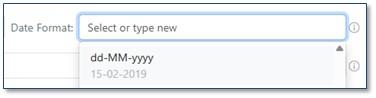
The ‘dd-MM-yyyy’ format (e.g. ’15-02-2019’) is now available as a Date Format option during bulk importing of materials.

Integrations & APIs

We have updated our Synergy API to support recalling of Work Orders.

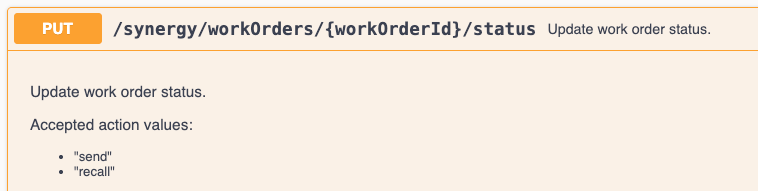
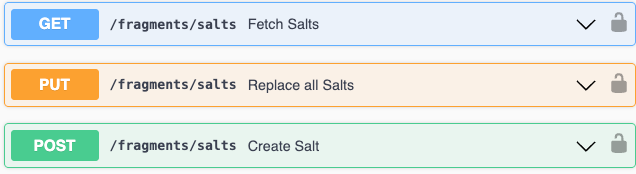
PUT /synergy/workOrders/{workOrderId}/status now supports the “recall” action. A Work Order must be in the To-Do state for this action to succeed.

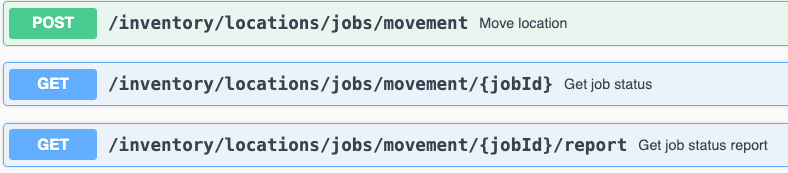
We have added new APIs to move a sub-location to a new parent location. This is an asynchronous API that follows our standard pattern of Begin Move Job, Check Status of Move and Download Report of Move. Only location that include the “movable” system property and have it enabled will be able to move to new parent locations.

We have also added a new API to register a new material from a material table. The table must be configured to allow for material registration in System Configuration. The row being registered as a new material must have all required data for the material to successfully register.

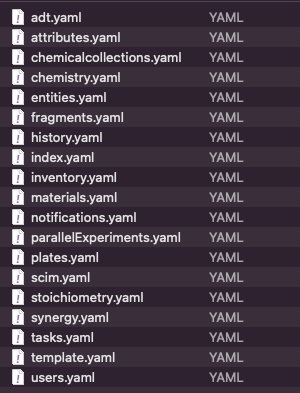
We have also added a method to download all the YAML files which back our Notebook Swagger page via Signals Configuration. This is to make it convenient to access these files for usage with SDK generation tools. They were tested with OpenAPI Generator.

Further Details 

The following capabilities are in beta and are available for users, administrators and developers on the Signals platform upon request. Please contact your account representative or our support team if you would like access to the following features.
AI

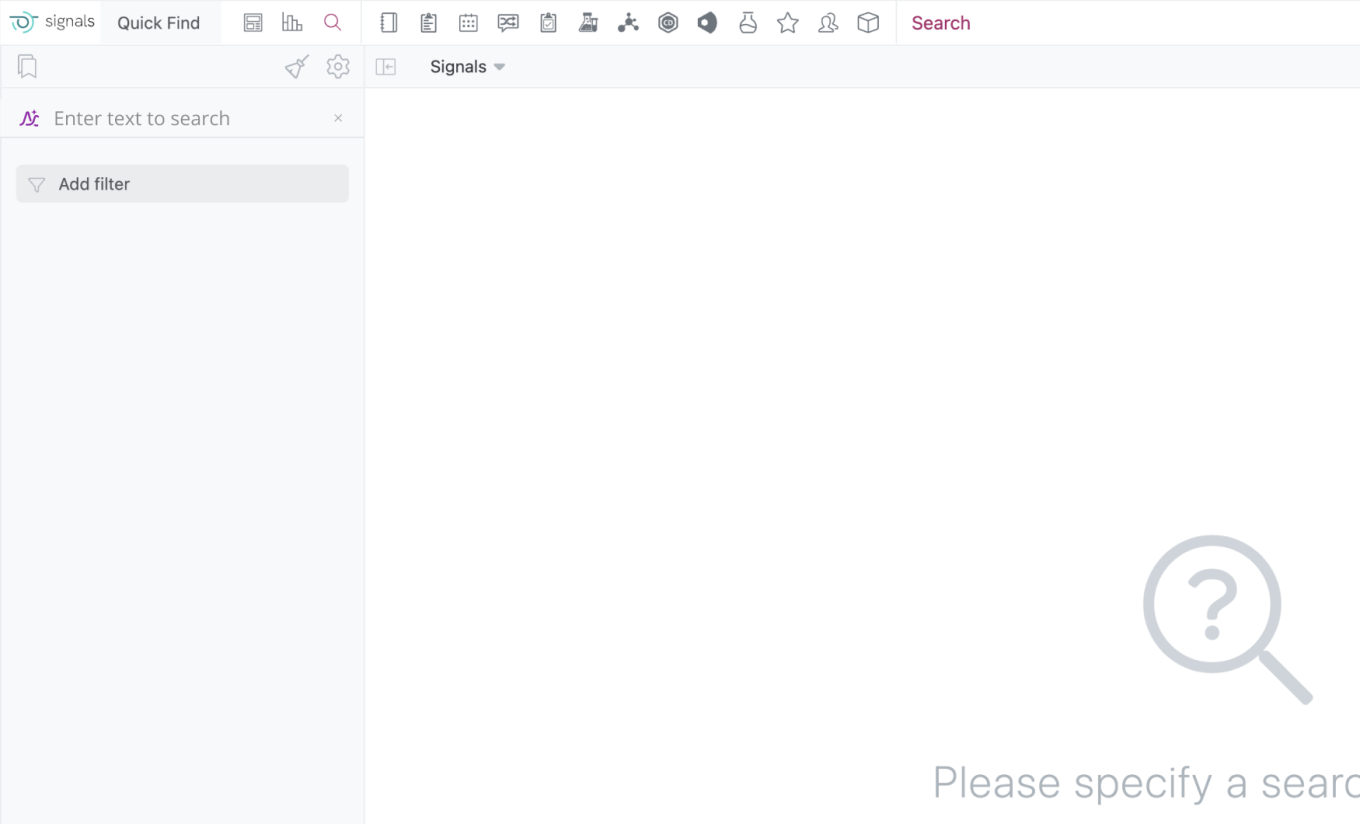
Users with a Signals One license will now have access to the new Semantic Search. Semantic search is an AI-powered method of searching that focuses on understanding the meaning and context of a user's query, rather than just matching keywords. It leverages Natural Language Processing (NLP) and Machine Learning (ML) to interpret the user's intent and deliver more relevant search results.

To enable Semantic Search users just need to click the Sematic Search icon to enable semantic search.

Data Workflows & Analytics

For tenants with a Signals One license, users will now be able to perform In Vitro (screening, assays) data analysis, visualization and results quality control. The first curve fitting method available, is the logistic 4 Parameter (4P) fit.

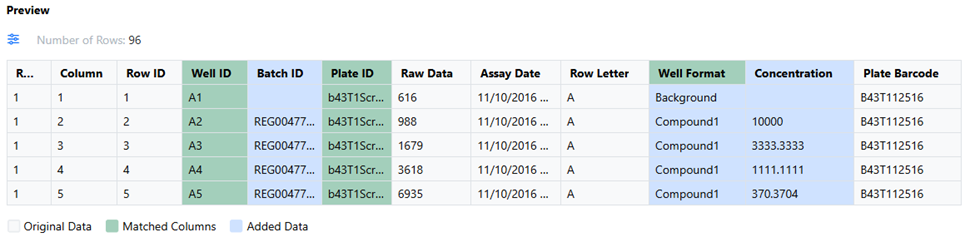
The first rows of data assembled from multiple sources (instruments data, plates, external lookup tables,…) can now be previewed in the Data Assembly.

The Preview highlights the columns used for matching and the columns added to the instrument data. A column first added before being used for matching will have the column header highlighted as “Matched” and the content rows as “Added”. The Preview appears upon assembling the data when pressing the “Assemble” button.

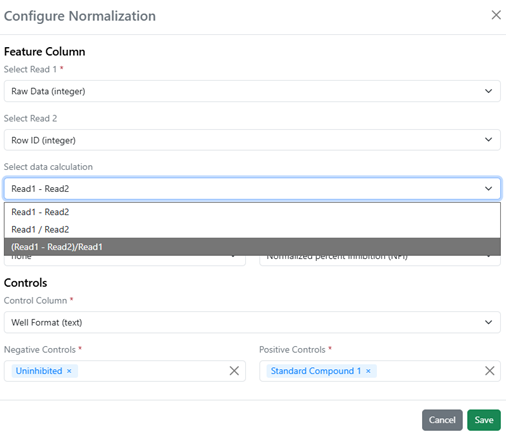
Calculations can be applied when analyzing two instrument readouts in Vitro Analysis. Two instrument readouts can now be used (Read 1 and 2) and combined using a predefined calculation.

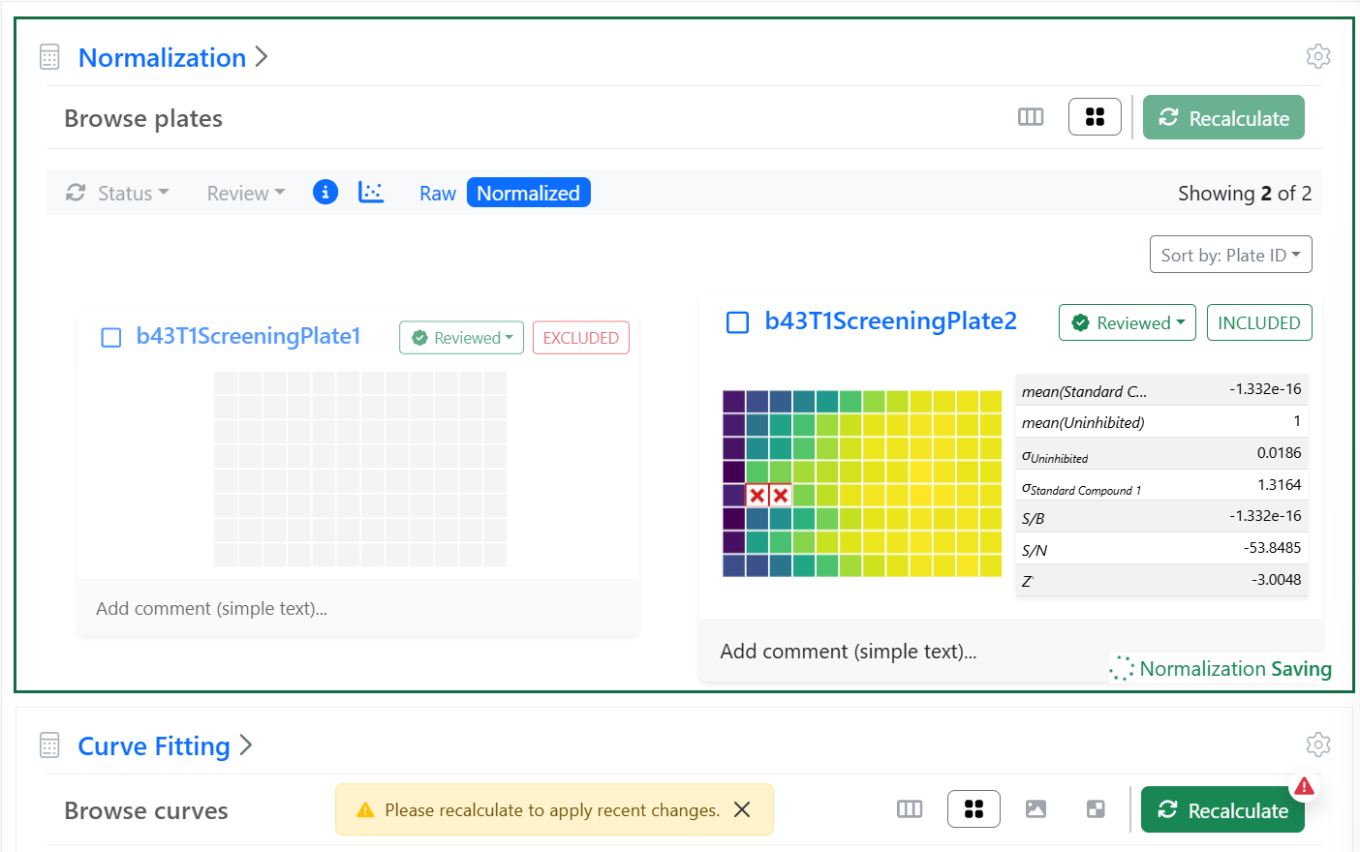
When user changes like exclusions or settings modification take place in the analytics steps, each step can be recalculated independently from the other steps using the new “Recalculate” button.

When the next step in the analytics is impacted, the recalculated button of the downstream step is enabled and the user notified that the steps are out of sync (e.g. normalization changes that impact curve fitting).

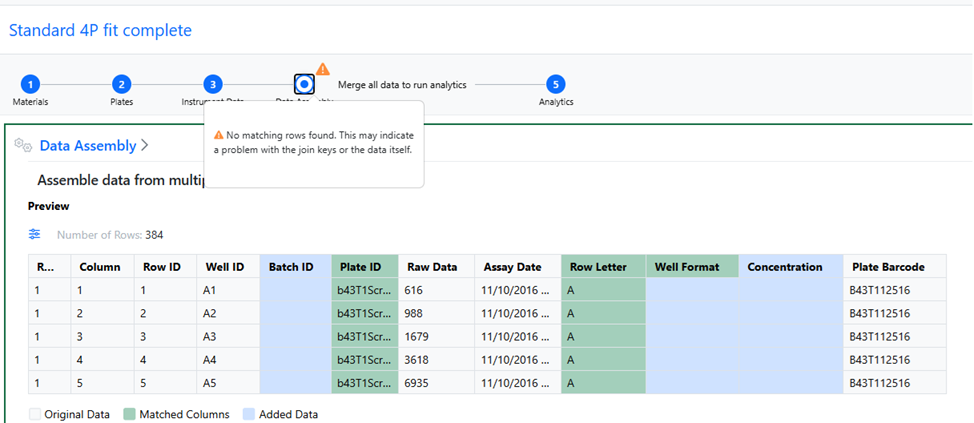
When potential problems are detected, warnings become visible in the user interface to help users identify early on the sources of problems.

In this example, the matching of two columns returns no rows, which is an indication of a wrong selection of columns to match.

SAR & Decisioning

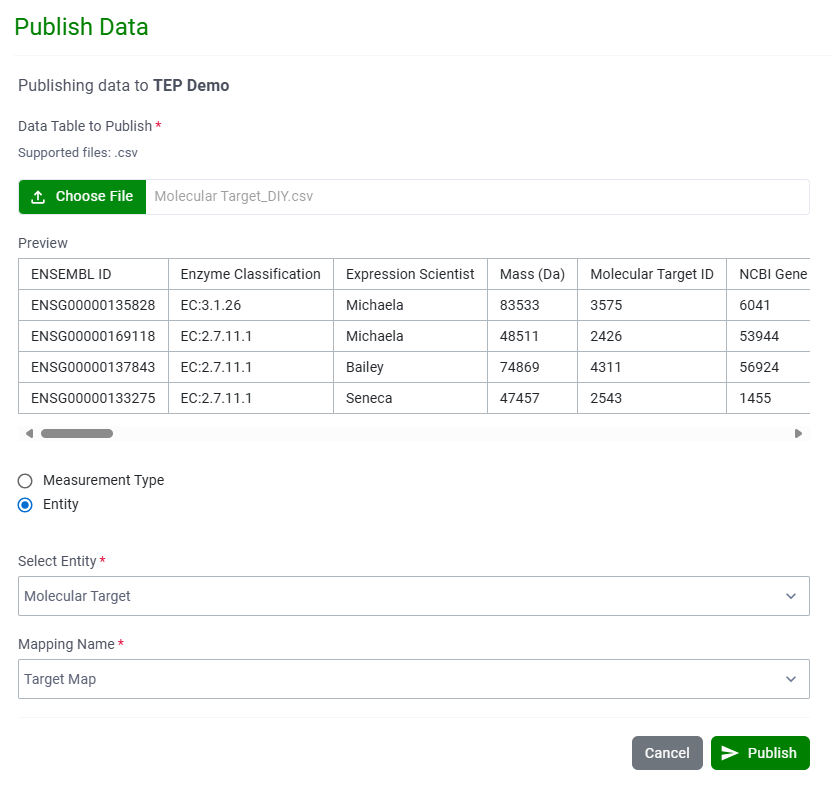
Custom Entity data can now be published directly to Data Factory projects (beta version) from the Inventa Dashboard.

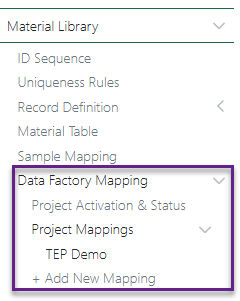
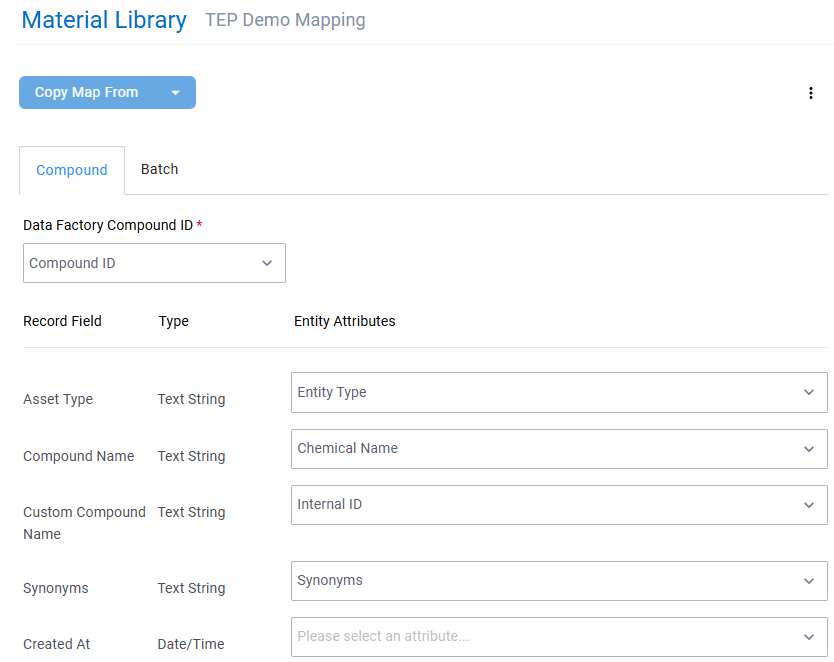
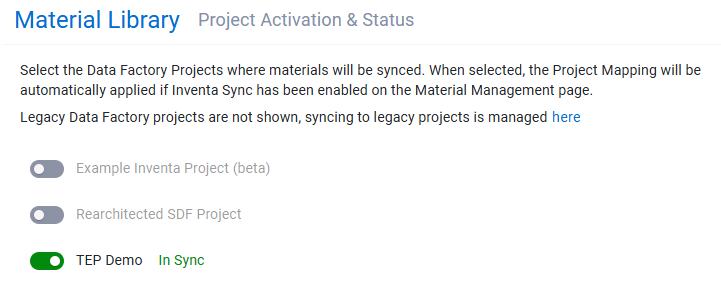
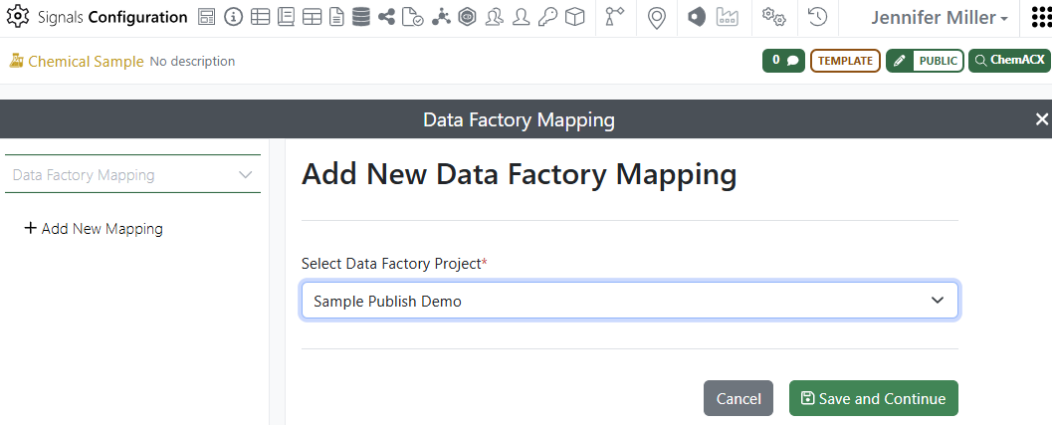
Inventa Sync now supports Data Factory projects (beta version). Map material libraries to projects using the new Data Factory Mapping section (accessible from the Material Management page), then activate sync on a per-project basis though the Project Activation and Status section.

Inventory

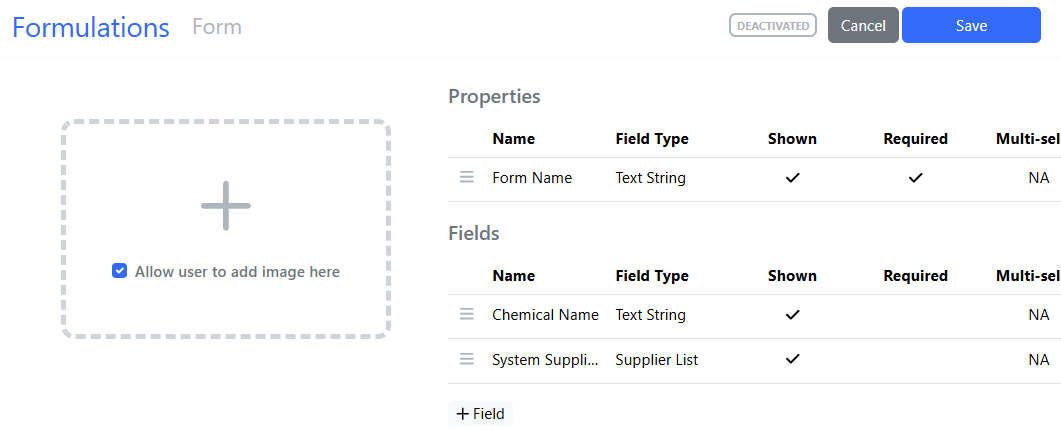
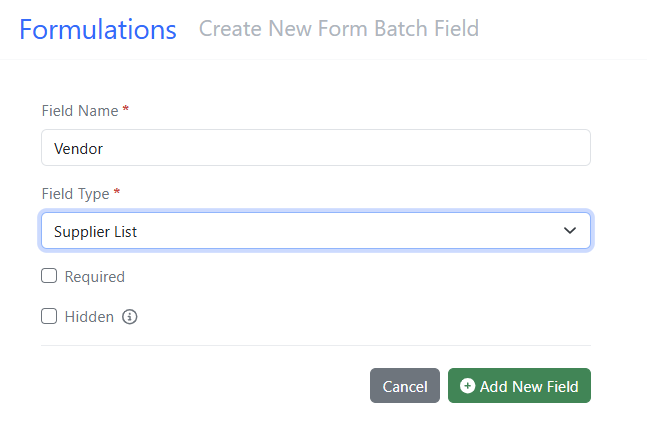
System Supplier List available in Material Library. Administrators can now add the System Supplier List to the Materials Library at both the asset level:

And the batch/lot level:

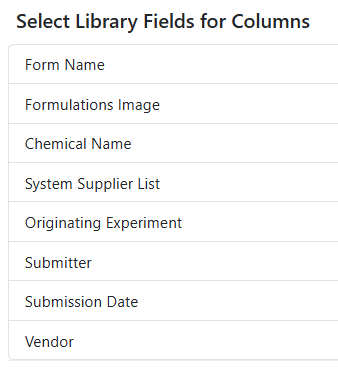
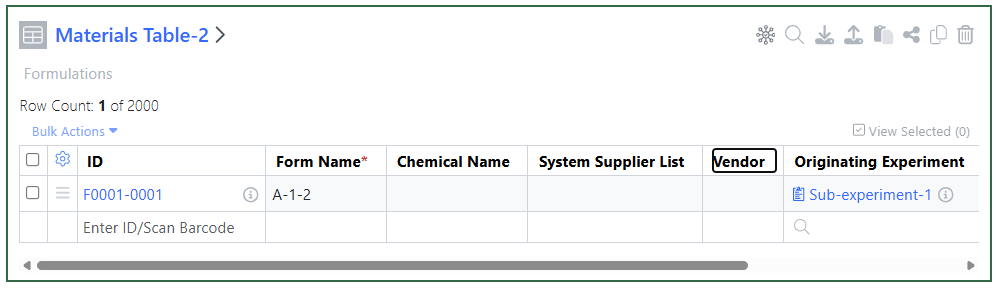
Multiple Fields can be associated with the System Supplier List and can be added to the Materials Table:

Users will see the fields in the Materials Table when they add them to an Experiment/ADO:

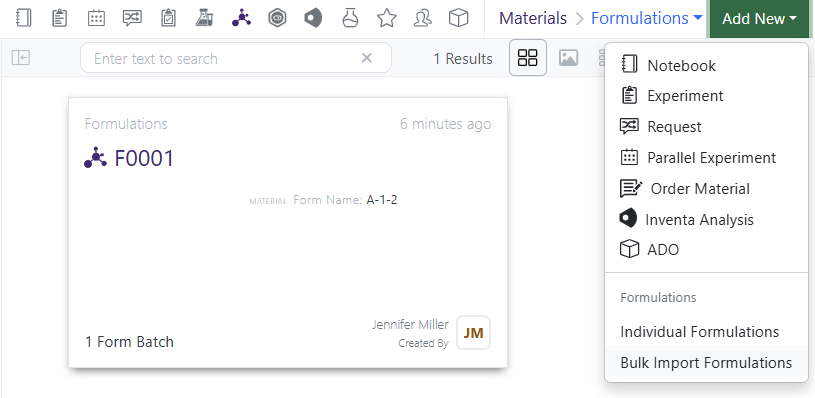
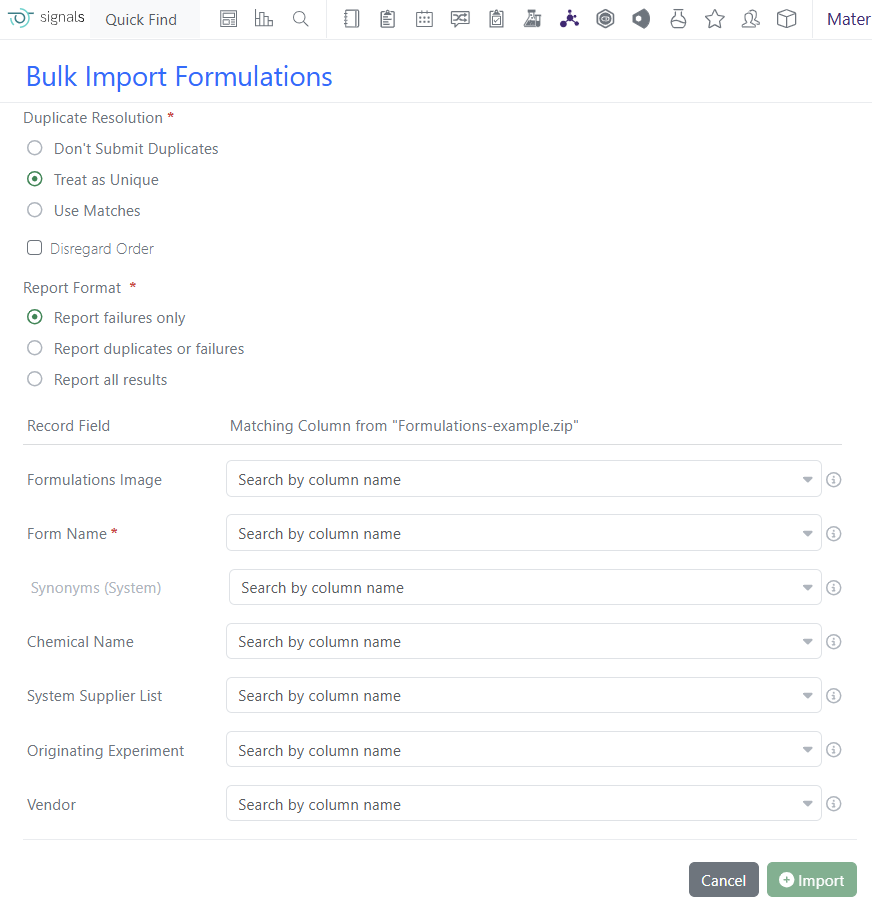
Bulk Import to a Materials Library supports the System Supplier List field type:

The mapping import screen as well as the example file supports the System Supplier List field:

What’s New

The latest release of Signals brings improvements to the ChemDraw+ application. This release brings enhancements to the structure to name capabilities in the application. We also have new improvements to increase the efficiency of drawing biopolymers in ChemDraw. Finally, we have also fixed a small number of bugs. The following improvements are available for users of Signals ChemDraw. Certain features may only be available with enablement by an administrator.

The following improvements are available for users of Signals ChemDraw.

ChemDraw+

  • Name to Structure capability expanded to use ChemACX
  • Drawing of individual RNA or DNA monomers when editing biopolymers
  • Selection and replacement of multiple monomers at once in biopolymers 


ChemDraw+

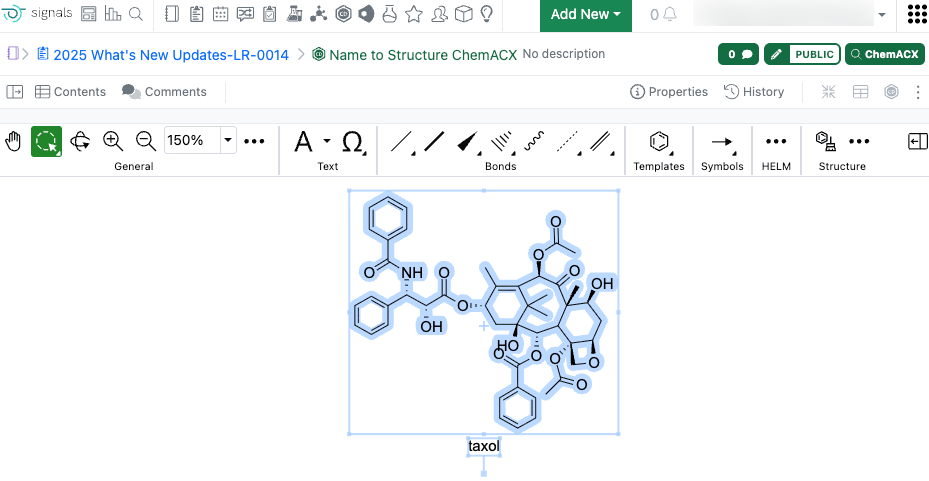
Name to Structure capability expanded to use ChemACX

Converting names to structures in ChemDraw+ now utilizes the ChemACX, which is a unified chemical database containing 10s of millions of substances. The use of ChemACX now allows the conversion of synonyms, trade names or common names of the substances within the database to a structure.

Drawing of individual RNA or DNA monomers when editing biopolymers

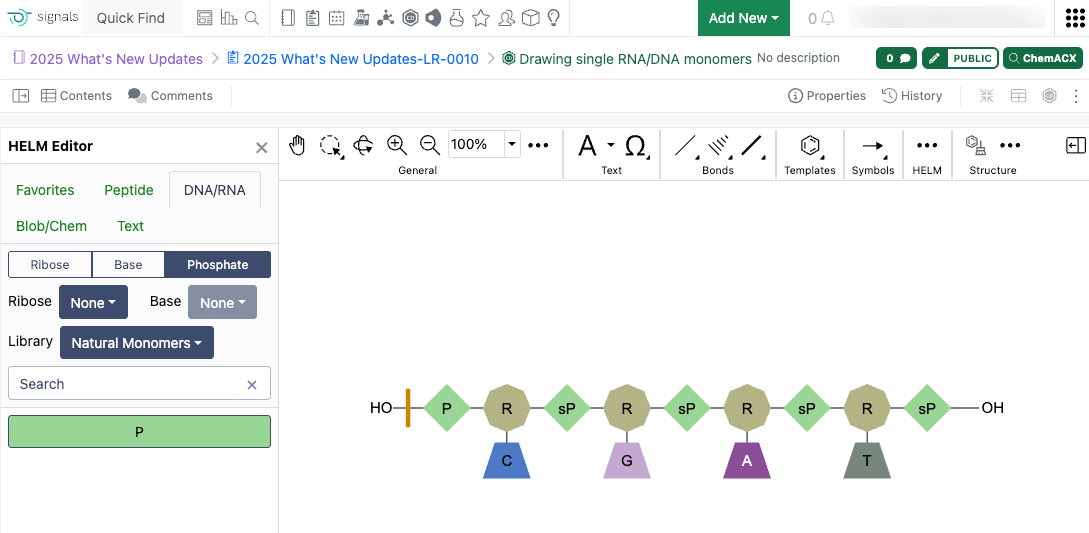
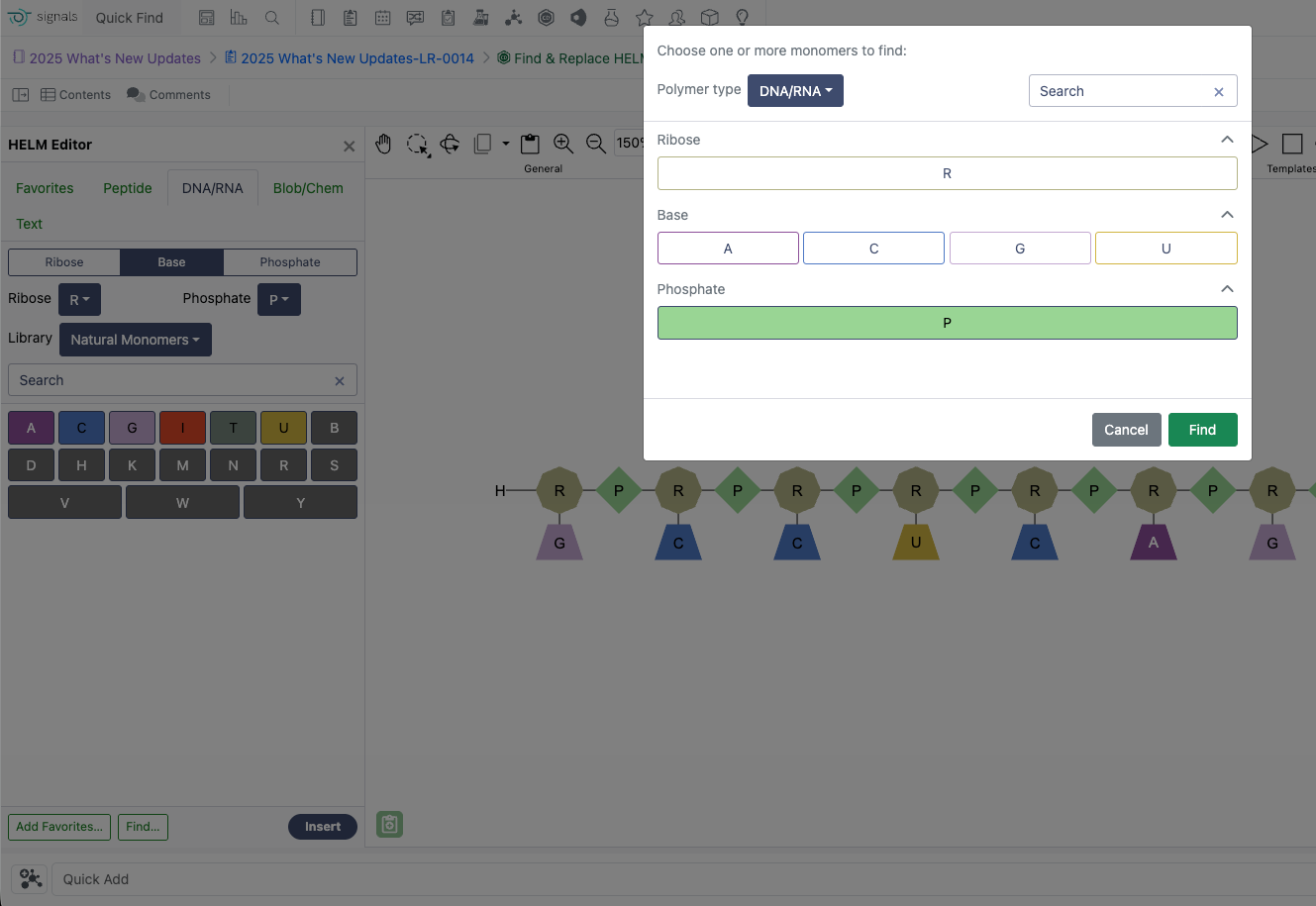
Support for drawing individual RNA/DNA monomers has been added to the HELM editor. When editing in the RNA/DNA tab of the HELM Editor, there is a new "none' option available in the dropdown menu for secondary monomers. When 'None' is selected, a monomer of that type will not be drawn when the primary monomer is added to the ChemDraw canvas. Additionally, if the user wishes to draw using only the primary monomer (ribose, base or phosphate), a modifier key is available. Selecting alt/option + the monomer will only add the primary monomer to the canvas.

Selection and replacement of multiple monomers at once in biopolymers

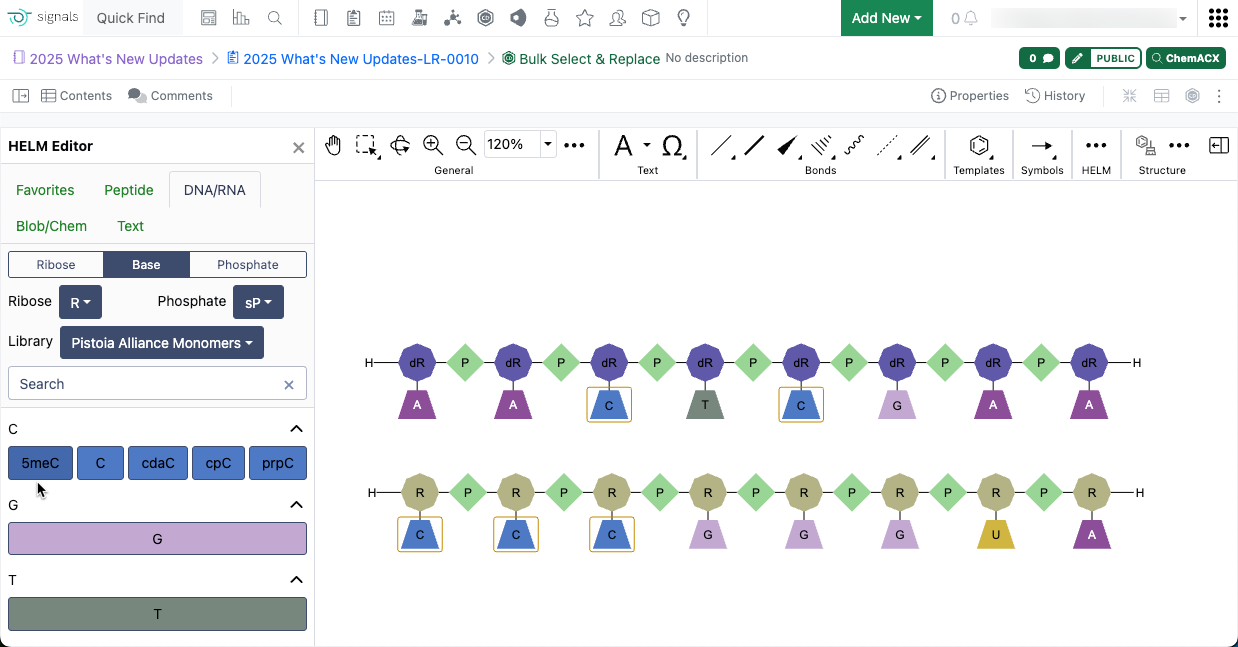
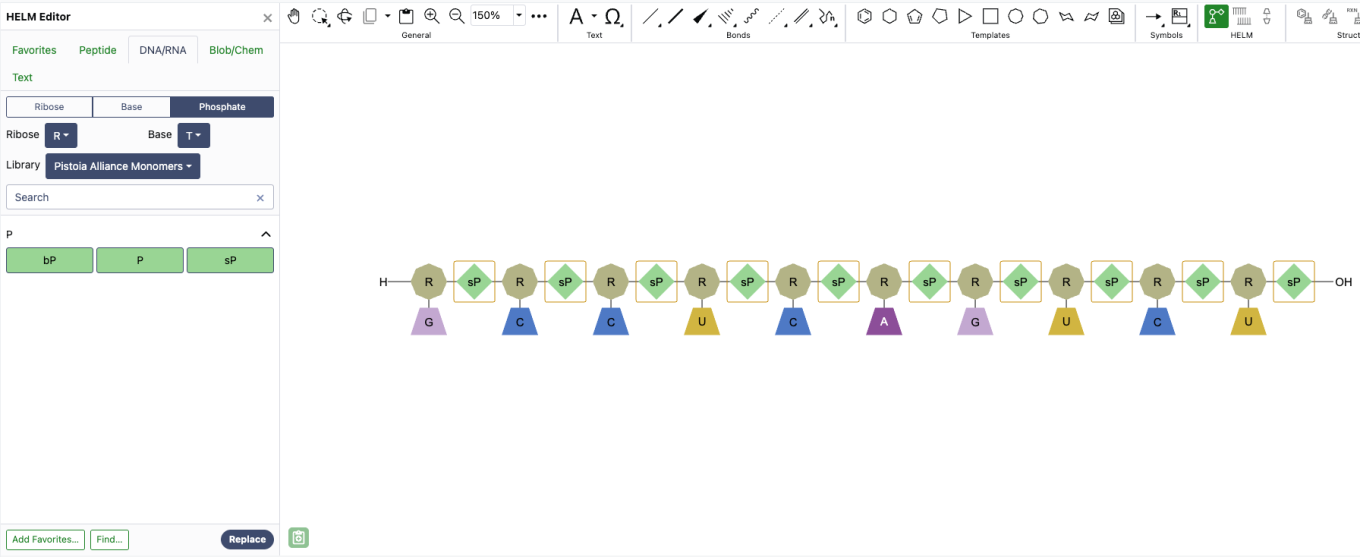
Bulk selection of monomers while in HELM edit mode is now possible by using the 'Shift' key and selecting multiple monomers on the canvas. Once selected, these monomers can be replaced simply by selecting a new monomer in the HELM editor.

What's New

We are delighted to release our new version of Signals, 25.8. This release brings enhancements in our Data Workflows and Analytics, SAR and decisioning, Inventory, Tables and Plates amongst others. We have new beta capabilities for Hierarchical Tables, Contextual Lists and extended beta capabilities around Supplier Lists, Data Factory and InVitro Analysis. Finally, we have also fixed a number of small bugs.

The following improvements are available for users, administrators and developers on the Signals platform. Certain features may only be available with appropriate licensing and/or with enablement by an administrator.

  • AI
      –Admin options to enable/disable AI functionality in Signals One  (Beta)
  • Data Workflows & Analytics 
      –Animal Selection & Group Assignment App with Randomization capabilities is no longer available 
      –Data Factory 2.0 Publishing (beta) 
      –Exclusion of Plates or individual Wells (beta) 
      –Analytics annotations (beta) 
     
  • SAR &Decisioning
      – System generated IDs can be used when publishing data to Data Factory (beta)
      – Changes to Data Factory’s information design now propagate to published data (excludes legacy projects) (beta)
      – ChemCharts manual sequence alignment visualization, HELM enhancements, and structure visualization improvements
     
  • Synergy
      – Copy/Copy Partial of Work Order
      – Bulk create Designs from enumerated Products in Parallel Experiments
     
  • Chemistry
      – Drawing of individual RNA or DNA monomers is now supported in the HELM editor
      – Selection and replacement of multiple monomers at once when using the HELM editor is now possible
     
  • Admin Defined Tables & Variation Tables
      – ROUND function
    – Hierarchical Tables (beta)
    – Contextual Lists (beta)
     
  • Plates
      – Load/update plate via CSV upload
     
  • Inventory
      – 3 New labels 
      – Update to Export Containers for searches that return no results
      – Additional Container Privilege for updating Home Location
      – Search by CAS and select containers in Quick Add in Chemical Drawings
      – Remove link to any container in the Materials Table
      – Bulk Import Containers (beta) 
      – Update to Advanced Search for Home Locations with grid coordinates
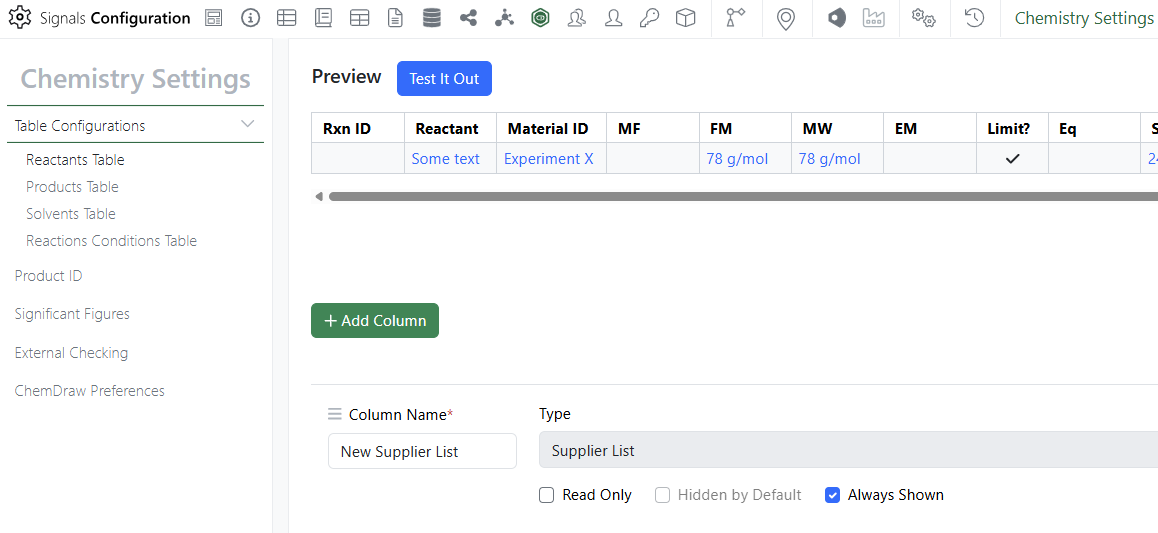
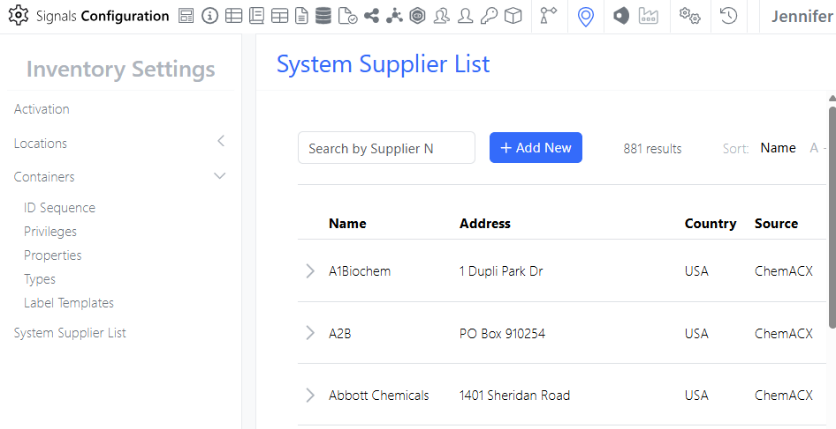
      – System Supplier List available in Chemistry Settings Configuration (beta) 
     
  • Materials
      – Option to utilize structure AND additional fields in uniqueness checking
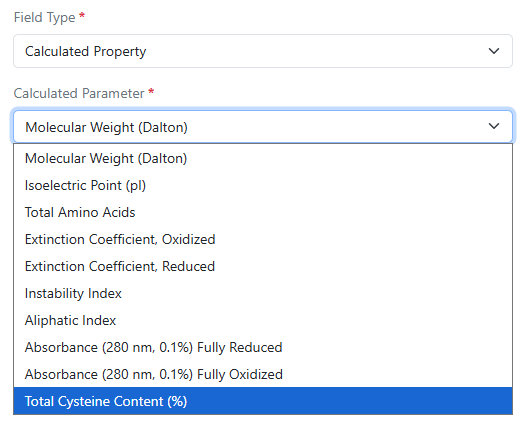
      – Total Cysteine Content (%) for protein sequences
     
  • Adminstration
      – Privilege to create or use personal templates
    – Privilege to copy experiments or entities
     
  • Integrations & APIs
    – Enhanced APIs to allow RXN files for export and replacement of Chemical Drawings
    – API enhanced for adding items to Stoichiometry grids without Chemical Structures
    – New APIs for moving location content to a new location
    – New API to create relationship links between entities
    – API enhanced fetch all samples from a Samples Table
    – New APIs to fetch and update Order details
    – External Notifications for Work Orders
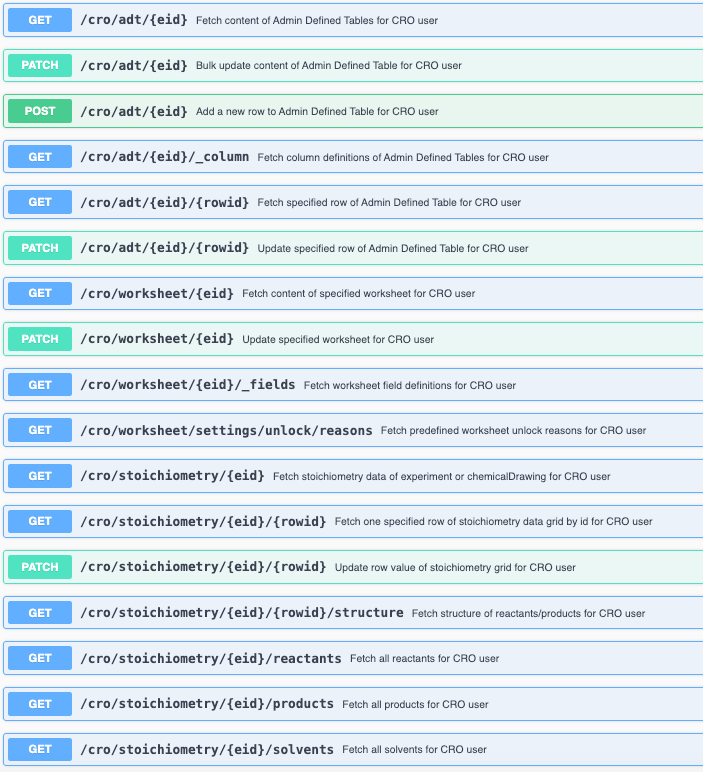
    – New CRO specific APIs for interacting with Entities and Samples
     

We also fixed several small bugs in this release. Details of the enhancements are described below.

Developers should note that we are planning to address an issue with the GET /entities/{eid}/export endpoint, where currently the response returns an incorrect Content-Type header for Text entities. The header is currently set to text/plain, while the actual content is text/html. This only affects text entities created through text file upload. This will be corrected in an upcoming release.


Data Factory administrators should be aware that in an upcoming release you will no longer be able to create Legacy Data Factory projects. We encourage adopting the Data Factory beta features which will soon replace the current (legacy) projects. 


System Administrators of E3 or Private Cloud systems using our validation ready deferred release should be aware of the upcoming change to our patch process. Starting November 2025, we will introduce a planned patch to E3 and select Private Cloud environments approximately 3-4 weeks after the update to Production. These patches will contain resolution to critical issues identified late stage during PQ testing or immediately post-Production. Note: These critical issues can include those not identified via a Sandbox tenant that were not fixed in sufficient time in our Standard releases to be part of the Production update. If no appropriate issues are identified, no patch will be released. The planned timing for the patch will be communicated in the Release Notes. 


Administrators should note that the beta capability “Animal Selection & Group Assignment App with Randomization capabilities” is no longer available. 


Administrators should be aware that the stereochemical annotation of pseudochiral OR centers using the guided stereo tool now will add an additional label which is interpreted as chemically significant. This change only applies to annotations made subsequent to this change, existing compounds will remain with the prior understanding until edited. 


Data Factory administrators should be aware that you can no longer change the data type of an attribute to an incompatible format (e.g.: from chemical structure to date). 


Data Factory administrators should be aware that secondary (AER) maps will now only be handled by the Data Factory backend. You can no longer create nor modify these maps manually. Consequently, the following are breaking changes in Primary APIs: 
GET /information-design-service/import-maps/{importMapId} no longer returns secondary maps
POST /information-design-service/import-maps/search no longer returns secondary maps
POST /information-design-service/import-maps no longer allow the creation of secondary (AER) maps. This will return a 400 error if attempted. Query parameters and response fields related to secondary maps have been removed. 


The following endpoints will no longer return fields related to secondary maps: 
PATCH /information-design-service/mtypes/{name}
GET /information-design-service/mtypes/{name}
The following endpoints have been marked deprecated and will no longer include fields related to secondary maps: 
GET /information-design-service/attributes/{attributeId}
POST /information-design-service/mtypes
PUT /information-design-service/attributes/{attributeId}
 

Administrators are recommended to subscribe to the channels within our support news site found at https://support.revvitysignals.com/hc/en-us/categories/360004446171-Support-News which contains more information about releases and other pertinent product information.

This content is anticipated for release on our Production E3 environments, and for Private Cloud customers on our deferred release schedule, in March 2026
 

Further Details 

The following improvements are available for users, administrators and developers on the Signals platform. Certain features may only be available with appropriate licensing and/or with enablement by an administrator.

SAR & Decisioning

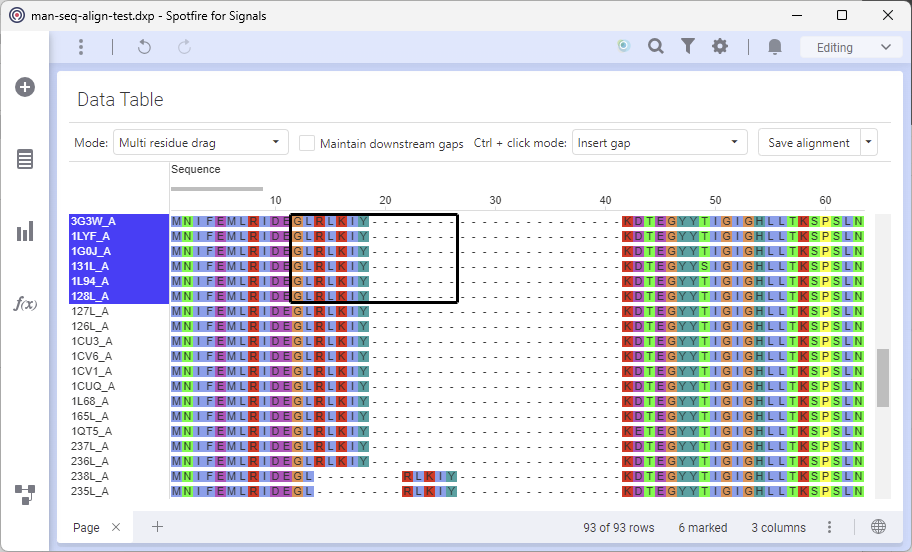
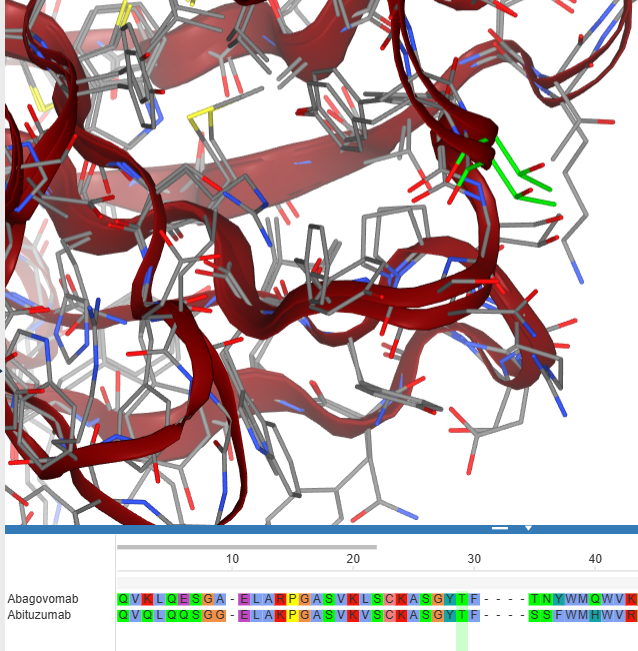
The ChemCharts “Manual Sequence Alignment Visualization” allows users to manually align biological sequences (including HELM). Drag to align single or multiple residues and modify gaps as needed.

The ChemCharts HELM visualization introduces a handful of customer-requested helper data functions.

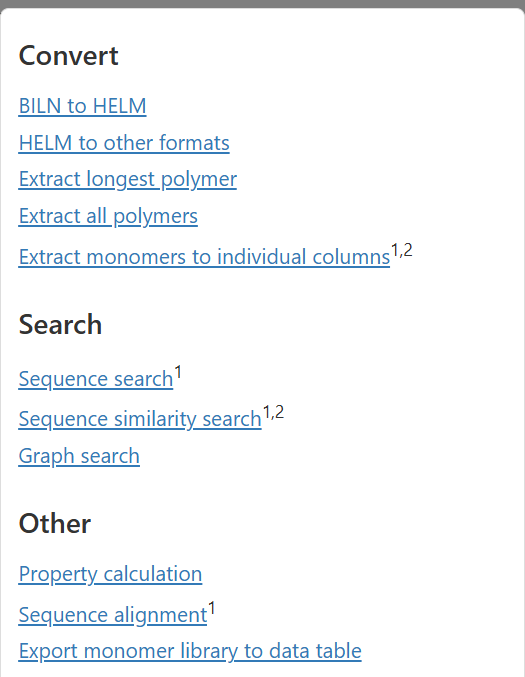
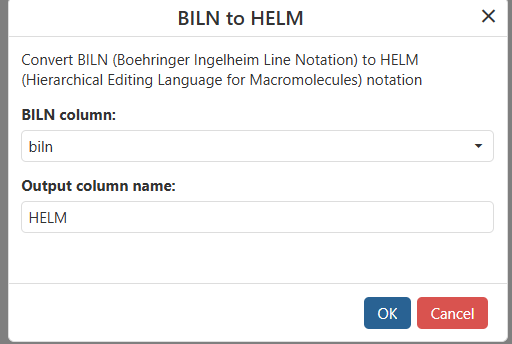
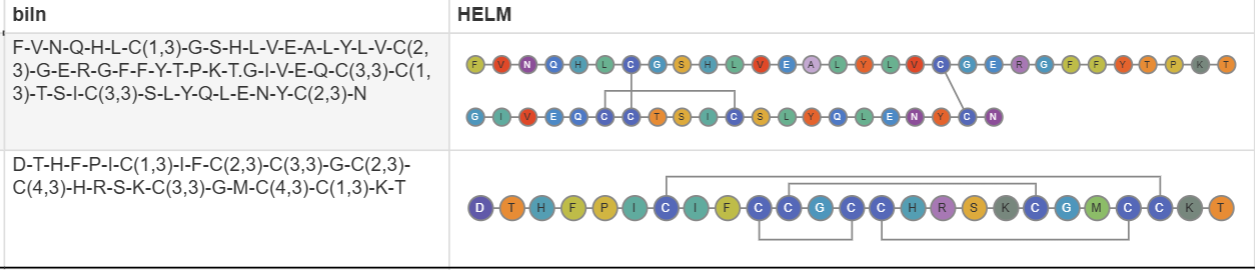
Convert biosequence formats using the BILN to HELM data function.

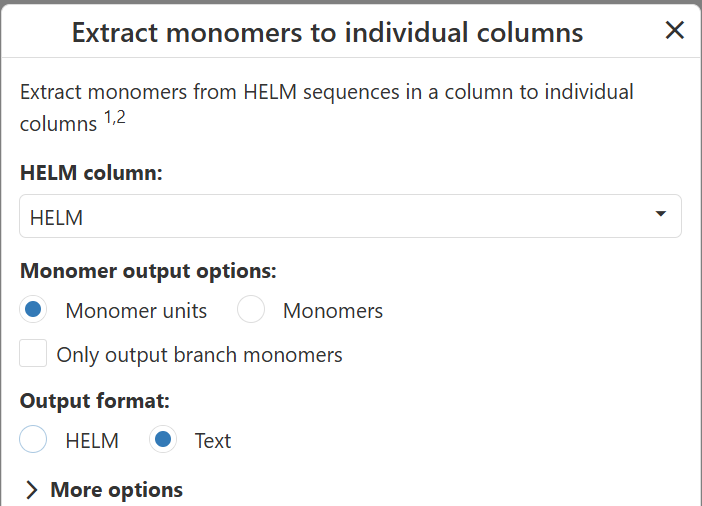
Extract all monomers or monomer units from HELM into a set of columns

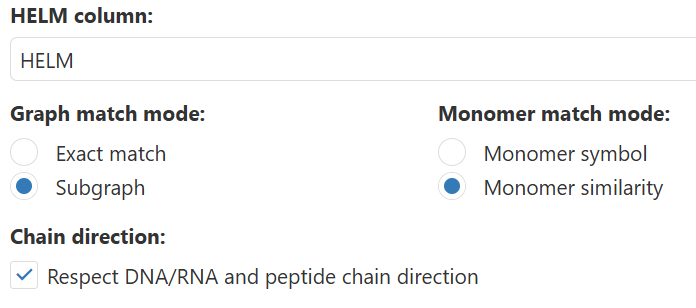
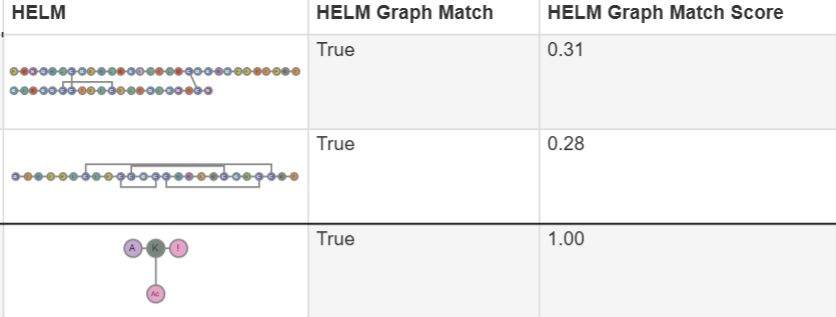
Perform HELM substructure or similarity searching using a powerful graph-based comparison of query structure and target structures.

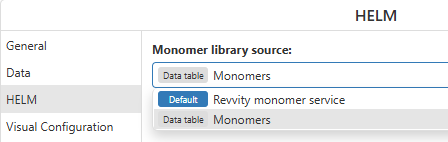
Optionally use a local data table as a monomer source

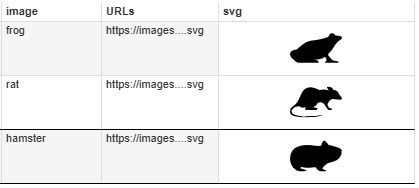
ChemCharts now supports SVG image format within Table/Gallery visuals, and the Embed Image data function.

There are minor enhancements to the Kinome, Chemistry, Gallery, and Table ChemCharts

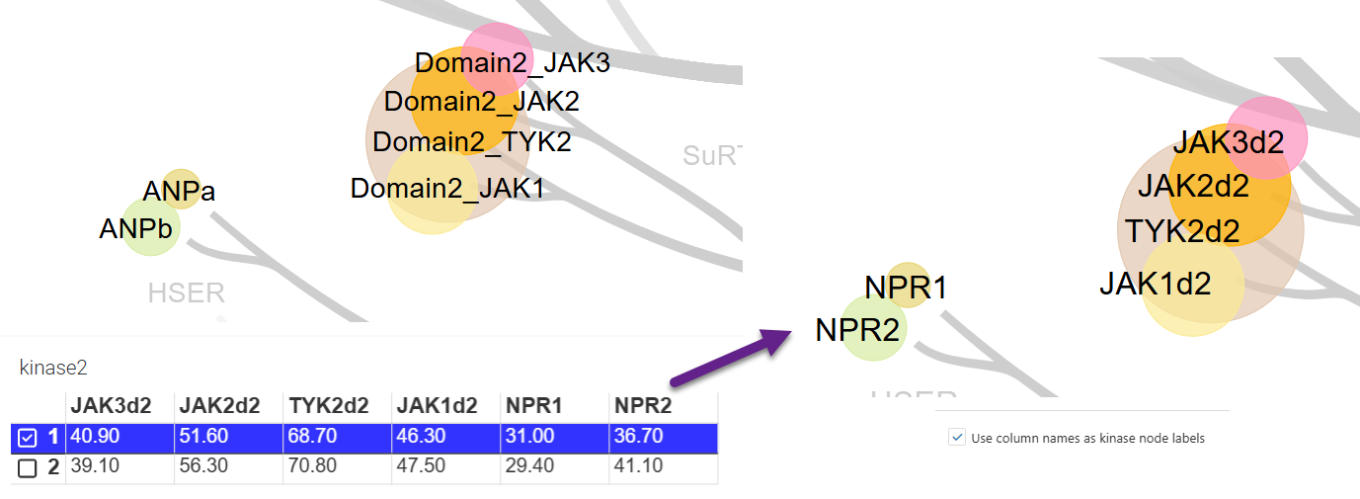
In the Kinome visualization, optionally use column names as node labels.

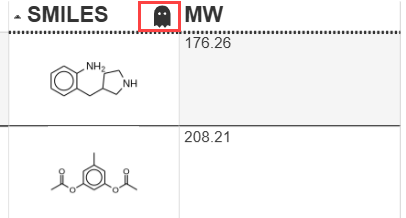
In the Table visualization, there is a new visual indicator for columns with a shadow column assigned.

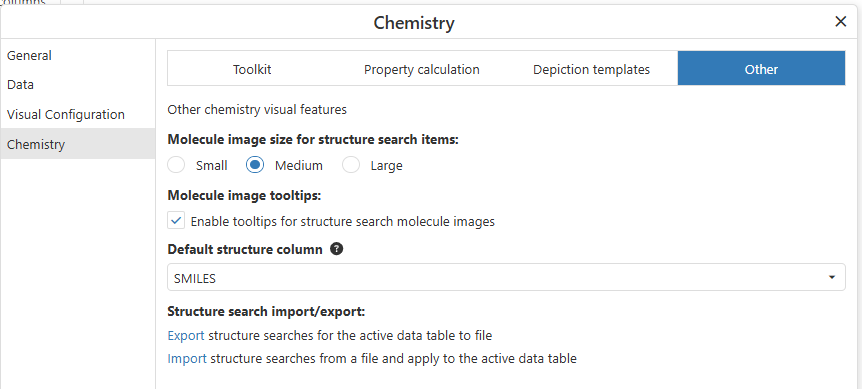
The Chemistry visualization now supports defining a default structure column, enabling/disabling tooltips for structure search images, specifying the image size in structure searches, and importing/exporting structure searches

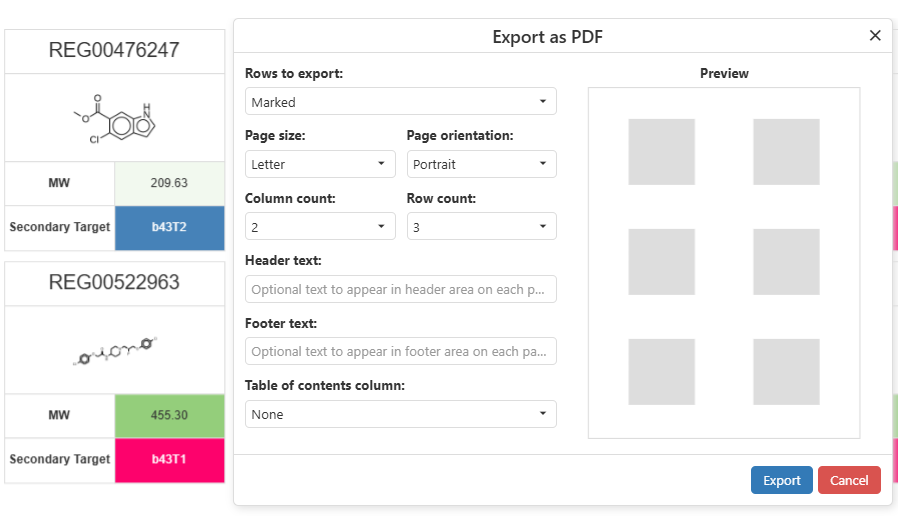
Gallery visualizations can now be exported to PDF

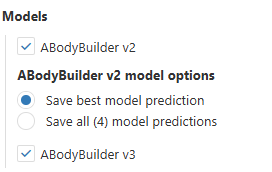
Antibody and Nanobody data functions, including Developability Dashboards, now support the ABodyBuilder v3 model

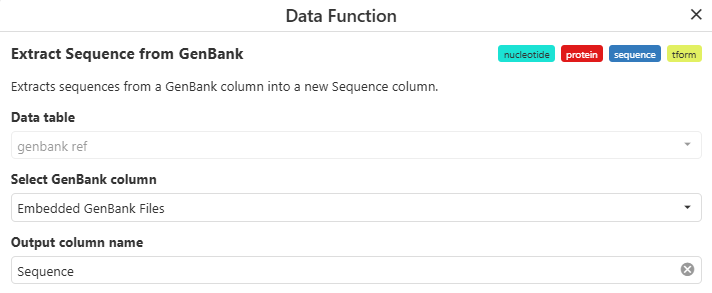
Use the new “Extract Sequence from GenBank” data function to output the sequence into a new column.

Synergy

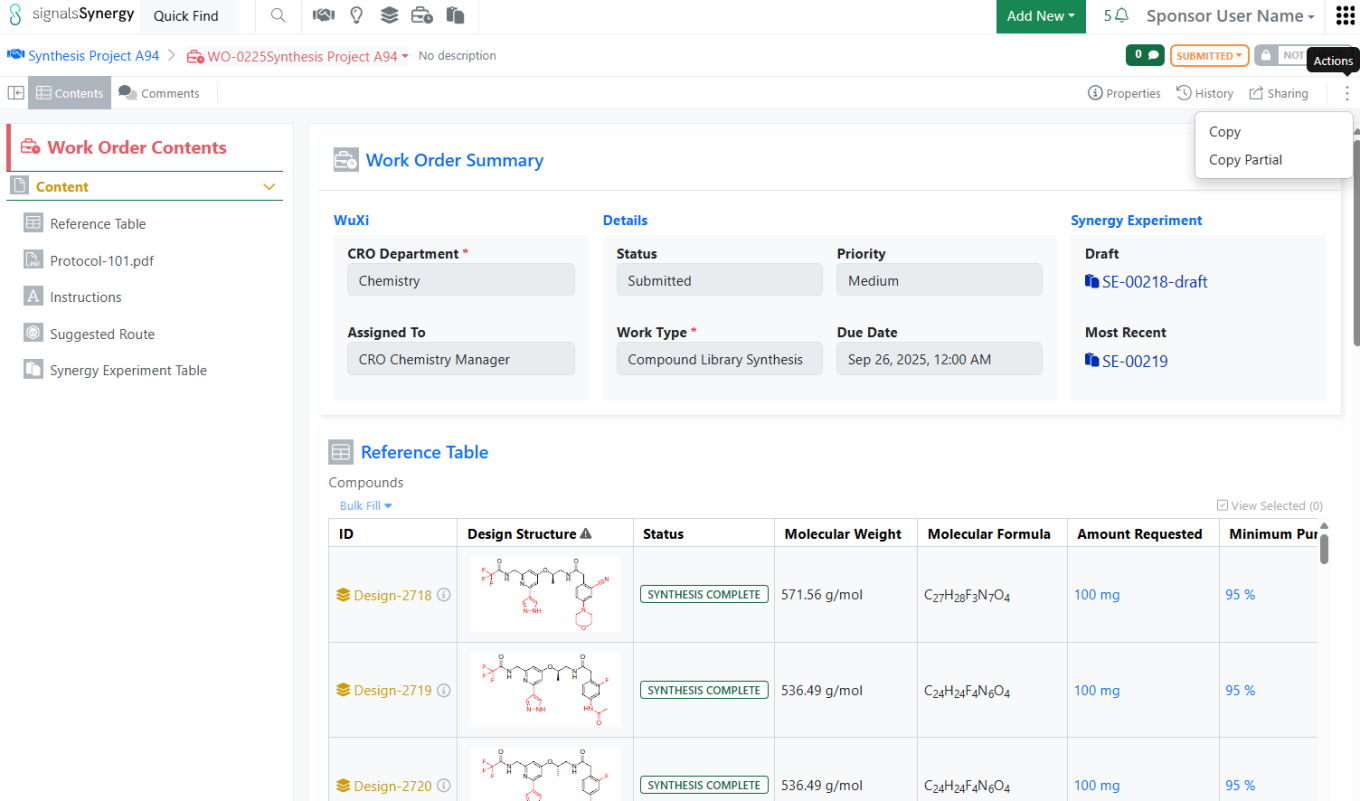
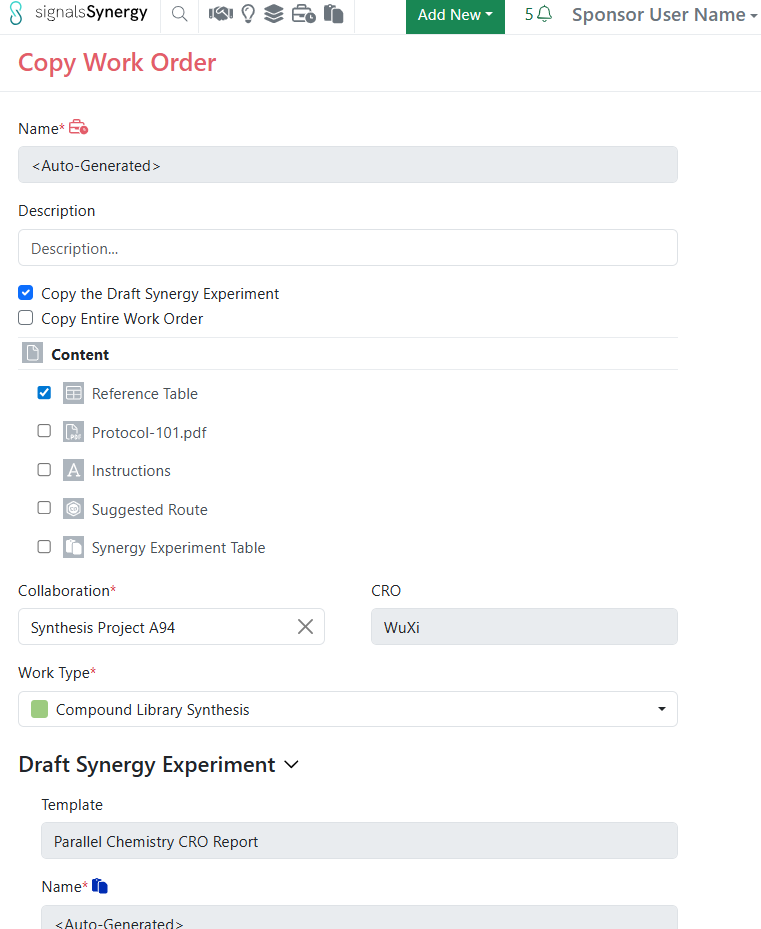
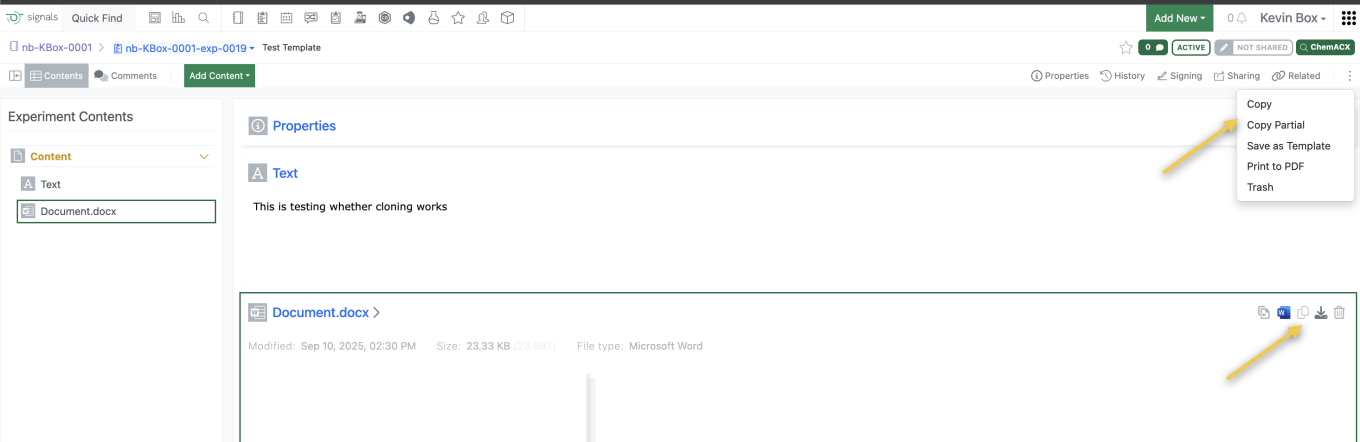
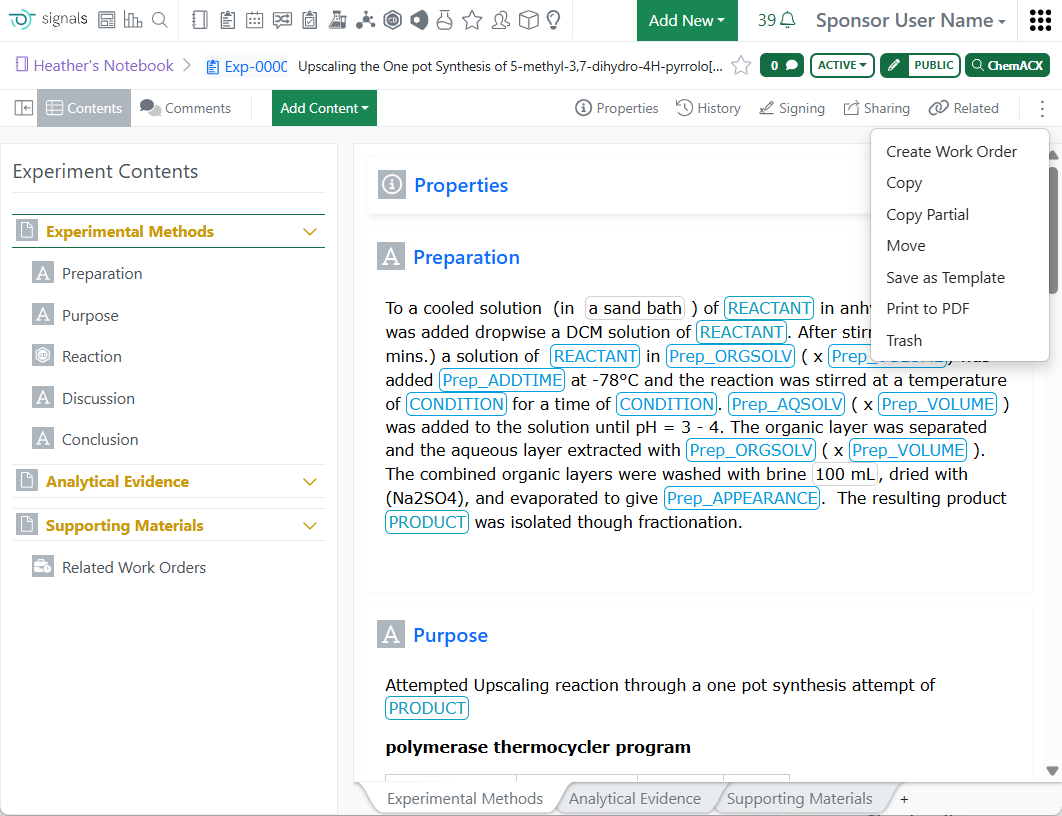
Sponsor users with the new privilege Clone Entities can Copy or Copy Partial Work Orders. This allows the Sponsor to easily send the same compounds for another assay or easily repeat common Work Orders.

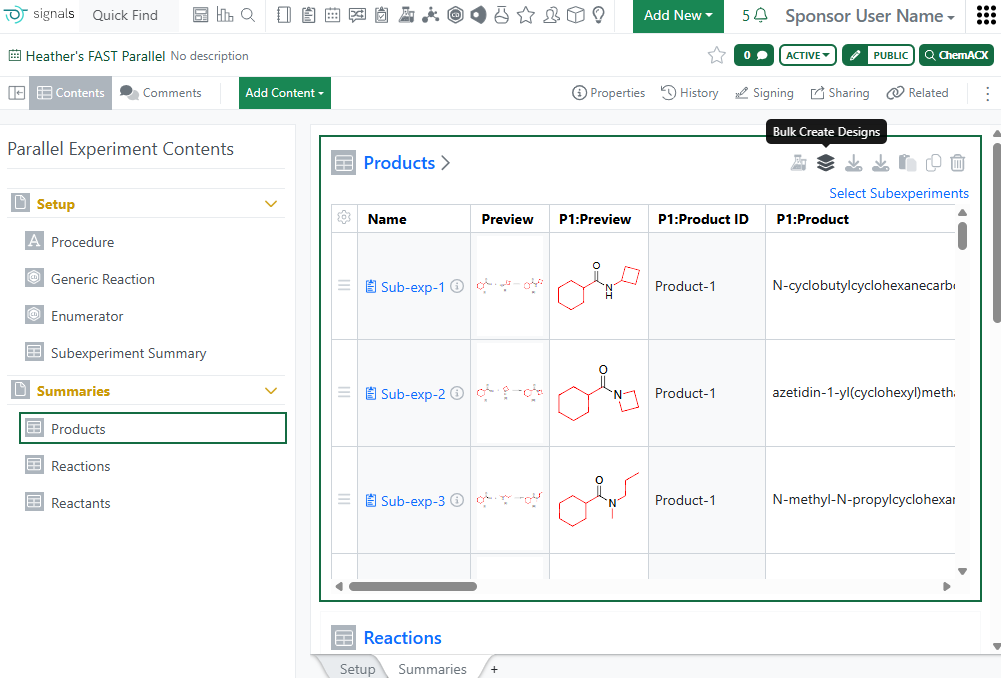
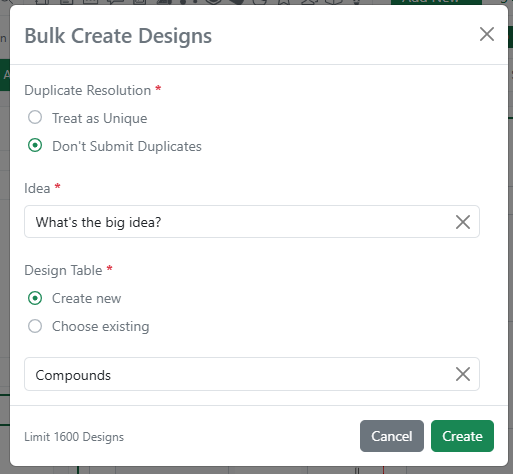
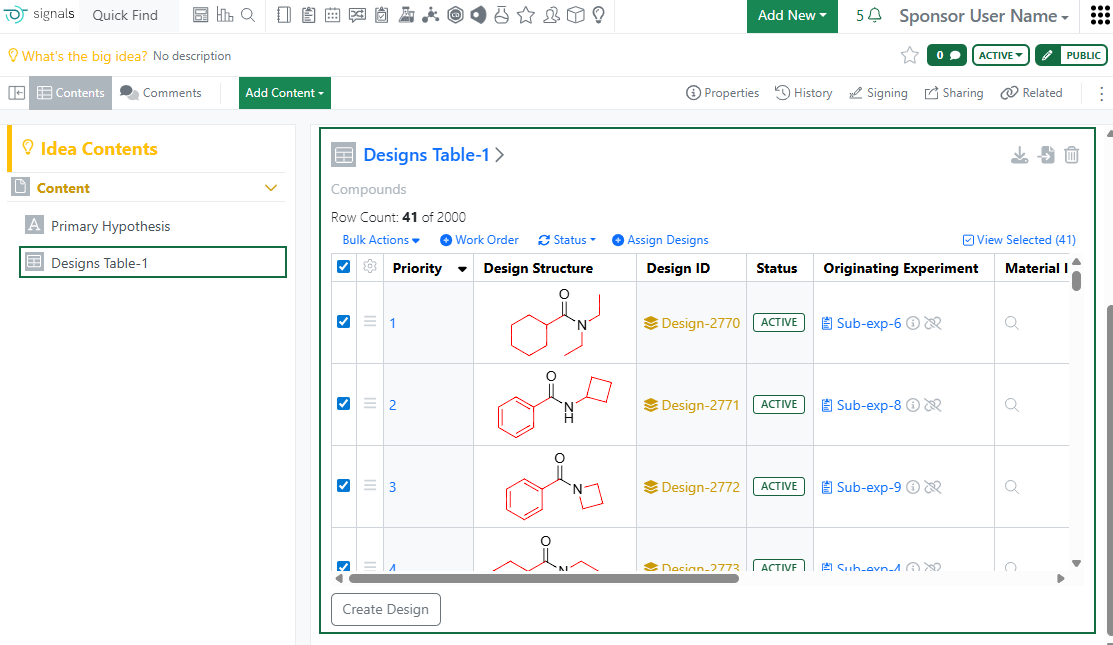
After enumerating Products in a Parallel Experiment in Signals, a Sponsor may want to synthesize the products internally or send the Products off to a CRO for synthesis. On a Sub-Experiment/Products Table in a Parallel Experiment, a Sponsor can now Bulk Create Designs. Created Designs are marked with the Originating Experiment for traceability and are easily sent off in a Work Order for synthesis at a CRO.

Chemistry

Support for drawing individual RNA/DNA monomers has been added to the HELM editor. When editing in the RNA/DNA tab of the HELM Editor, there is a new "None” option available in the dropdown menu for secondary monomers. When “None” is selected, a monomer of that type will not be drawn when the primary monomer is added to the ChemDraw canvas. Additionally, if the user wishes to draw using only the primary monomer (ribose, base or phosphate), a modifier key is available. Selecting alt/option + the monomer will only add the primary monomer to the canvas.

Bulk selection of monomers while in HELM edit mode is now possible by using the 'Shift' key and selecting multiple monomers on the canvas. Once selected, these monomers can be replaced simply by selecting a new monomer in the HELM editor.

Admin Defined Tables & Variation Tables

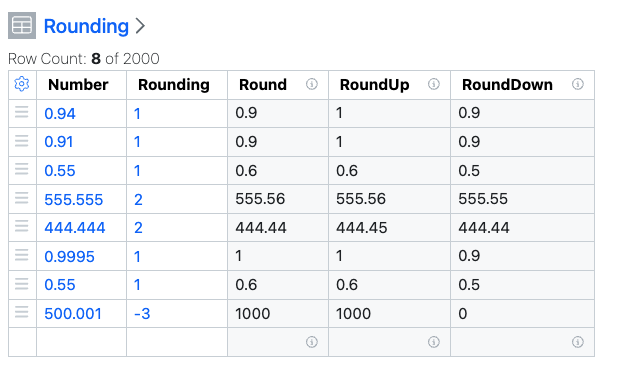
A new function “ROUND” is available in table calculations, to supplement our exiting ROUNDUP and ROUNDDOWN functions. ROUND uses the method “Rounding half away from zero”, an optional second argument allows definition of which position relative to the decimal point the value is rounded to. If the second argument is absent, the value is rounded to the nearest whole number.

Plates

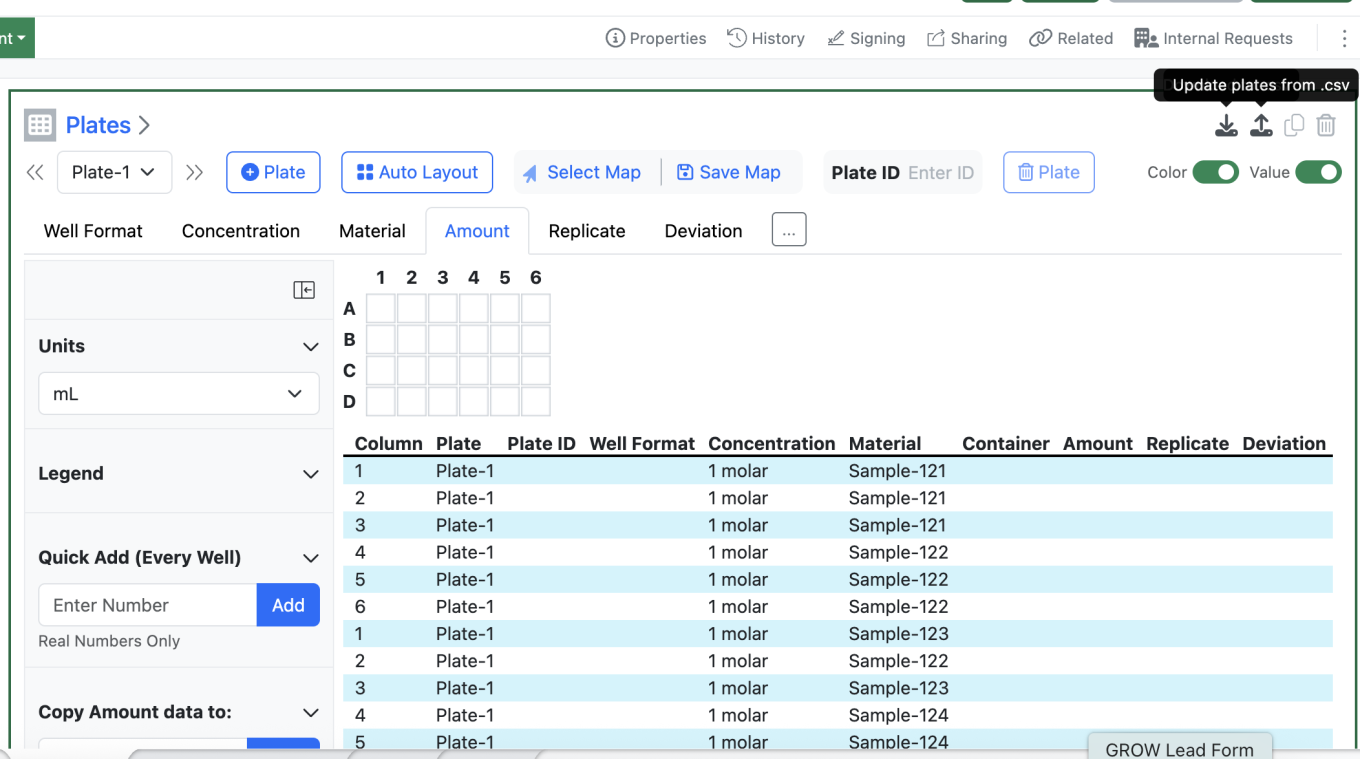
Users are now able to load or update Plates via a csv upload by selecting “Update plates from csv”.

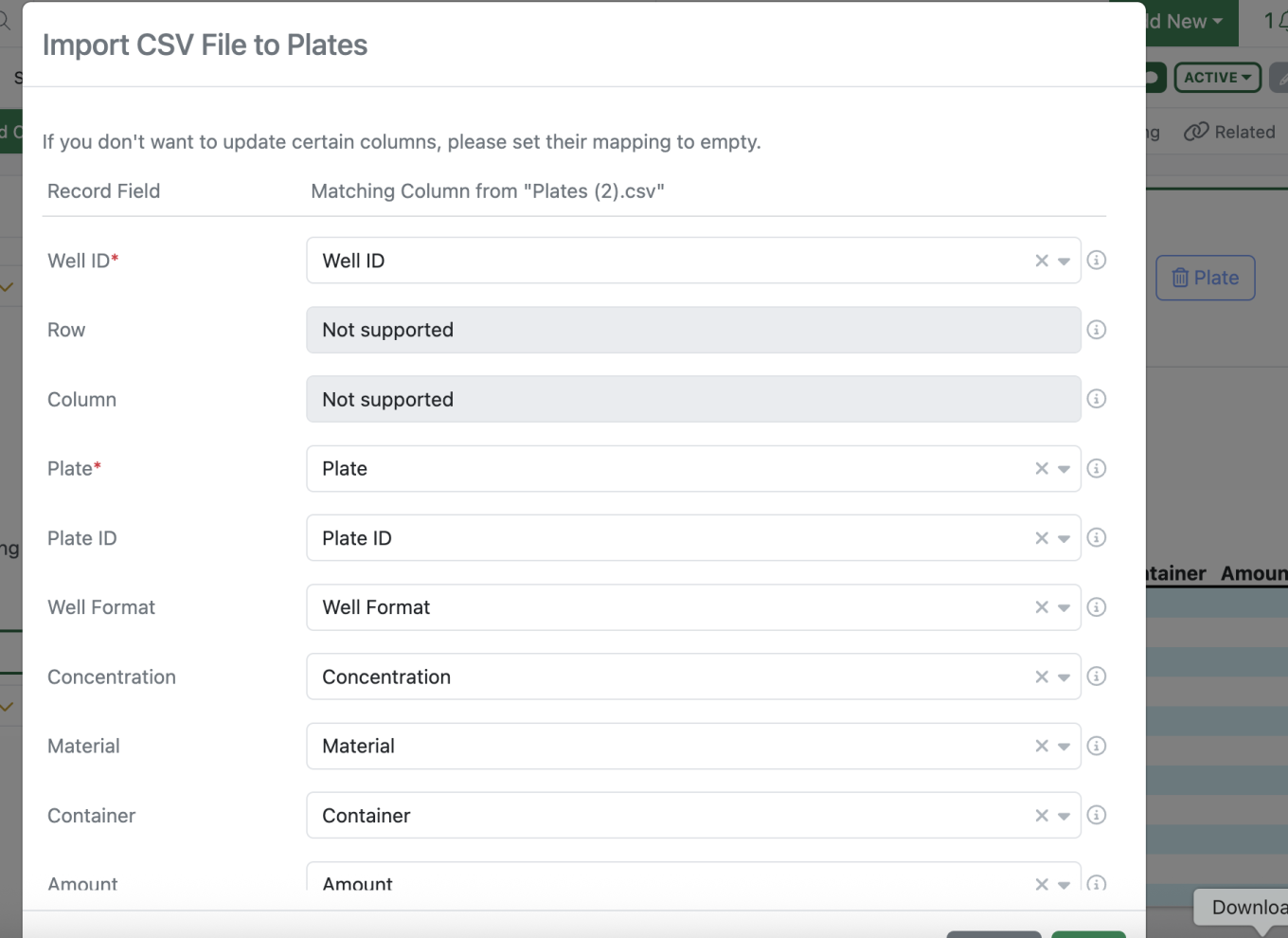
This brings up a mapping modal which allows the user to map columns from their csv to the associated annotation layers.

Once imported the plate is updated.

Inventory

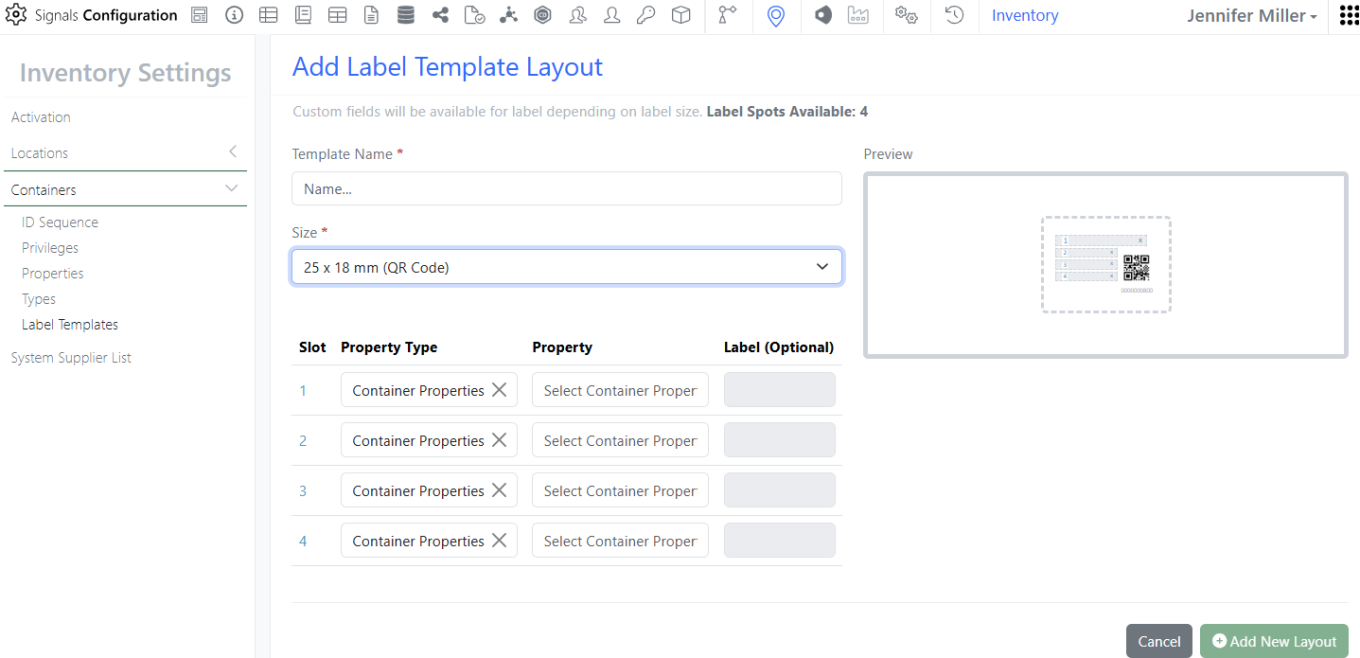
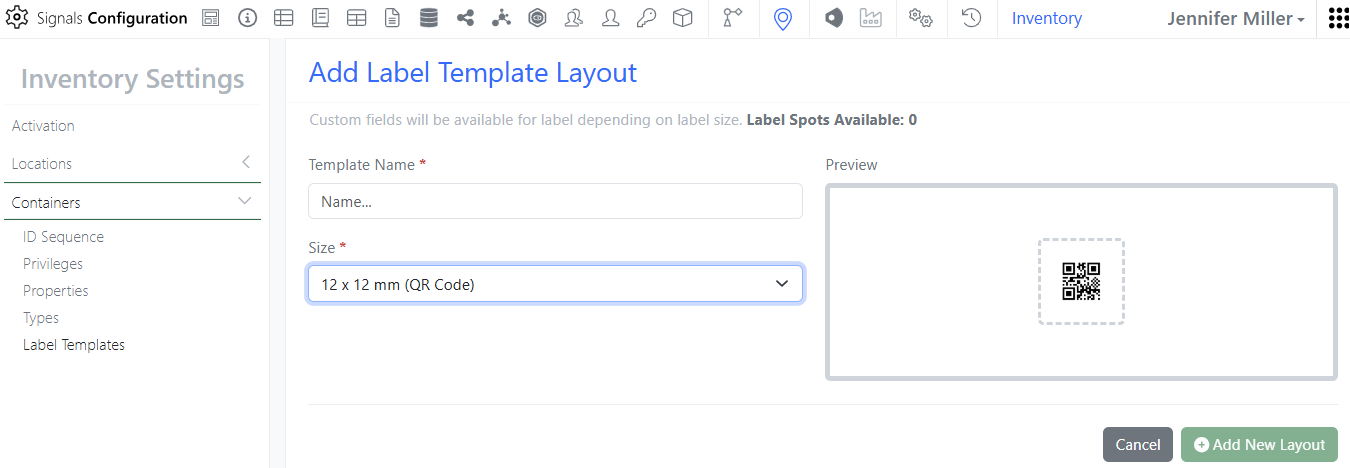
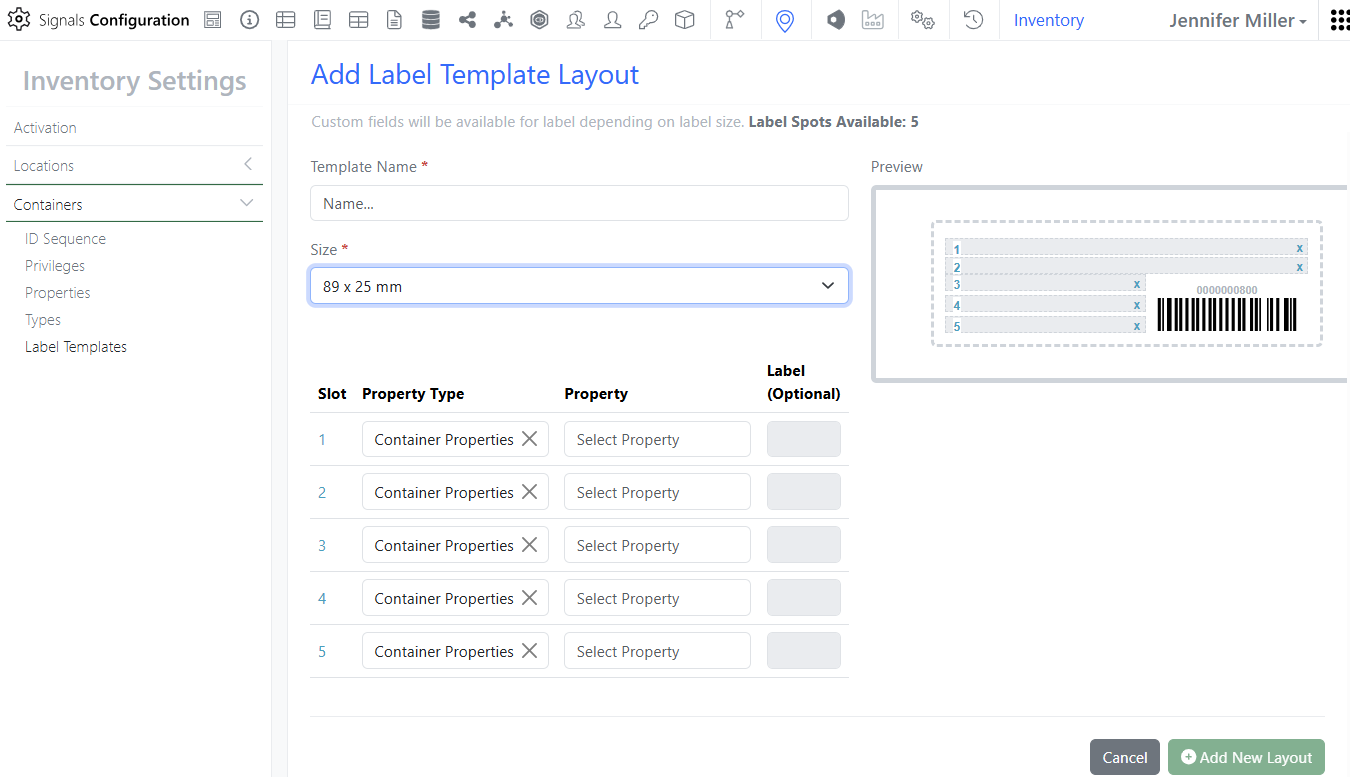
3 New Labels:
25 x 18 mm:

12 x 12 mm:

89 x 25 mm:

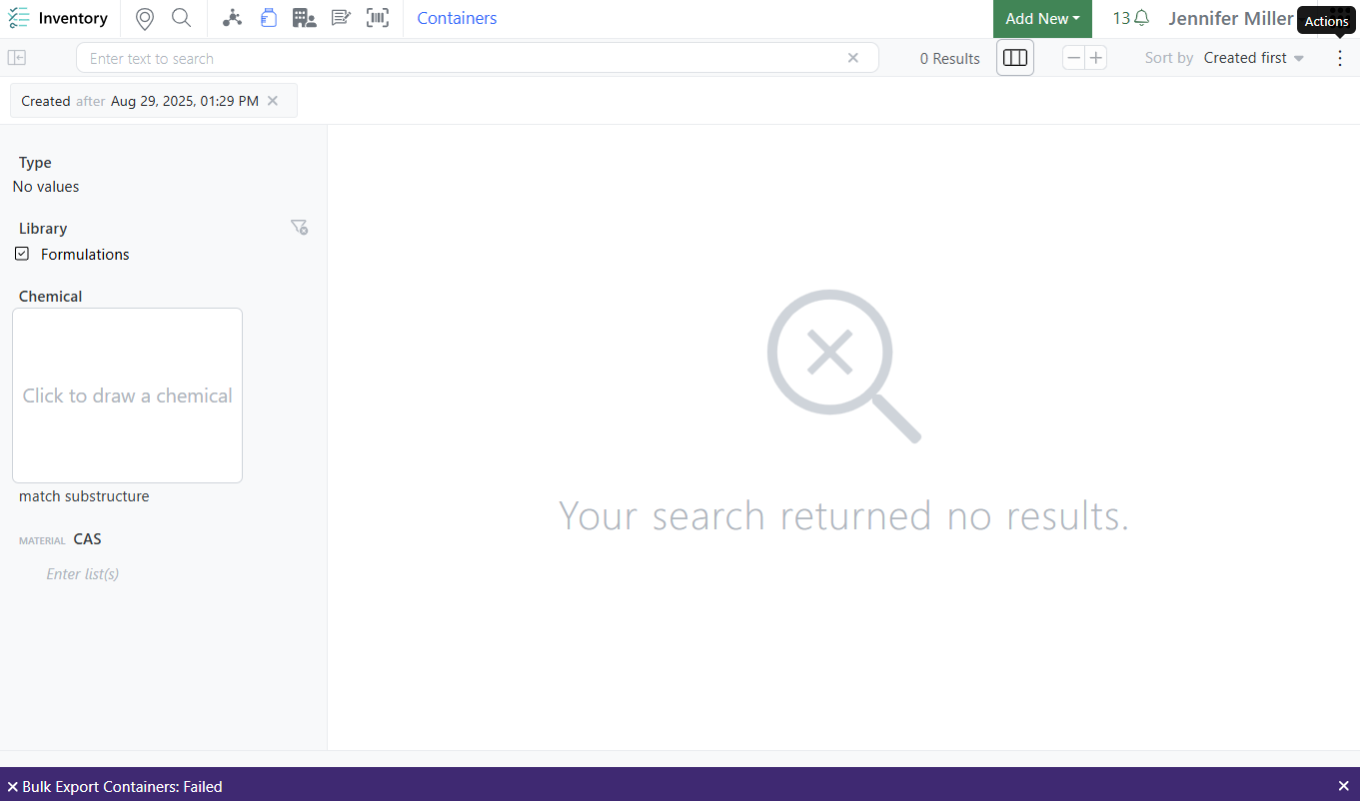
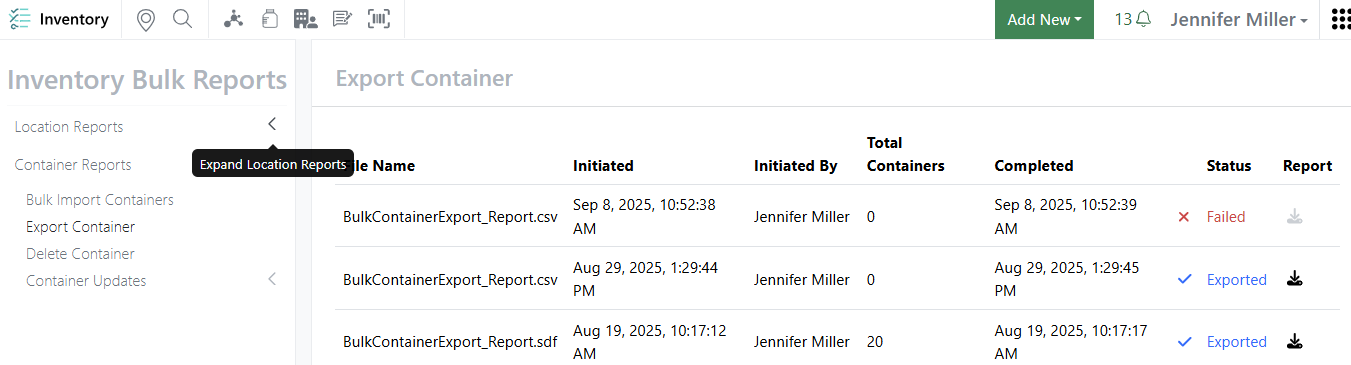
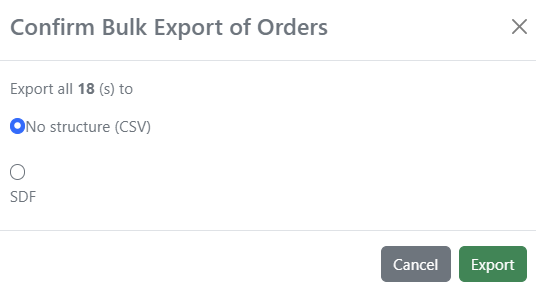
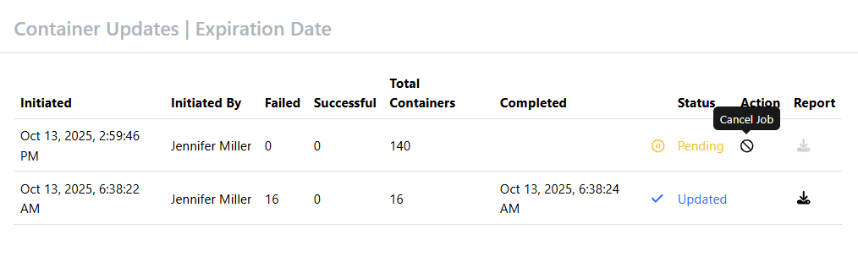
Update to Export Containers for searches that return no results. If the data changed during the export the job would not finish, Users will now see a failure message on the page:

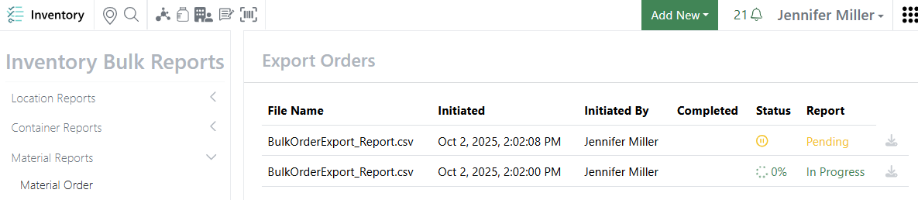
And on the report page:

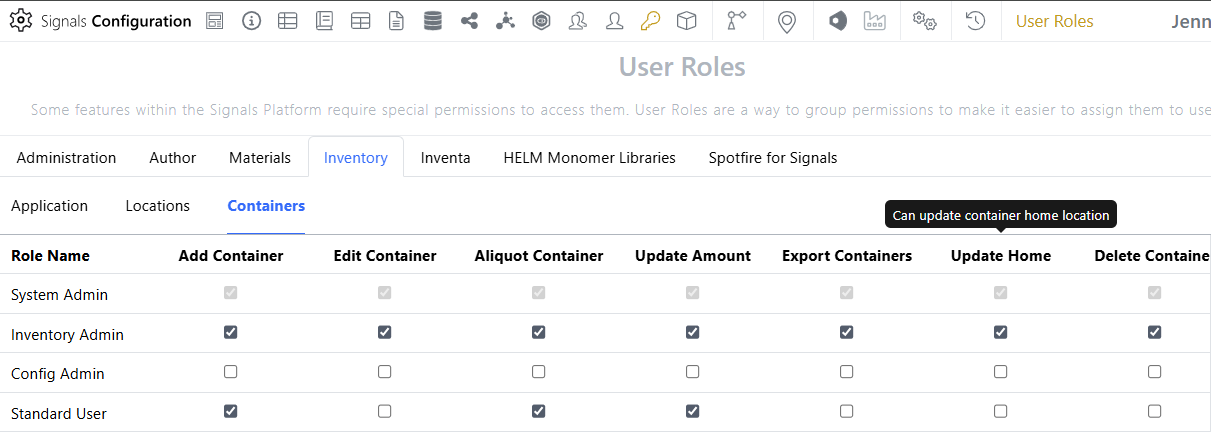
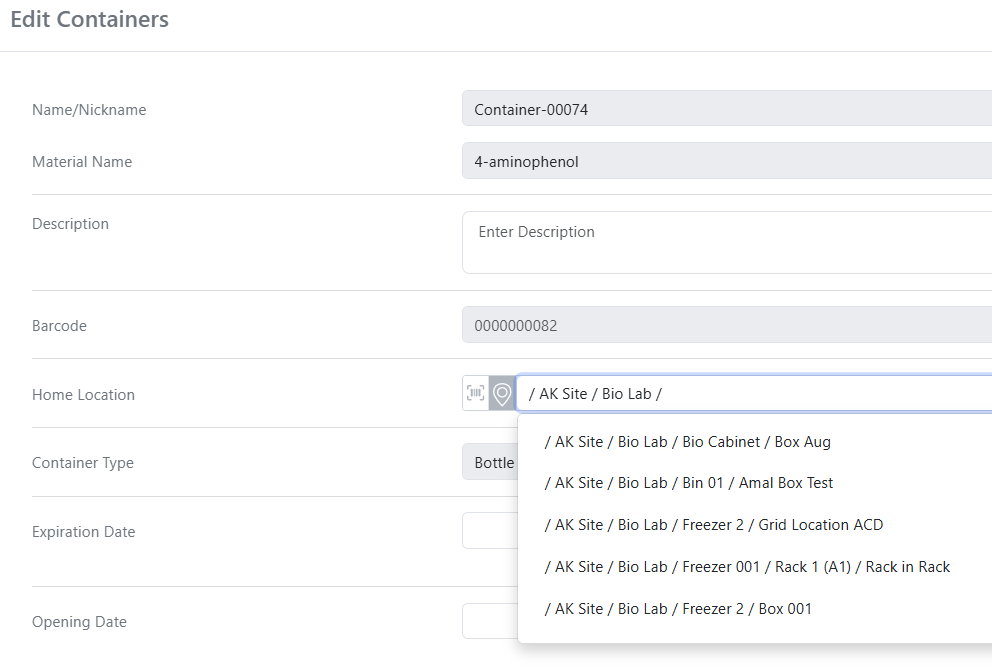
Additional Container Privilege for updating Home Location. Now users can be given the privilege to update a container’s Home Location. Previously this was reserved for System and Inventory Administrators. Users still need security access to the containers as well as Edit Container privilege to update the Home Location:

Once the user has the privilege to update the Home Location, they can use the vertical 3 dots in the top right corner to open the Edit menu:

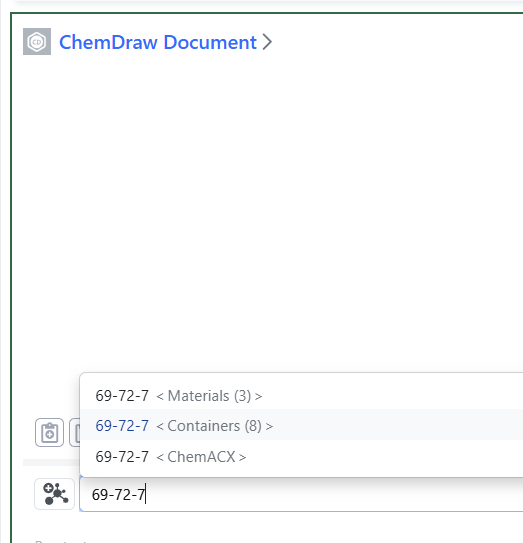
Search by CAS and select containers in Quick Add in Chemical Drawings. When users type a CAS number in the Quick Add, associated containers will show as an option:

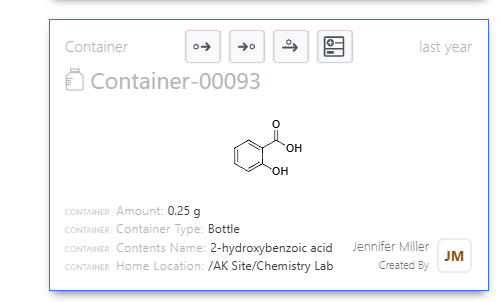
Users then select the container they would like to add to the Chemical Drawing:

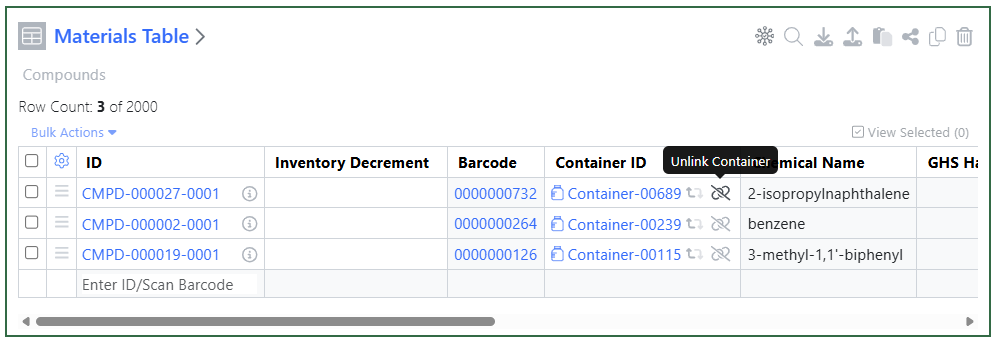
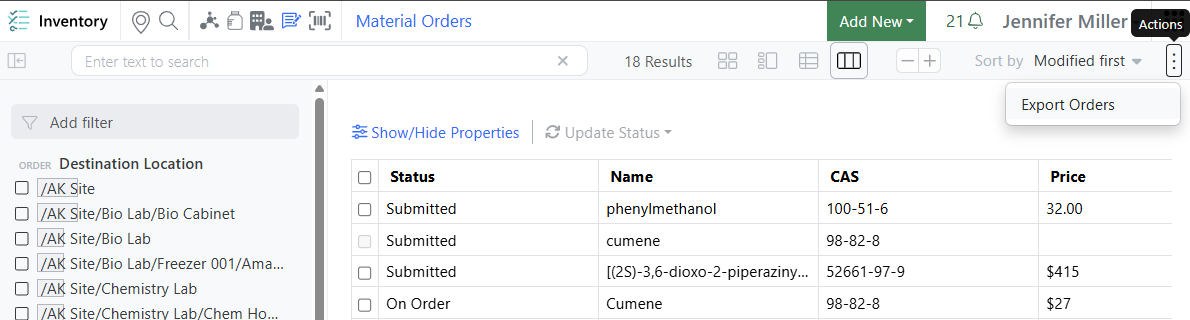
Remove link to any container in the Materials Table via the unlink icon:

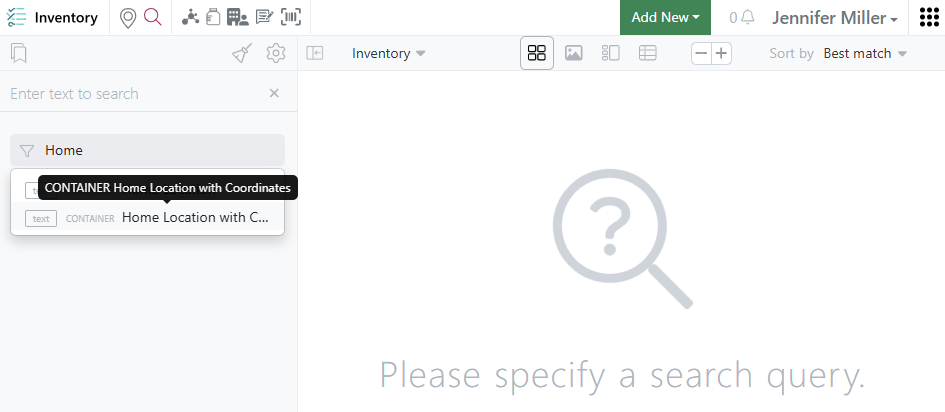
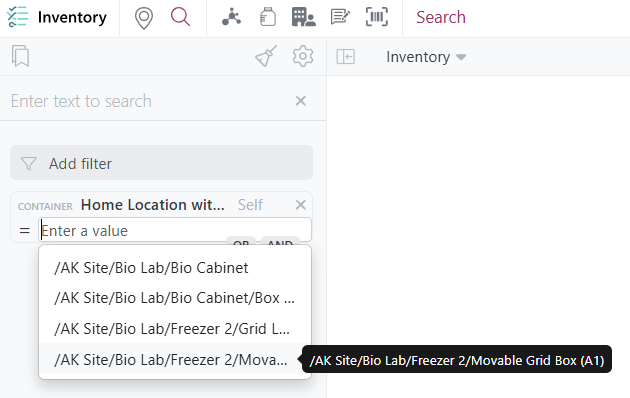
Update to Advanced Search for Home Locations with grid coordinates filter:

Users can select a location with a grid coordinate to find which container is supposed to be in that location:

Materials

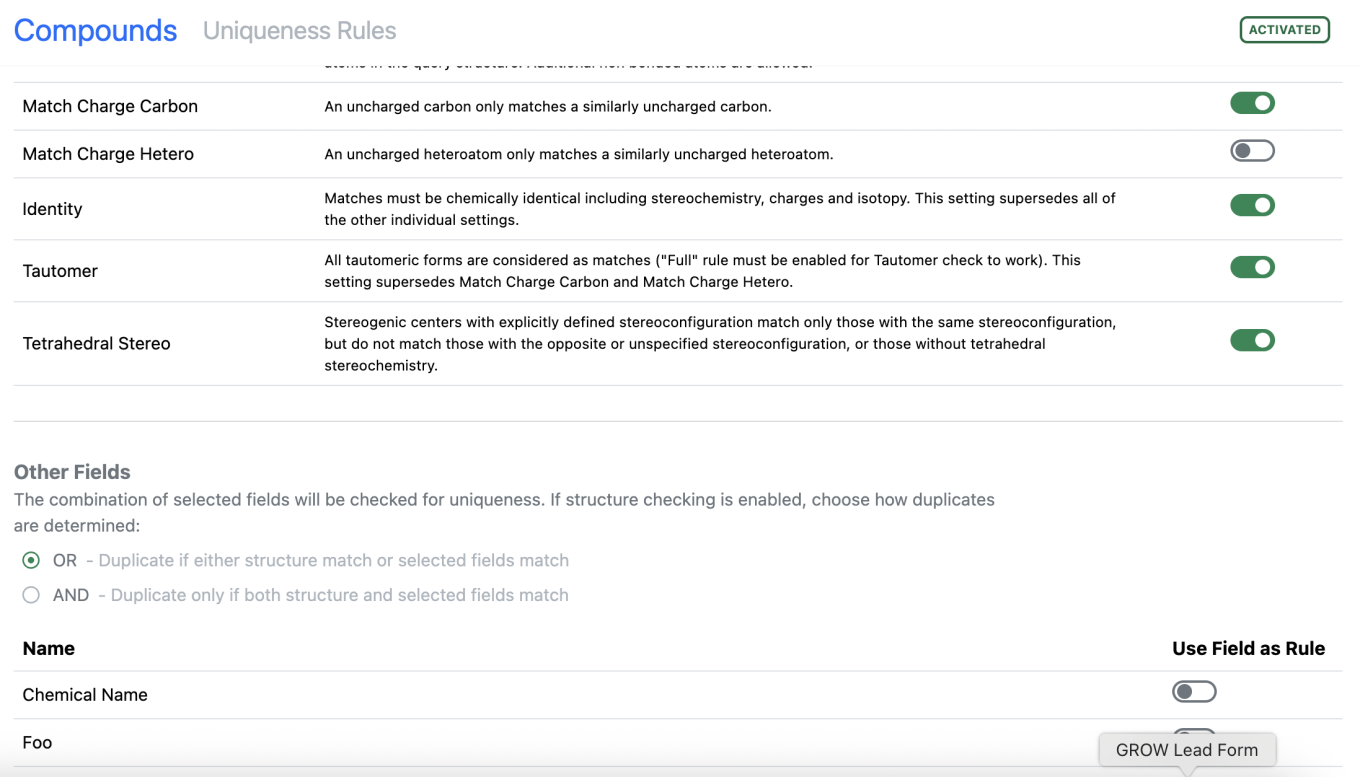
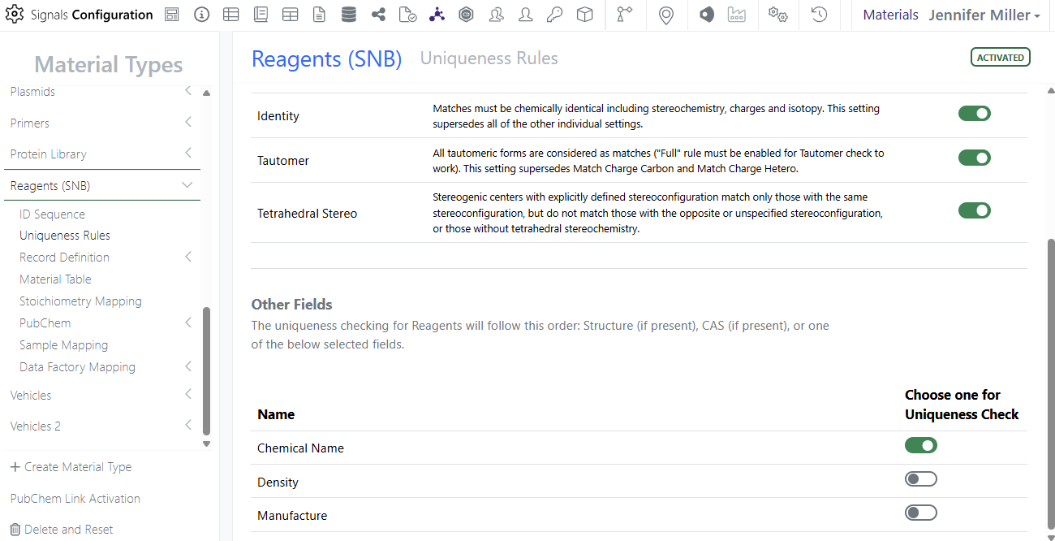
Admins now have the option of utilizing both the structure rules AND material fields in uniqueness checking during material registration. 

This is an addition to the existing OR option for uniqueness checking. If AND is utilized, a duplicate will only be identified with there is a match on the Structure AND all selected rules.


These options are deactivated if the Structure rules are turned off as all fields will be utilized regardless of selection.
 

Calculated total cysteine content (%) is now available for Protein materials.

Administration

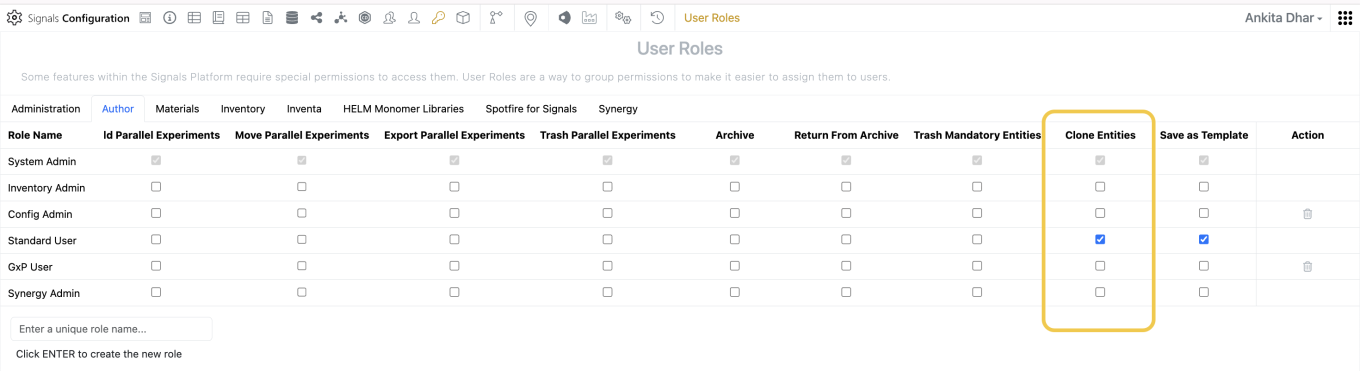
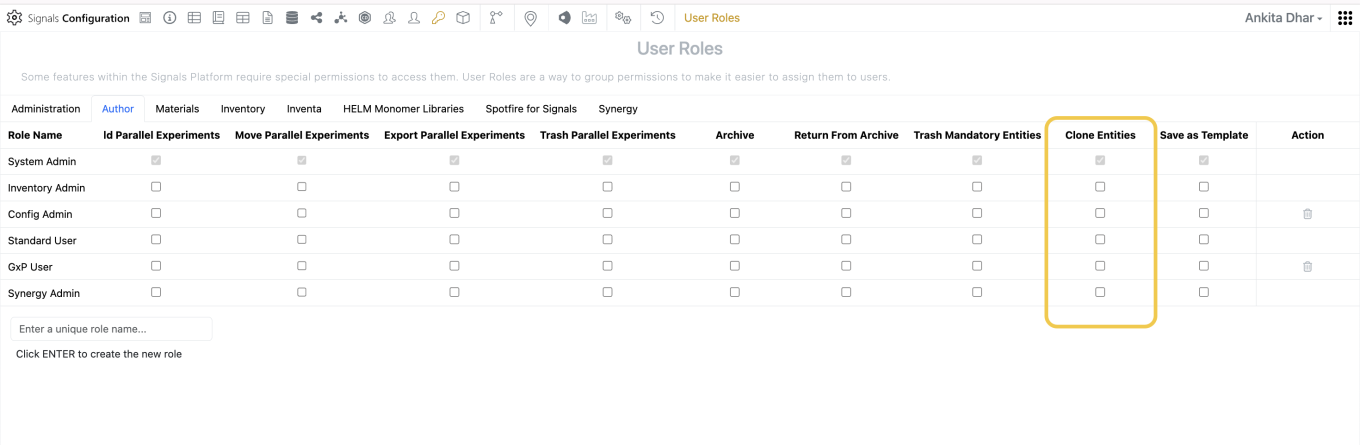
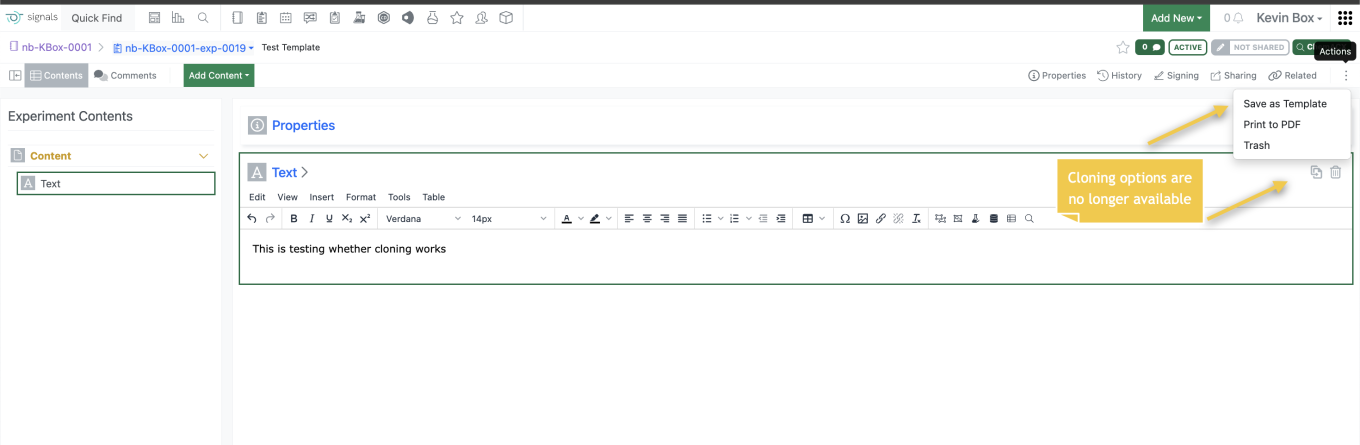
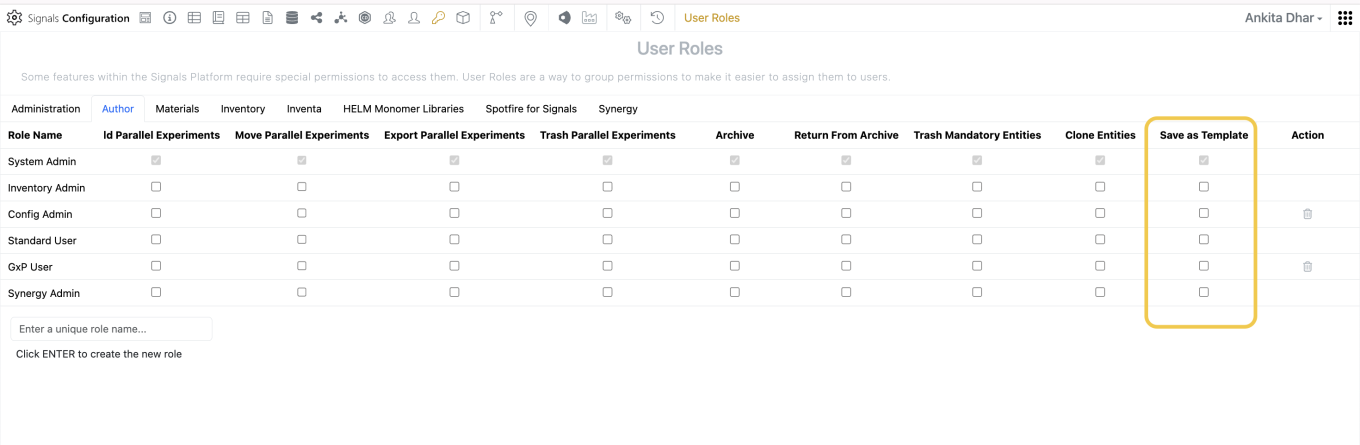
Admins can set a privilege to control users’ ability to copy experiments or entities. The “Clone Entities” privilege allows users to copy and partially copy experiments, and content entities within an experiment. Disabling this privilege from all roles for a user will disable the their ability to copy content.

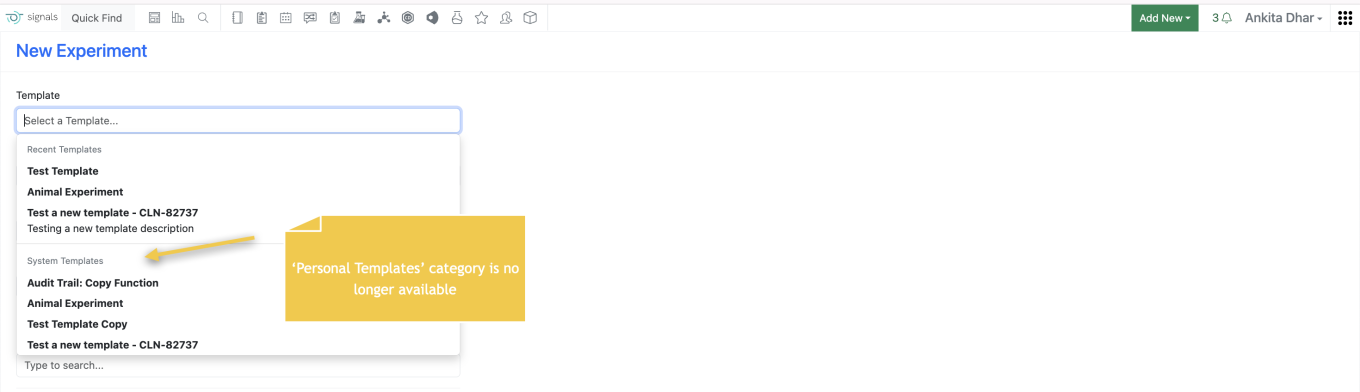
Admins can also set a privilege to control users’ ability to save or use personal templates. When the “Save as Template” privilege is disabled for users they cannot save nor use Personal Templates. 

When admins disable both the ‘Clone Entities’ and ‘Save as Template’ privileges, end users are forced to use the latest definition of a system template when creating an experiment.  

Integrations & APIs

We have updated our APIs to allow for exporting and replacement of Chemical Drawings with RXN files. A replaced Chemical Drawing will maintain the entities ID while replacing the content from the provided RXN file.

We have added new APIs for adding custom products and reactants to Stoichiometry grids. This enables the ability to add either a product or reactant to a stoichiometry table without need of a chemical structure.

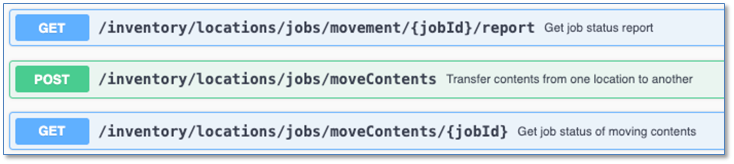
We have added new APIs for moving location content to a new location. This will move all the containers in a location to another location. You will need to provide an option for handling duplicates as part of the request. 


The API is asynchronous and kicked off in three steps: Create the Move Content Job -> Check the Status of the Job -> Get a report of a completed Job.

We have added a new API to create relationship links between entities. The type of relationship: related, repeats, repeated_by, duplicates, duplicated_by, precedes, or preceded_by is required for creating the link.

We have updated our API to allow fetching all Samples in a Samples Table.

We have added new APIs to fetch and update Material Orders.

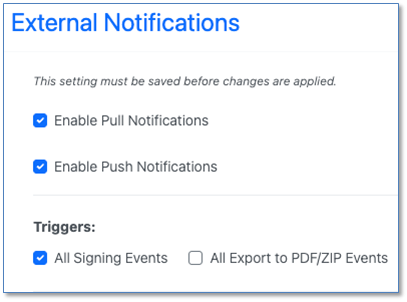
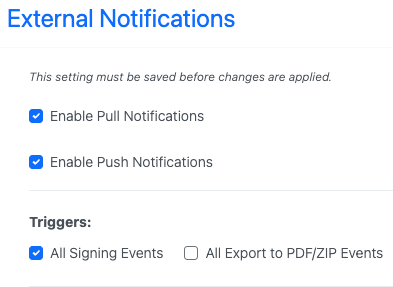
For our Synergy product we have added External Notifications for Work Order signing Events. These are included in the Notification Trigger “All Signing Events”.

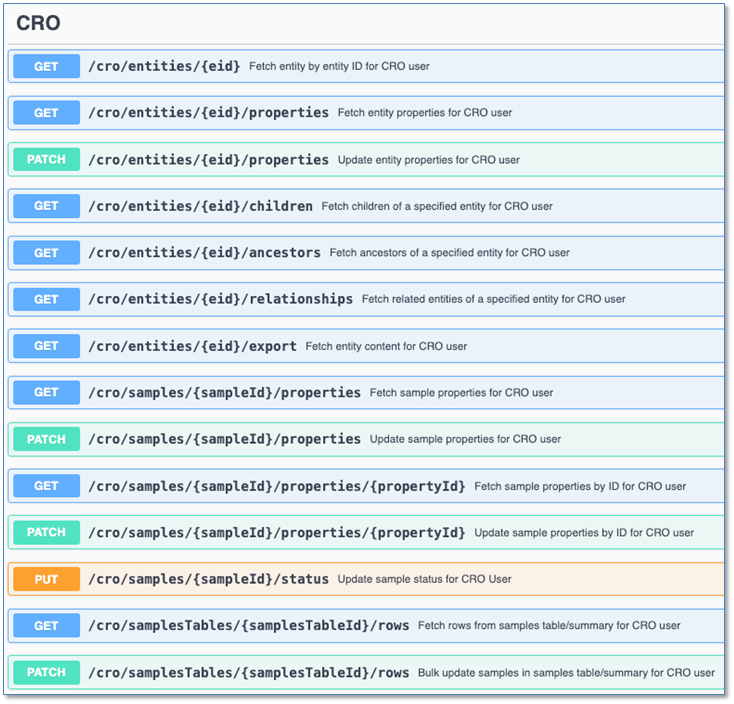
We have added new APIs specific to our Synergy Product CROs. These allow for specific APIs to be utilized by CRO users. This enables customers External Actions to read and write for CRO users without exposing details that CROs are restricted from seeing or interacting with

Further Details 

The following capabilities are in beta and are available for users, administrators and developers on the Signals platform upon request. Please contact your account representative or our support team if you would like access to the following features.
AI

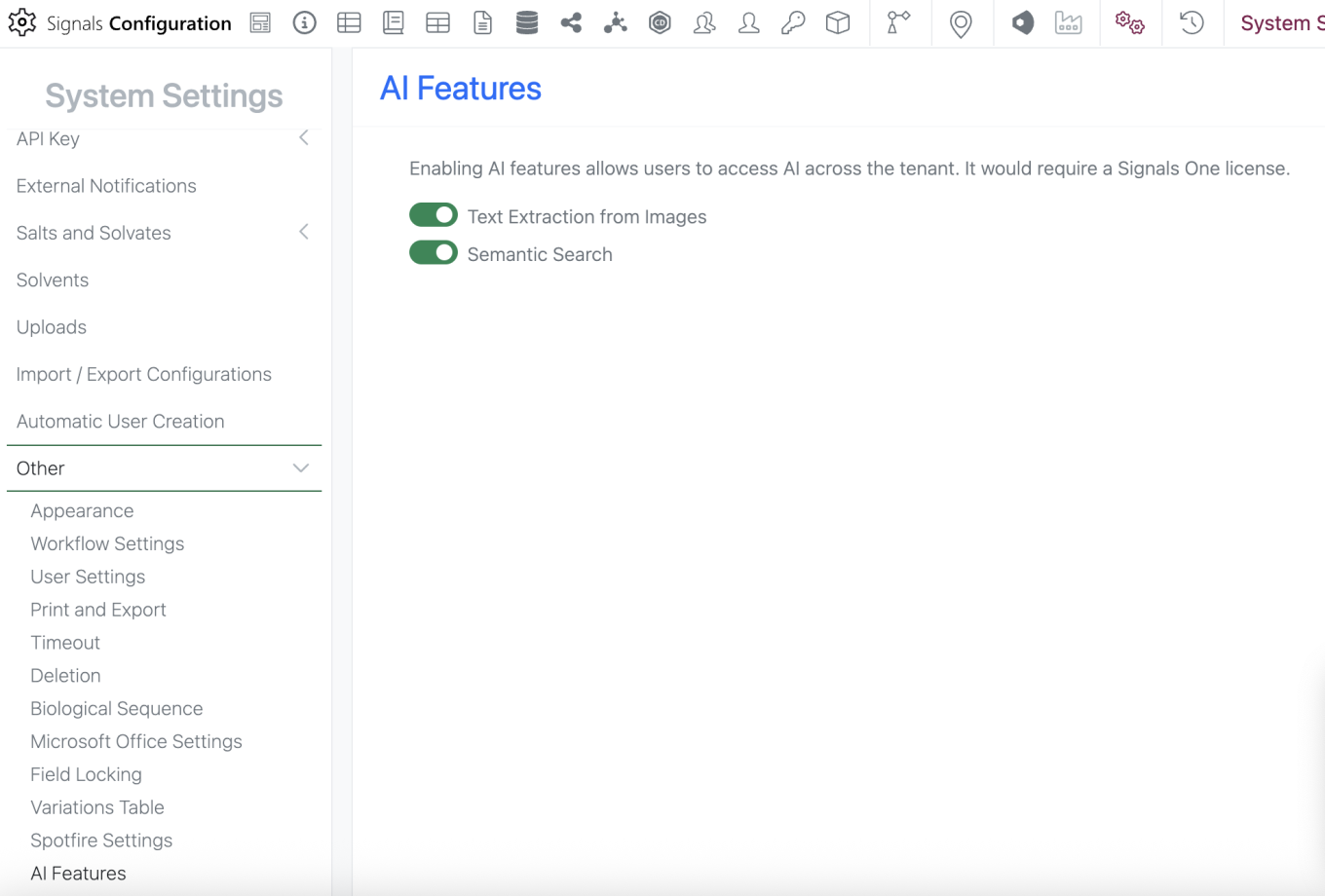
Administrators will now be able to enable or disable new AI features utilizing the AI settings options. AI features still require a Signals One license and infrastructure to function. This just allows the admin more granular control on when these features are made available to end users.

Data Workflows & Analytics

For tenants with a Signals One license, users will now be able to perform In Vitro (screening, assays) data analysis, visualization and results quality control. The first curve fitting method available is the logistic 4 Parameter (4P) fit.


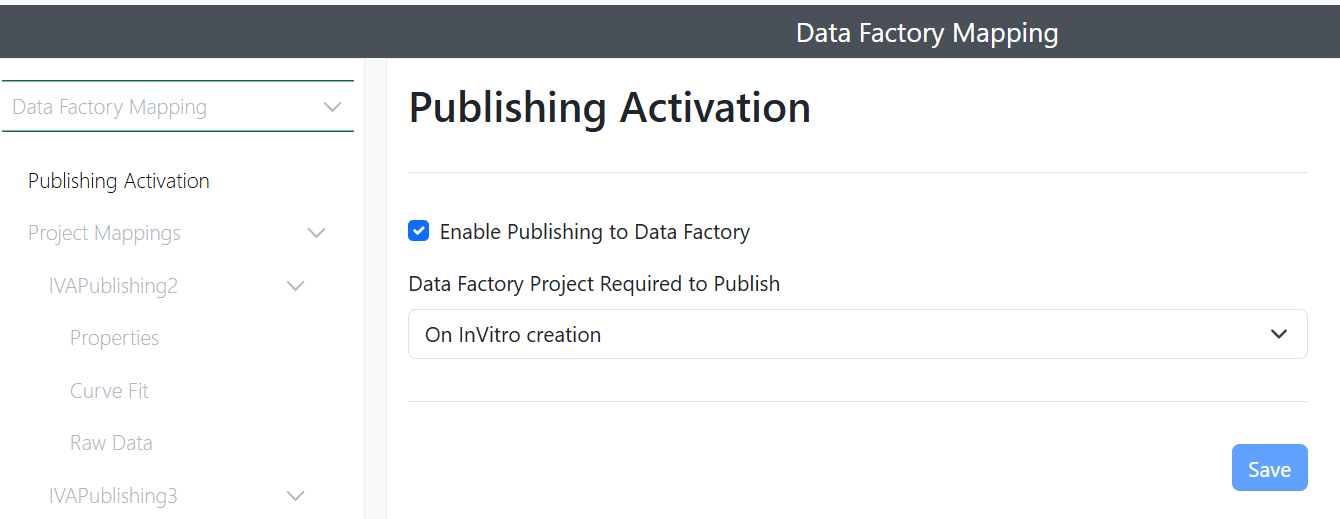
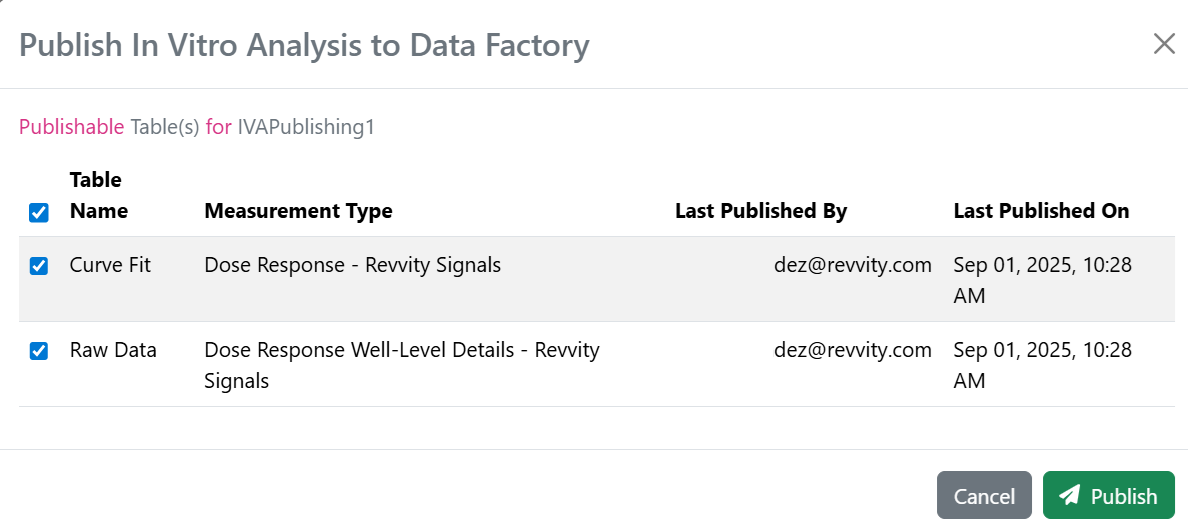
It is now possible to define the mappings of the raw data and curve fit results with the Measurement Types of a Data Factory 2.0 project in the In Vitro Analysis templates.

In addition to the raw data and curve fit results, which are interrelated, a set of general properties can also be mapped for publication.

The users of an In Vitro Analysis template with publishing activated can decide whether both raw data and curve fit related tables or only one of them should be published for their analysis.

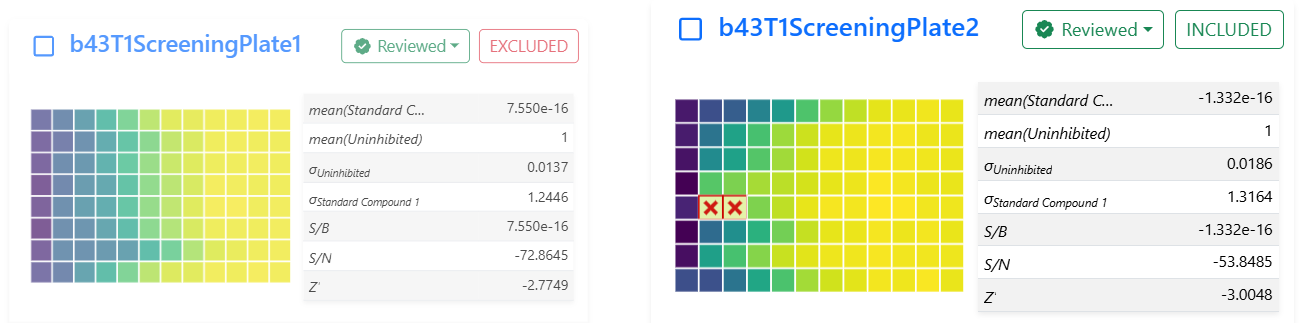
In addition to the exclusion of curves and curve data points, it is now possible to exclude whole plates or plate wells from normalization.

The exclusions at the plate or well level affect the normalization and the curve fitting downstream. Therefore, the users are notified that they should recalculate the normalization results.

Successively, downstream steps dependent on the normalization, like the curve fitting, will also need to be recalculated and the user gets another notification.

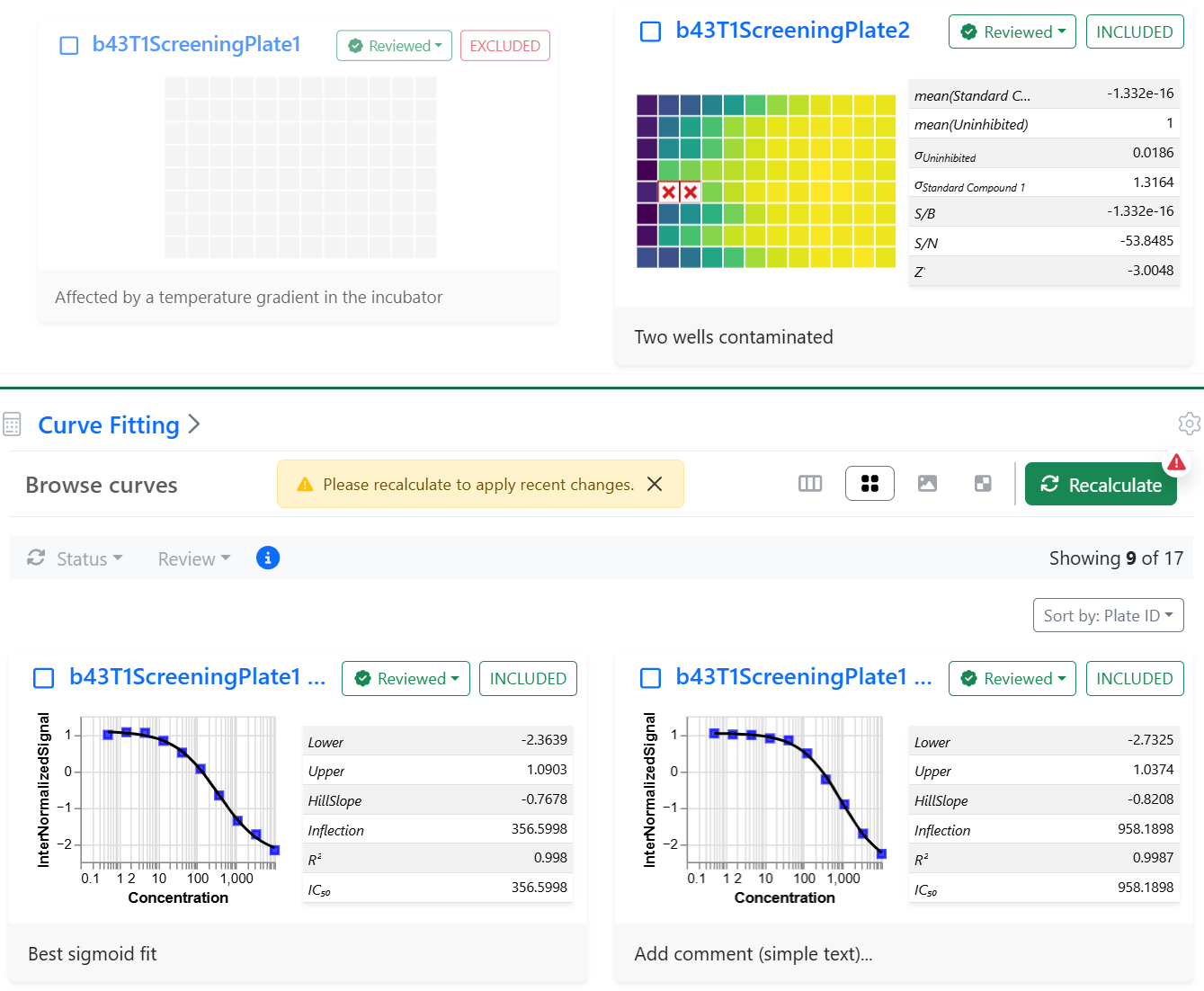
Plate, well, curve and point-level annotations are now embedded in an In Vitro Analysis. 

All the annotations can be reset and result recalculated in a row by clicking on the global RUN button, while the recalculate buttons maintain the annotation.

SAR & Decisioning

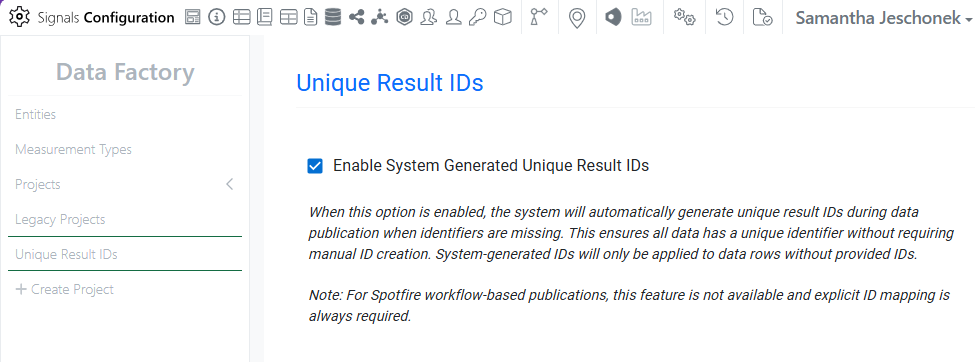
System generated unique result IDs are now available for use with Data Factory (beta) projects in Signals One. When enabled by an Administrator, unique identifiers will be automatically generated for any empty ID values during publication, while preferentially using any explicitly provided identifiers. This feature does not apply to legacy projects.

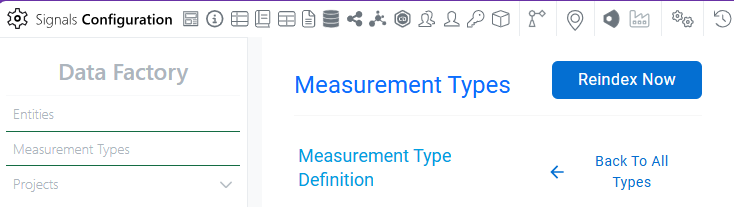
Data Factory will now propagate changes in entity, attribute, or measurement type design to maps and published data. When making a change to the information design, administrators will be warned if the change will require data reprocessing. Once an admin makes a change requiring data reprocessing, newly published data will be inaccessible until after the admin selects “Reindex Now”, and data finishes processing. When reindexing, all design changes are applied to any existing data or newly published data. Any existing admin-defined maps will continue to work.

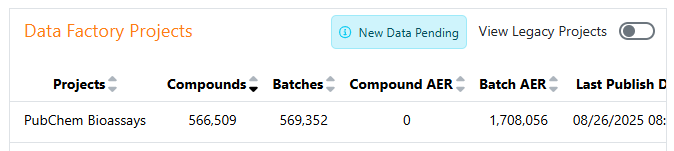
When an admin has made changes that require data reprocessing, end-users will see a “New Data Pending” notice, indicating that access to newly published data may be delayed. Previously published data will remain accessible during this time. The label is removed once data finishes processing.

Admin Defined Tables, Variation Tables and Hierarchical Tables

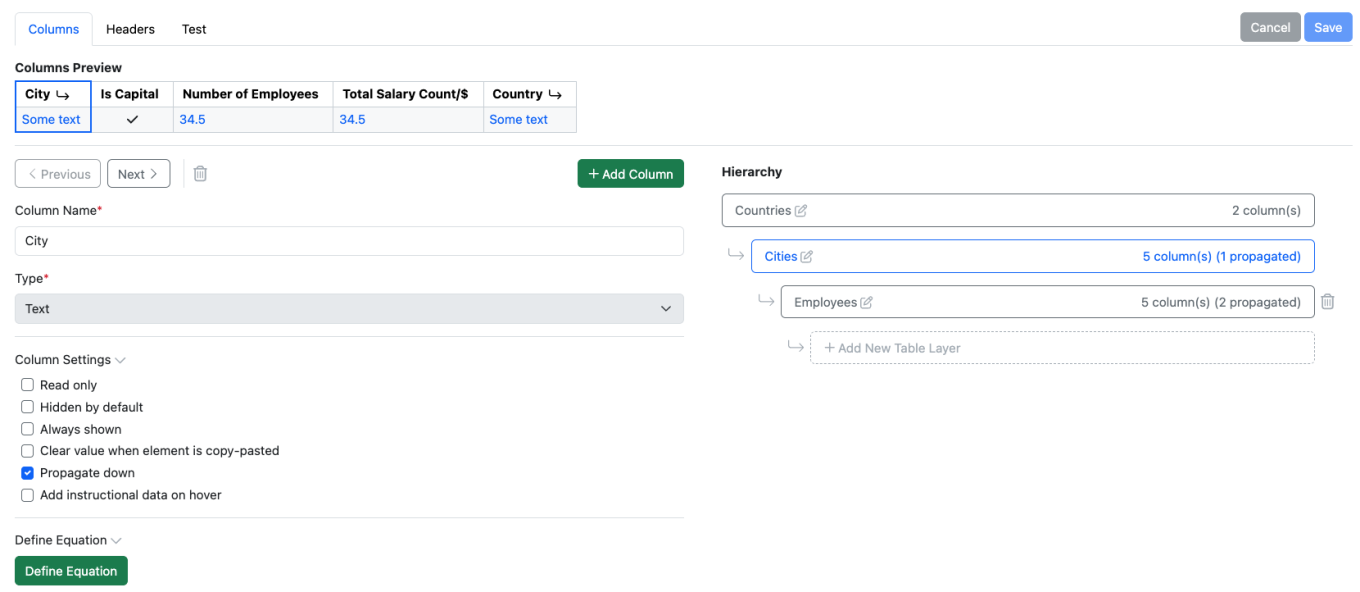
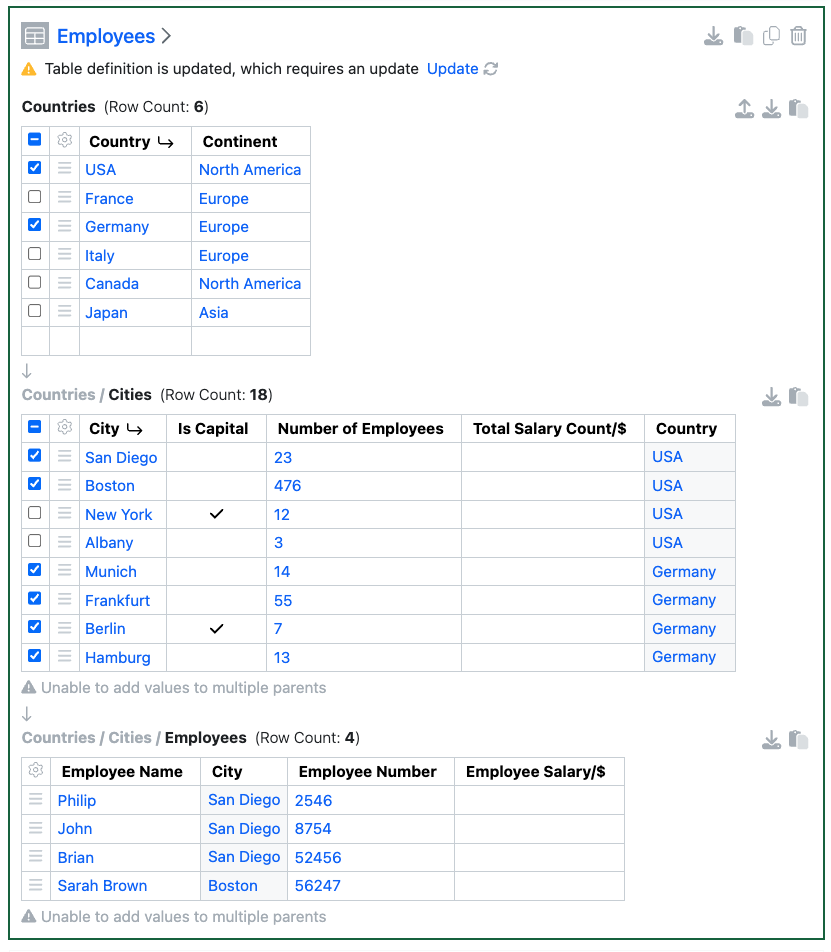
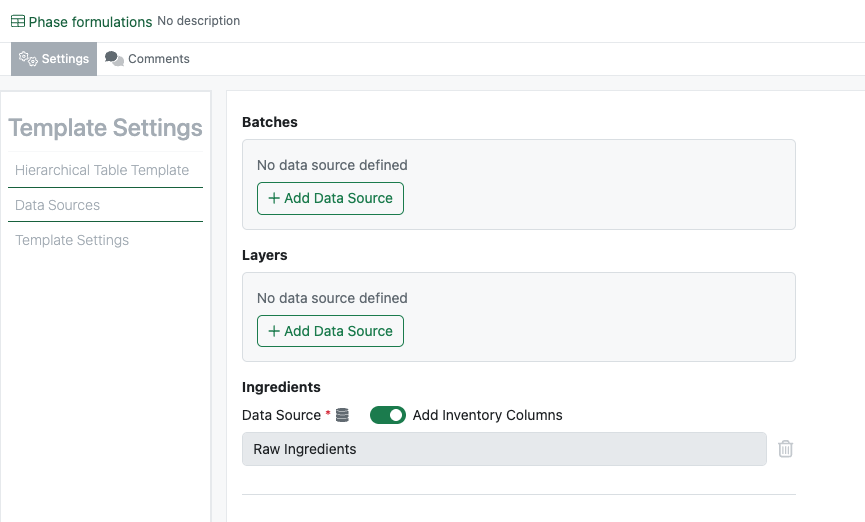
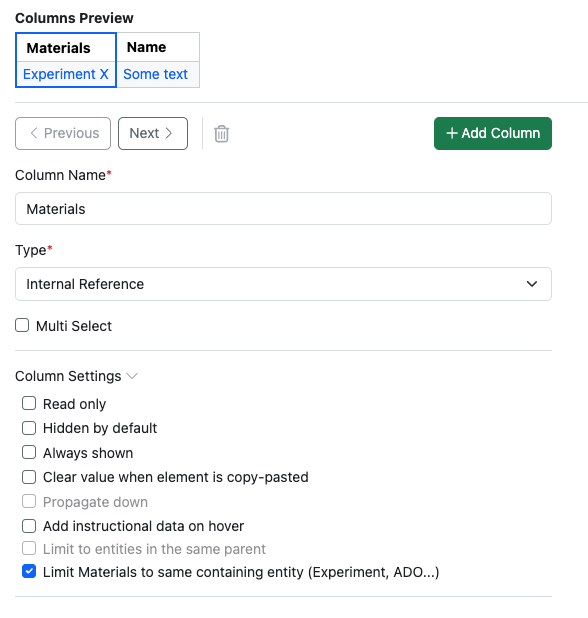
A new tabular content type, Hierarchical Tables, has been added. Hierarchical Table Templates can be defined by an administrator in the Table Templates folder. Hierarchical Tables can contain multiple table layers, with association between an upper row in a table and one or more rows in the lower table, to provide layers of data containing different levels of detail. Hierarchical Tables require the end user to have a Signals One license.

The association between rows can be indicated with “propagating down” an identifier value from a row above. Rows from multiple associated upper rows can be displayed, to add rows however a single parent must be selected.

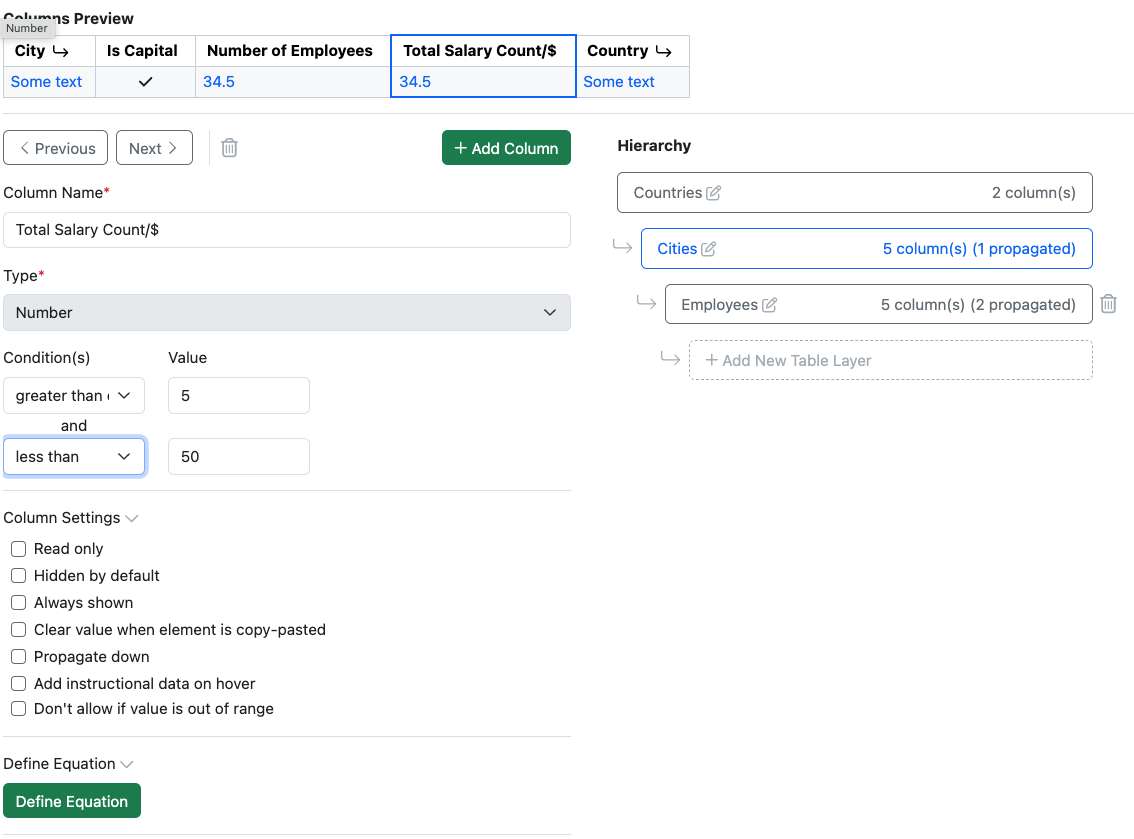
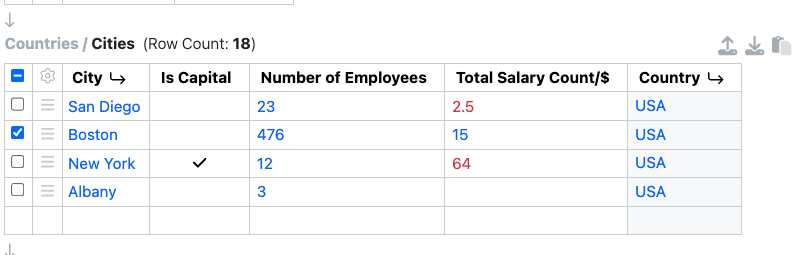
Available property types include a similar library to in Admin Defined Tables, such as Text, Number, Date/Time, Internal Reference etc. Equations in a table layer or between table layers, or Headers, can be defined. Number properties can also be defined with conditions for data entry, ranges can be set and the property set to either not allow an out of range value, or to provide a visual indication when a value does not match.

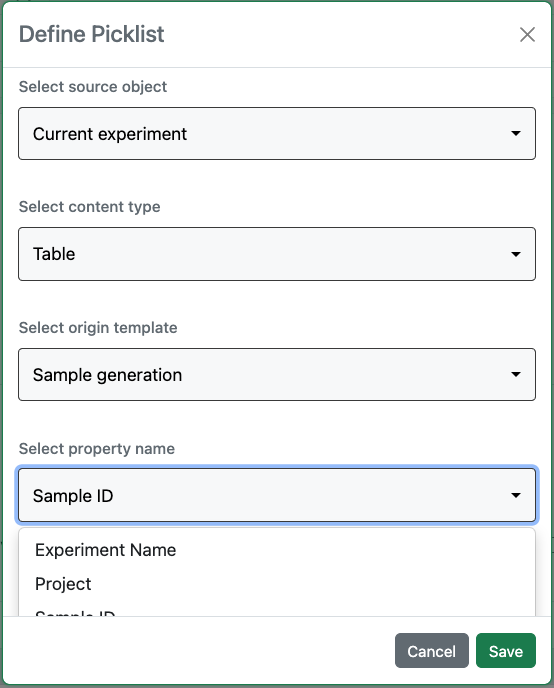
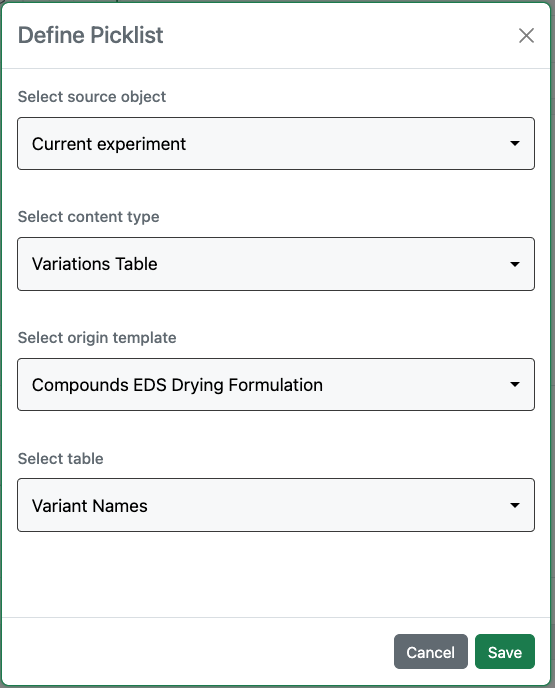
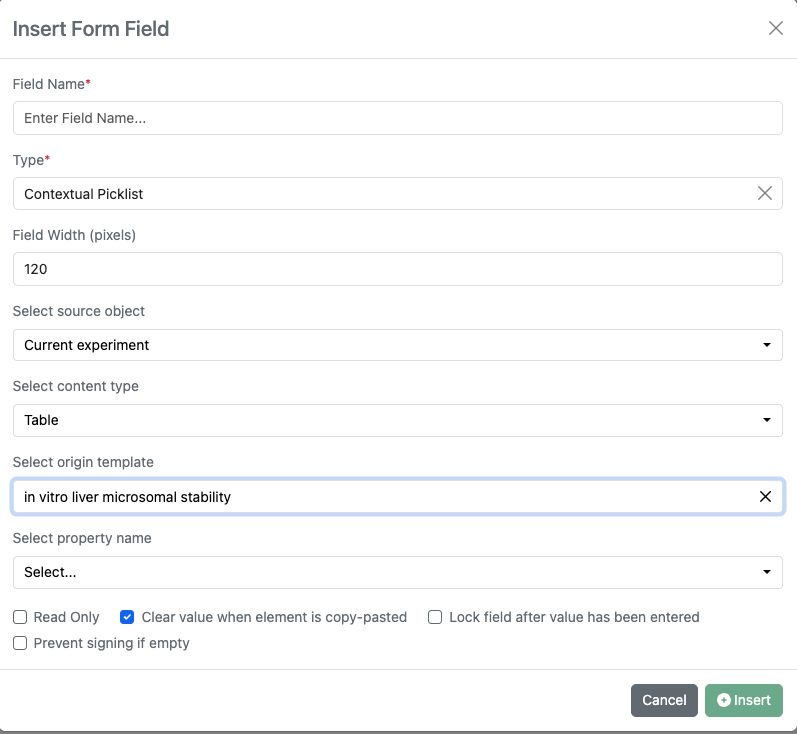
A new property type, Contextual Picklists, have been added to ADTs, Variation Tables and Hierarchical Tables. Contextual Picklists allow an administrator to define a logic for generation of a dropdown list, where the values for the list are sourced from other content within the system. This capability is only available to users with a Signals One license.

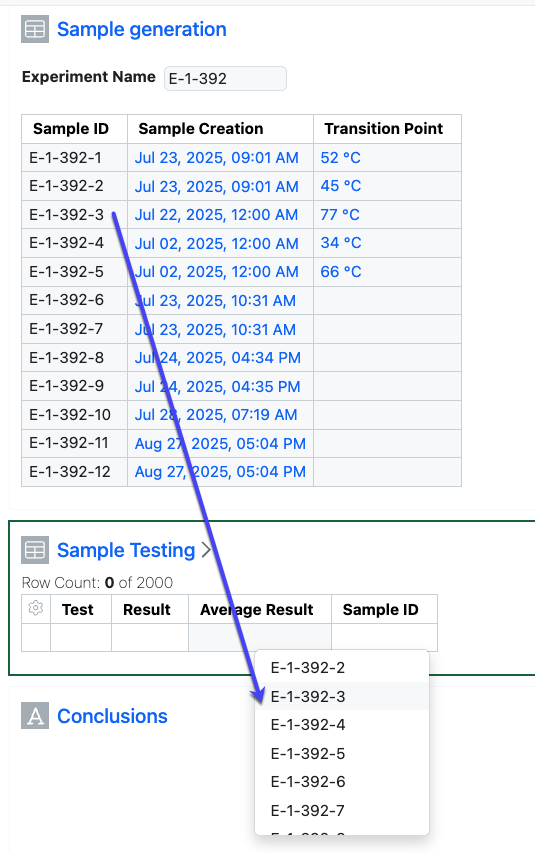
The source of the list can be defined as coming from the Experiment the user is in. The source is further defined as to the content type, such as an Admin Defined Table. Depending on the content type, the source is further refined to identify the Origin Template. Finally, the Property where the values are found is defined. A dropdown list of the unique values, given the prior definition, is presented to the end user as a dropdown.

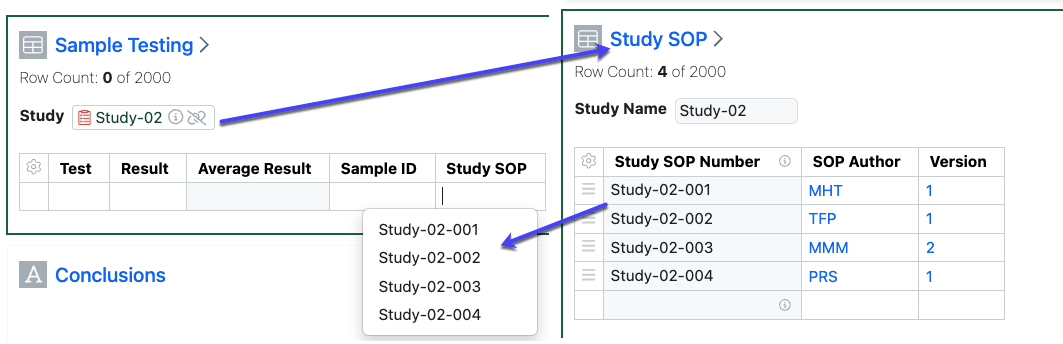
The source for the list can also be defined as a different Experiment or similar object (Admin Defined Object etc.) The other Experiment must be defined in the table with an Internal Reference type field.

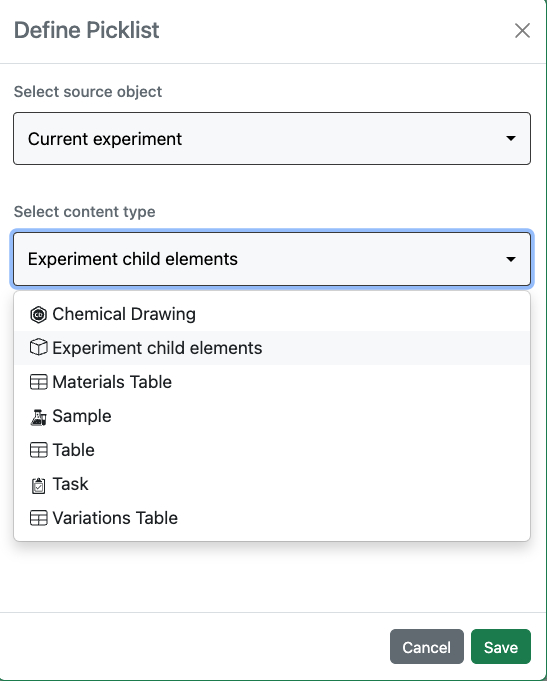
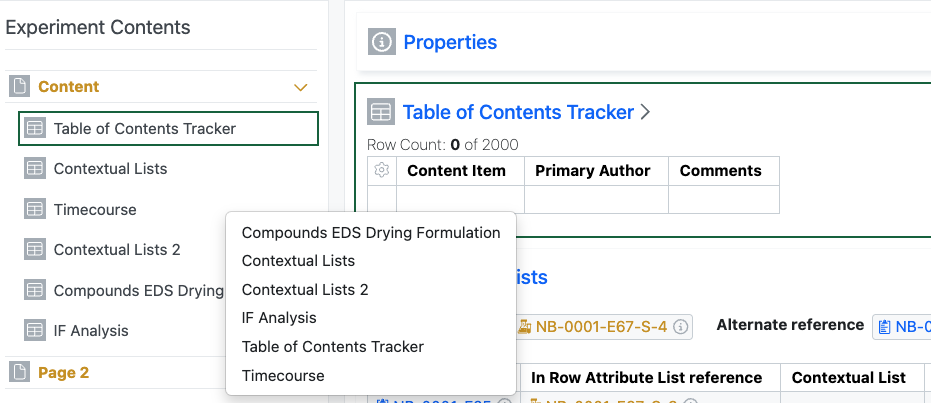
In addition to choosing data from table type objects, the values in the list can also represent the names of the content items within an Experiment by selecting the option “Experiment child elements”.

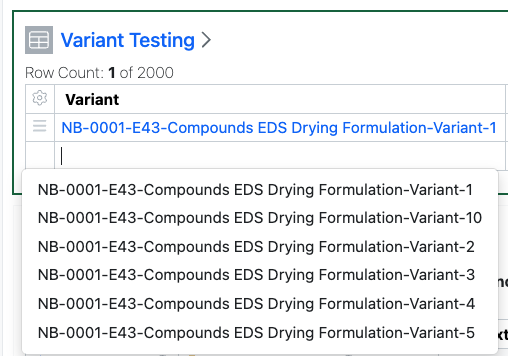
The values in the list can also represent the Variant Names from Variation Tables to aid in associating testing or other data on those Variants by selecting “Variant Names” after selecting the Variation Table and Origin Template.

Inventory

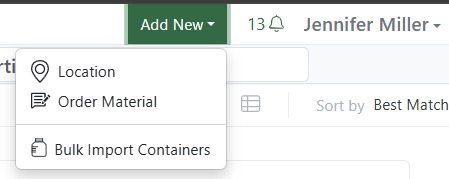
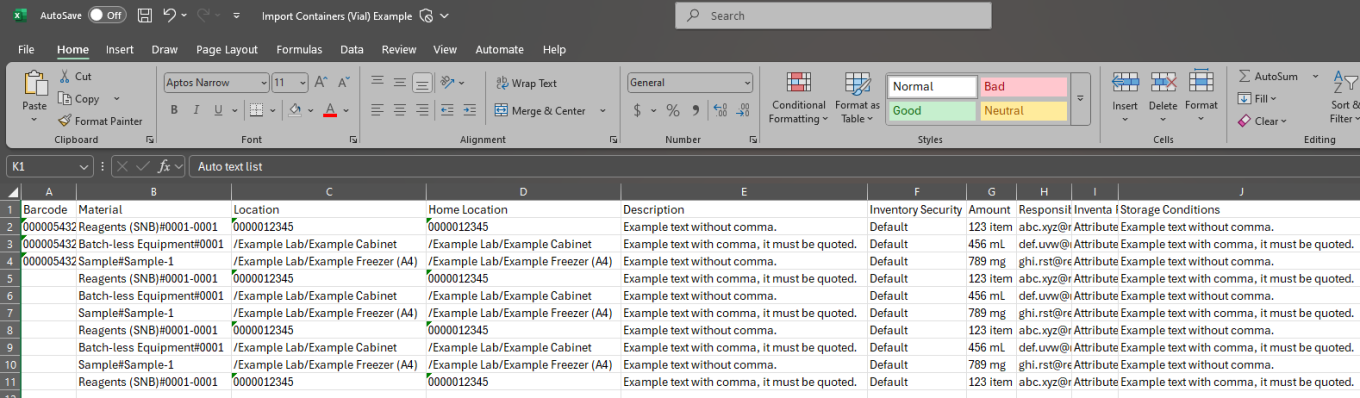
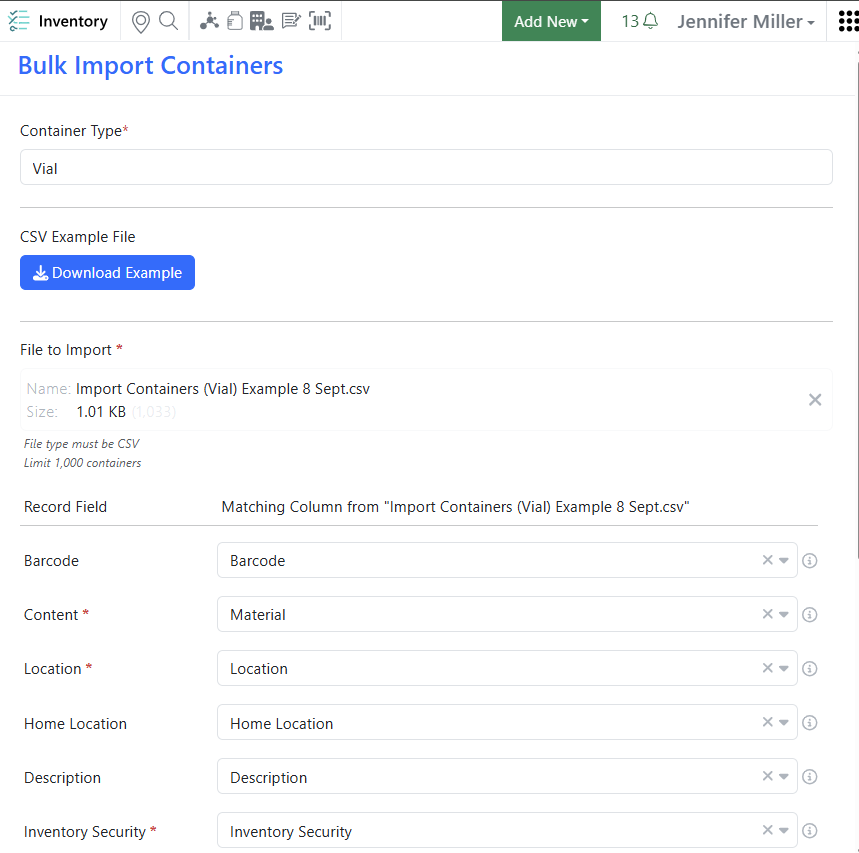
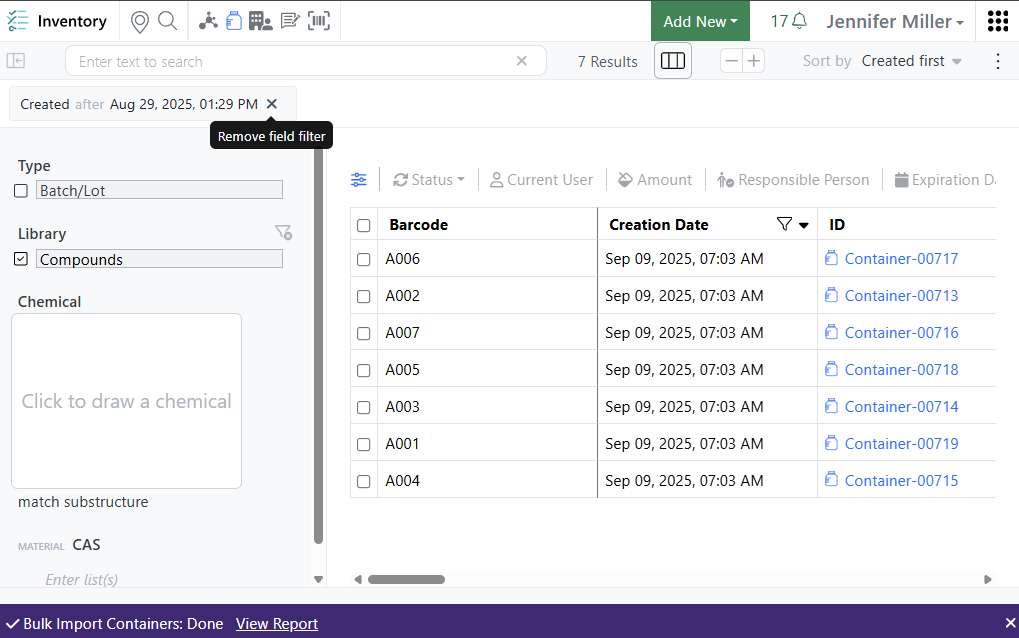
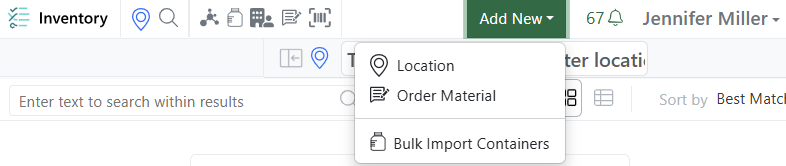
Bulk Import Containers into Inventory. Users need to navigate to Inventory, to the Add New menu:

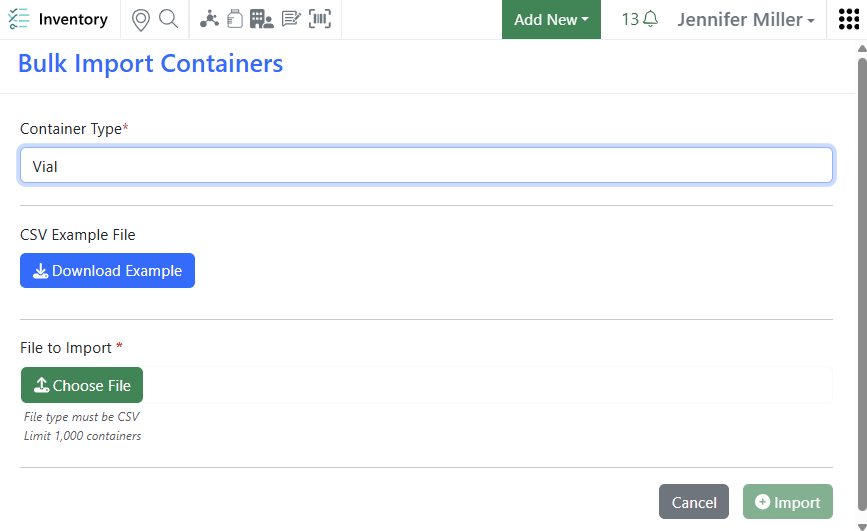
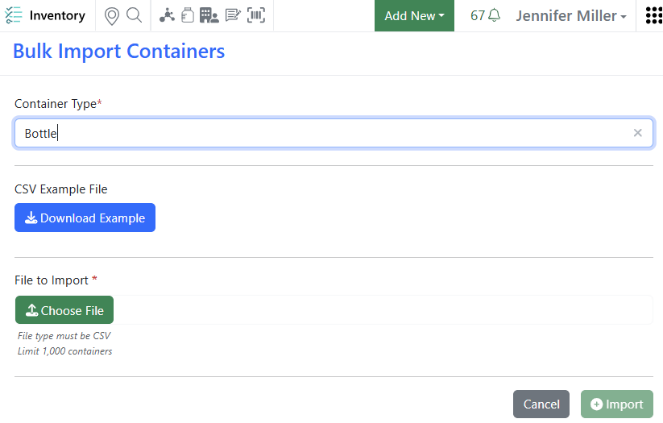
Select a Container Type to activate the Example download and the File Upload:

A csv example file will be created based on the container type properties:

Users need to be able to create containers and have (at least) read access to locations to import containers:

Once the import is started, the progress will be displayed at the bottom of the screen:

When the import is complete a report will be created. If there are any errors, they will appear in the report and the containers with errors will not be created.

Once complete, the users will be brought to the containers search table with the filter pre-set for the date:

System Supplier List available in Chemistry Settings Configuration. Navigate to the SN Config Chemistry Settings to create a column using the System Supplier List option:

Users will see the column in the stoichiometry table with the favorite suppliers at the top of the alphabetical list:

What’s New

The latest release of Signals brings improvements to the ChemDraw+ application. This release brings enhancements to the drawing experience including the introduction of a new periodic table tool, object and ring fill coloring options, as well as tools for mass fragmentation and alignment. Additionally, improvements to the biopolymer editing experience with the introduction of a find and replace capability within the HELM editor. Finally, we have also fixed a small number of bugs.

The following improvements are available for users of Signals ChemDraw. Certain features may only be available with enablement by an administrator.


ChemDraw+

  • Created by filter now available on the Dashboard
  • Periodic table available in ChemDraw editor
  • Creation of atom lists are now possible in the periodic table tool
  • Chemical objects can now be copied as 'MOLV3000 (Expanded)'
  •  'Copy As HELM (natural analog)' updated to 'Copy as FASTA'
  • Chemical Object colors can now be changed
  • Ring Fill coloring can now be applied
  • Mass Fragmentation tool now available
  • Alignment tools now available
  • Monomers can now be searched for, found and replaced when editing biopolymers
     

ChemDraw+

Created by filter now available on the Dashboard

Periodic table available in ChemDraw editor

Use the new ‘Created by’ filter on the ChemDraw+ Dashboard to control what appears in Recent Drawings. Select ‘Created by me’ to see only recently modified drawings that you created (not ones shared by other users). Select ‘Created by anyone’ to see all recently modified drawings you can access in your account.


The periodic table tool, now available in the ChemDraw toolbar, enables selection of any element to add to the canvas. When an object is selected, choosing an element from the periodic table replaces it; otherwise, any atom or blank space on the canvas can be replaced with the selected element. 


Creation of atom lists are now possible in the periodic table tool

Creation of atom lists for the generation of generic structures is now also possible with the new periodic table tool. Upon opening the tool in ChemDraw, users can select List which will allow the selection of multiple elements. Once the list is generated, selecting 'Apply' will allow the user to place the atom list on the canvas in brackets.


Chemical objects can now be copied as 'MOLV3000 (Expanded)'

Chemical objects on the ChemDraw canvas can now be copied as an expanded V3000 molfile. When using 'Copy As MOLV3000 (Expanded)', a fully expanded version of the chemical object will be copied, including the expansion of all nicknames, labels, and HELM biopolymers.

Monomers are now searchable and replaceable when editing biopolymers

The HELM Editor in ChemDraw now supports finding and selecting specific monomers on the canvas for replacement. One or more monomers can be identified and selected simultaneously using the ‘Find….’ dialog in the HELM editor, and all instances found will be selected for replacement. Selecting a new monomer from the HELM editor replaces all selected monomers on the canvas with the chosen selection. This bulk find and replace capability streamlines large-scale modifications of sequences, enabling rapid transformation of a natural sequence from a FASTA string into a highly complex sequence with custom modifications.

'Copy As HELM (natural analog)' replaced by 'Copy as FASTA'

The Copy As options for HELM biopolymers in ChemDraw have been updated. The 'Copy as HELM (natural analog)' function has been replaced by 'Copy as FASTA.' This change more accurately reflects that a FASTA sequence containing all natural analogs will be copied when this option is selected, with no change in the underlying behavior.

Object colors can now be changed

Object colors can be now adjusted directly from the Colors section in the Properties panel. Choose a hue from the color picker’s pre-defined palette or enter an exact hex code for precise control when creating publication-ready chemical drawings.

Ring Fill coloring is now available

Ring fill color can be now be applied to chemical rings enabling clearer communication of ideas and concepts by directing the focus of a reader or an audience to a given part of a chemical structure. Available in the Colors section of the Properties panel, users can choose a fill color from the color picker’s pre-defined palette or enter an exact hex code to fill ring systems and create publication-ready chemical drawings.

Mass Fragmentation tool now available

A new fragmentation tool is available in the left hand general drawing toolbar in the ChemDraw editor. When used, the mass fragmentation tool mimics the Mass Spec fragmentation to generate fragment structures with calculated molecular formulas and masses.

Alignment tools now available

Structure and reaction alignment is now available in the ChemDraw editor. With objects selected on the canvas, use the right-hand context toolbar to center, align horizontally or vertically, and distribute evenly to produce clean, consistent, publication-ready figures.

What's New

We are delighted to release our new version of Signals, 25.9. This release brings enhancements in Synergy, ChemDraw, Inventory and calculations in Tables, amongst others. We have new beta capabilities for the publish of Samples from Tables and for a Configuration Report, and have extended beta capabilities around Contextual Lists and Hierarchical tables.  The beta capabilities around In Vitro Analysis, Data Factory and Supplier Lists are now available to all systems. Finally, we have also fixed a number of small bugs.

The following improvements are available for users, administrators and developers on the Signals platform. Certain features may only be available with appropriate licensing and/or with enablement by an administrator.

  • Fundamentals
    –Experiment description in the Grid view
    –SDF export for Samples Grid view


  • Data Workflows & Analytics*
    –In Vitro Analysis is now available to all systems
    –Preview of the assembled data In Vitro Analysis is now available to all systems
    –Calculations can be applied when analyzing two instrument readouts In Vitro Analysis is now available to all systems
    –Re-execution of Analytics steps In Vitro Analysis is now available to all systems
    –Improved error handling In Vitro Analysis is now available to all systems
    –Data Factory 2.0 Publishing In Vitro Analysis is now available to all systems
    –Exclusion of Plates or individual Wells In Vitro Analysis is now available to all systems
    –Analytics annotations In Vitro Analysis is now available to all systems
    –Audit log and history In Vitro Analysis
    –Publishing enhancement, including Units publishing In Vitro Analysis
    –Multiple visualization options in normalization QA mode In Vitro Analysis
     
  • SAR & Decisioning*
    –Mapping useability enhancements in Publish Results to Data Factory app is now available to all systems
    –Downloadable report for successful publications is now available to all systems
    –Automapping improvements in Publish Results to Data Factory app is now available to all systems
    –Data Factory projects now support Custom Entity data and Material Sync is now available to all systems
    –System generated IDs can be used when publishing data to Data Factory is now available to all systems
    –Changes to Data Factory’s information design now propagate to published data (excludes legacy projects) is now available to all systems


  • Synergy†
    –Create Work Order from selected Designs in Designs Smart Folder Data Grid view
    –Send internal Experiment content to Work Order for CRO
    –Hidden from CRO properties on Work Orders
    –Custom Work Types
    –Work Order or CRO can be included in auto-naming Sequence Attributes for Synergy Experiments naming


  • Chemistry
    –Name to Structure capability expanded to use ChemACX
    –Periodic table tool now available in ChemDraw editor 
    –Creation of atom lists are now possible in ChemDraw using the periodic table tool
    –Chemical objects can now be copied as 'MOLV3000 (Expanded)'
    –Monomers are now searchable and replaceable when editing biopolymers
    –'Copy As HELM (natural analog)' replaced by 'Copy as FASTA'


  • Admin Defined Tables, Variation Tables and Hierarchical Tables
    –GETVALUE function to convert a Variable Measure to a Number
    –Allow a function to operate on the same column if within ROWOFFSET
    –Calculate the Product or conditional Product of all or some of the values in a column
    –Internal Reference column limited to Materials in a Material table in the same containing entity setting available to Admin Defined Tables
    –Publish Samples (beta)
    –Total row limit for Hierarchical Tables (beta)*
    –Header display settings for Hierarchical tables (beta)*
    –Define Internal or External Data Sources in Hierarchical Tables (beta)*
    –Add Inventory Columns to Hierarchical Tables (beta)*
    –Internal Reference column limited to Materials in a Material table in the same containing entity setting available to Hierarchical tables (beta)*

     
  • Worksheets
    –Contextual List property (beta)*


  • Inventory
    –Map Sample Properties to Container Labels
    –New labels
    –Bulk Print Barcodes from Container Search Table
    –PubChem Update to allow manual selection when CAS has multiple entries
    –Export Material Orders
    –Update to Uniqueness Rule for Reagent Material Libraries
    –Container Status Filter in Location Details View
    –Cancel bulk actions
    –Bulk Import Containers available for all users
    –System Supplier List available for all users
    –System Supplier List available in new container creation workflow available for all users
    –System Supplier List available in new Material Library available for all users
    –System Supplier List available in Chemistry Settings Configuration available for all users
    –Updates to System Supplier list
     
  • Administration
    –Rearchitected SDF Projects, improved performance with row-level updates, and new methods for project creation and data publication is now available to all systems*
    –Configuration Transfer of Contextual Lists (beta)*
    –Configuration Report (beta)


  • Integrations & APIs
    –API support for SMILES on Salts
    –APIs for Bulk Sample Update in Sample Tables
    –Users included in Sign and Add reviewers External Action
    –PATCH Contextual List properties
    –External Notifications for Synergy Designs
    –New CRO specific APIs for interacting with ADTs, Worksheets, and Stoichiometry
     

* Requires Signals One license
† Requires Signals Synergy license
 

We also fixed several small bugs in this release. Details of the enhancements are described below.

Administrators should be aware that the Normalized Compound Salt Stripping tool will change to better handle fractional coefficients by altering how multi-fragment salts are interpreted from the Salt List. This change will occur in a future release and only apply to registrations subsequent to the change, existing compounds will remain with the prior understanding until edited.

Developers should note that this release addresses an issue with the GET /entities/{eid}/export endpoint, where the response returned an incorrect Content-Type header for Text entities. The header was set to text/plain, while the actual content is text/html. This only applies to text elements created through text file upload.

Data Factory administrators should be aware of several important updates. The latest version of Data Factory has officially exited beta, and all older versions of Data Factory projects and apps are now designated as “Legacy.” As part of this transition, it is no longer possible to create new legacy Data Factory projects through the user interface. We strongly encourage administrators to begin adopting the latest Data Factory features, as legacy projects will be fully deprecated in a future release. A simple migration path will be provided in a future release to support this transition.

Data Factory administrators should also note that the Advanced Security policies in Inventa apply an “AND” logic across all user groups, restricting access if any groups lack permissions. This behavior differs from the standard Signals security model and will be fixed to align with the standard in a future release.

Administrators are recommended to subscribe to the channels within our support news site found at https://support.revvitysignals.com/hc/en-us/categories/360004446171-Support-News which contains more information about releases and other pertinent product information.

This content is anticipated for release on our Production E3 environments, and for Private Cloud customers on our deferred release schedule, in March 2026.

Further Details 

The following improvements are available for users, administrators and developers on the Signals platform. Certain features may only be available with appropriate licensing and/or with enablement by an administrator.

Fundamentals

Users will now be able to view the Experiment description, which currently appears on the card view, in the Grid view of the Experiments Smartfolder.

In the Samples Smartfolder, Chemical samples can now be exported to SDF from Samples Grid view by selecting “Export” in the same manner a csv export can be generated. If a selected sample does not have an associated chemical drawing, it will be skipped in the SDF export.

Data Workflows & Analytics

In Vitro Analysis and all previously released capabilities are now available to all systems.

For tenants with a Signals One license, users will now be able to perform In Vitro (screening, assays) data analysis, visualization and results quality control. The first curve fitting method available is the logistic 4 Parameter (4P) fit. 

The activity in each of the In Vitro Analysis steps is now logged and appears in the history of the analysis:

The results published from a deleted In Vitro Analysis will automatically disappear from the Data Factory, in agreement with the principle of Signals constituting the single point of truth. 

Concentration units, defined at the plate level, are now propagated to the results of the analysis published in the Data Factory 2.0:

In the detailed plate view it is now possible to switch the plate heatmap from raw to normalized data:

Moreover, as well as changing the visualization to the histogram view allowing to better compare the data distributions before and after normalization The histogram visualization is fully dynamic, with interactive selection and binning:

SAR & Decisioning

The Data Factory capabilities previously in beta are now fully available across all systems in Signals One. Key updates include support for row-level updates, improved performance, enhanced mapping usability, expanded publication paths, and new public APIs.

Synergy

The Designs Smart Folder Data Grid view allows users to easily manage Designs across multiple Ideas or projects. Users can now easily Create a Work Order from selected Designs in the Designs Smart Folder Data Grid view.

From inside an Experiment, a Sponsor user with the privilege to Create Work Order can now select Create Work Order and include content from the Experiment to share with the CRO. Related Work Orders created from the Experiment are captured and tracked in the Related Work Orders Table within the Experiment, while the newly created Work Order has the Experiment linked in the Originating Experiment property.

Hidden from CRO properties can now be applied to Work Orders, in addition to Collaborations and Synergy Experiments. Hidden from CRO properties allow the Sponsor to protect proprietary metadata from external partners. Synergy or System Admins can mark fields on Work Order Templates as Hidden from CRO; when a Work Order is created from these templates, only the internal Sponsor users can view and/or edit these properties and their values on the Work Order. These properties are never visible to CRO users.

The admin can now define custom Work Types for labeling and organizing Work Orders. Work Types can be marked as Shown/Hidden for simplifying user selection.

Finally, the admin can include the associated Work Order or assigned CRO in an auto-naming number sequence Attribute list in Signals Configuration. When the auto-naming number sequence is used as the Name on a Synergy Experiment Template, the associated Work Order or assigned CRO will be included in the Experiment name.

Chemistry

The Name to Structure capability in ChemDraw now utilizes ChemACX, a unified chemical database containing tens of millions of substances. This enhancement enables conversion of synonyms, trade names, and common names within the database directly to structure representations in the ChemDraw editor. This improvement can be accessed by using the ‘Name to Structure’ tool in the ChemDraw editor or pasting plain text of the structure name onto the ChemDraw canvas.

The periodic table tool, now available in the ChemDraw editor, enables the selection of an element to add to the canvas. When an element is selected from the periodic table, it can replace an atom, selection, or be added to blank space on the ChemDraw canvas.

Creation of atom lists for the generation of generic structures is now possible using the periodic table tool. Upon opening the tool in ChemDraw, users can select the ‘List’ option which will allow the selection of multiple elements. Once the list is generated, selecting 'Apply' will allow the user to place the element list on the canvas in brackets.

Chemical objects on the ChemDraw canvas can now be copied as an expanded V3000 molfile. When using 'Copy As MOLV3000 (Expanded)', a fully expanded version of the chemical object will be copied, including the expansion of all nicknames, labels, and HELM monomers.

The HELM Editor in ChemDraw now supports finding and selecting specific monomers on the canvas for replacement. One or more monomers can be identified and selected simultaneously using the ‘Find….’ dialog in the HELM editor, and all instances found will be selected for replacement.

Selecting a new monomer from the HELM editor replaces all selected monomers on the canvas with the chosen selection. This bulk find and replace capability streamlines large-scale modifications of sequences, enabling rapid transformation of a natural sequence from a FASTA string into a highly complex sequence with custom modifications.

The Copy As options for HELM biopolymers in ChemDraw have been updated. The 'Copy as HELM (natural analog)' function has been replaced by 'Copy as FASTA.' This change more accurately reflects that a FASTA sequence containing all natural analogs will be copied when this option is selected, with no change in the underlying behavior.

Admin Defined Tables, Variation Tables and Hierarchical Tables

The Function GETVALUE has been extended to allow operation on a property of type Variable Measure. The formatting remains the same, whereby the first argument defines the property being input and the second property defines the unit for conversion. Numbers within the same Measure will be converted to the equivalent number with that unit. The function can be used within a CASE statement in order to output numbers across Measures.

A limitation on self referencing of columns has been relaxed. Columns can be self referenced when within a ROFFOFFSET function, avoiding a circular reference. This allows the prior value in a column to be used to calculate the next value in the same column.

New functions to calculate the product of the values in a column have been added. PRODUCT() and PRODUCTOVER() allow calculation of the product of the values, or a conditional subset of the values, either as a column of as a Header.

Properties of type Internal Reference can now be defined to limit to “within the same entity”. This capability, already available in Variation Tables, is now extended to Admin Defined Tables. When selected the list of available references will be limited to Materials referenced in Material Tables within the same Experiment.

Inventory

Under the Property Type column Administrators can now choose Sample Properties as an option to be printed on the container labels:

In the Inventory Container Label Templates we have released 2 new label options: 20 x 12 mm:

150 x 65 mm:

101 x 50 mm:

Users can select containers on the Containers Search Table that they would like to print/re-print barcode/labels for. Select the containers using the checkboxes to the left and choose the Print Barcode option:

The select barcode label size window will appear:

There has been a PubChem update to allow manual selection when CAS has multiple entries. When a given CAS has multiple entries associated in PubChem, the users will now get an option to select which entry they would like to pull the data into the Reagent Library:

Users will see a modal appear when they choose to update the data from PubChem to select from:

Once an option is selected, the data will be updated in the Regent Library:

In the top right corner of the Material Orders page is the new Export Order option:

Users can choose to export as a csv or a SDF:

Reports can be found in the Inventory Bulk Reports  Material Reports  Material Order:

There has been an update to Uniqueness Rules for Reagent Material Libraries. Administrators can select 1 additional required field for uniqueness checking for Reagent Libraries:

This means that when a new Reagent is being created the Structure is checked first, then the CAS number and if both Structure and CAS are empty, the chosen Other Field is used for uniqueness. Users will see the Resolve Duplicates screen if a match is found:

An additional Container Status Filter has been added in the Location Details View. This allows users to choose to see Disposed, Final Disposed, Exhausted containers instead of the default In Use and Available that the page defaults to:

When users initiate an action or a bulk download from the Containers Search Table or from a Move Location Contents or a Move Location, they are now able to cancel the request by navigating to the Inventory Bulk Reports page and choosing the Cancel Job icon:

Please note that some actions are very quick so the Cancel Job option may not appear to work or may not be present at all since the job runs so quickly. Bulk Import Containers is now available for all users:

Please remember that users need the permission to create containers in order to bulk import containers.

System Supplier List is available for all users. In addition, there are a few updates to System Supplier List. Inventory Administrators will see the System Supplier List available in the Inventory Settings page:

Inventory Administrators will be able to sort the System Supplier List by ChemACX or Admin Defined. The sort will keep the Favorite Suppliers at the top of the list and will sort those first and then sort the rest of the Suppliers below:

Integrations & APIs

We have updated our fragments APIs to allow for fetching and updating the SMILES values for Salts.

We have added new APIs to bulk update Samples in a samples table. This is an asynchronous API with two new endpoints. One to kick off the request and one to check the status (Success or Failure). The request body of the first PATCH request requires a well formatted CSV with the first column representing the ID of the sample and the subsequent the properties to be updated.

We have enhanced the External Action for “Sign and Add Reviewers” and “Sign and Add Two Stage Reviewers” to include the selected reviewers in the External Action request body. This is only applicable when submit method is set to POST.

We have enhanced our APIs to support Contextual List fields and columns. This applies to APIs for updating Admin Defined Tables, Variations Tables, and Worksheets. Note that using the External API any text value can be entered into these fields/columns regardless of the contextual list definition.

For our Synergy product we have added External Notifications for Design signing Events. These are included in the Notification Trigger “All Signing Events”.

We have expanded the APIs for our Synergy Product CROs to include Admin Defined Tables, Worksheets, and Stoichiometry. These allow for specific APIs to be utilized by CRO users. This enables customers External Actions to read and write for CRO users without exposing details that CROs are restricted from seeing or interacting with.

Further Details 

The following capabilities are in beta and are available for users, administrators and developers on the Signals platform upon request. Please contact your account representative or our support team if you would like access to the following features.
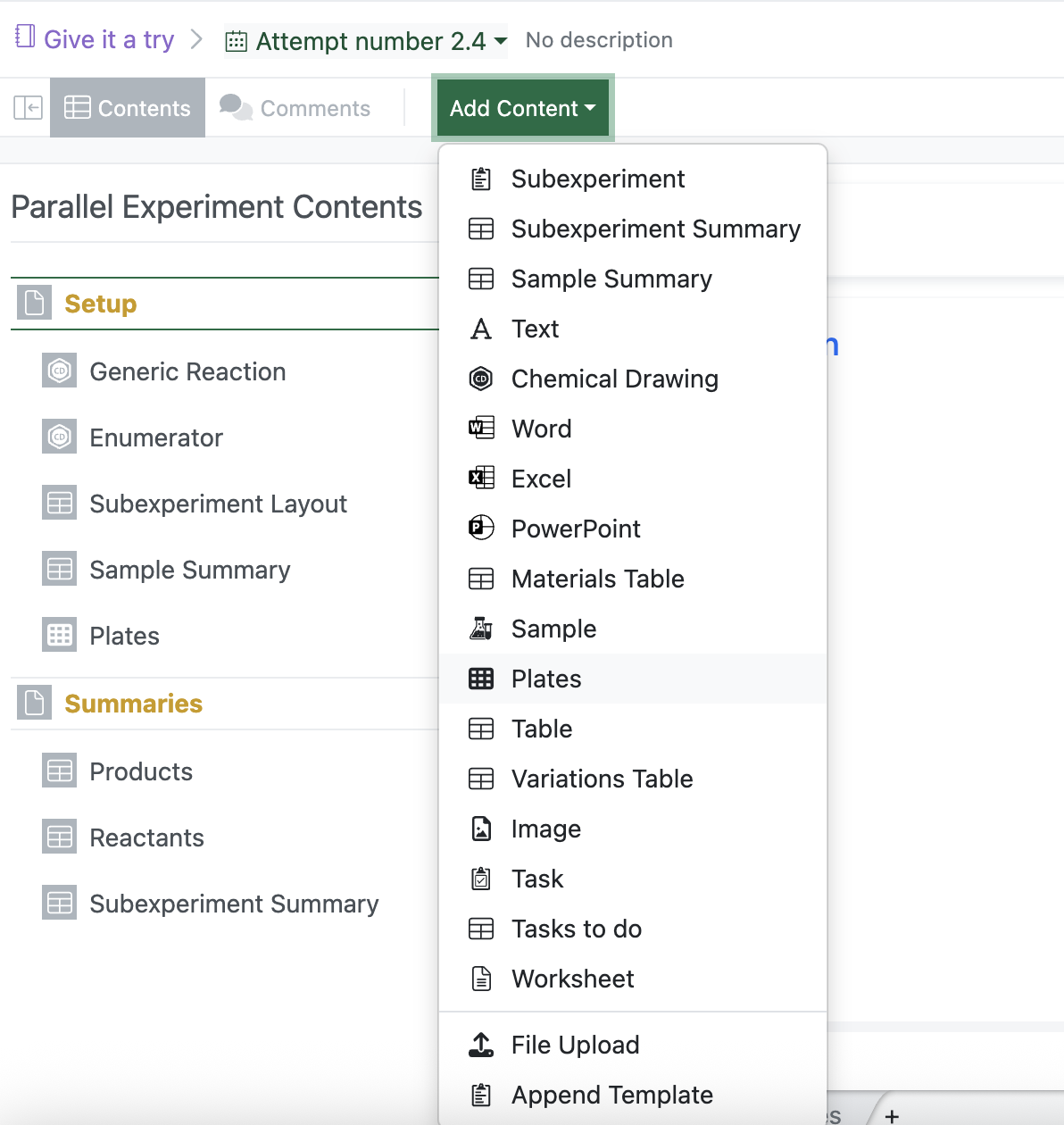
Admin Defined Tables, Variation Tables and Hierarchical Tables

Publish Samples is a new beta feature. To publish Samples for analysis the configuration will need to be done in at least 2 places and up to 3 depending on where the information is being filled stored or entered. The simplest option is to configure the Sample Template and the Table Template (ADT or Variation Table).

To configure the Sample Template the administrators needs to navigate to the System Objects  Samples  Templates. Choose the Template for the Samples to be published and click the Data Factory Mapping in the top right corner:
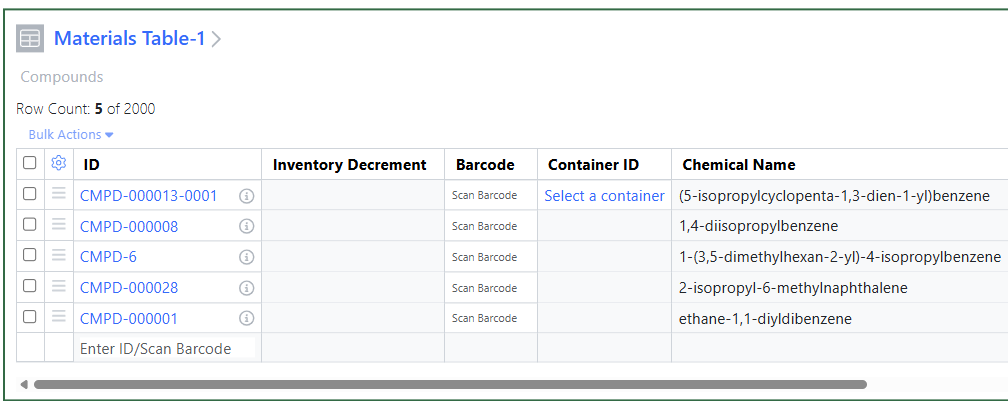
Select the Data Factory Project that the Sample data will be published to and click Save and Continue:

For the map to be able to be filled out, the Data Factory Entity Type needs to be selected. Administrators can map the Sample to the Asset or to the Batch/Lot. This is where the configuration depends on where the data will be stored or entered. Administrators can configure the system so that every Sample is an Asset is Data Factory and then associate Variants in a Variation Table as the batch/lots OR a configured field in an ADT can be the batch/lot. Another option the administrator could configure is the Experiment ID as the Asset (or another field on an Experiment/ADO, ex: a Material ID that links back to a Materials Library) and map each Sample as a batch/lot of that ID.

Once the administrator chooses the Data Factory Entity Type, either the Compound ID (if Asset is chosen) or the Batch ID (if Batch/Lot is chosen) the value will automatically fill in the ID row. The ID is expecting an Internal Reference. This means that in the ADT/Variation Table there is expected to be an Internal Reference field that will be filled in (by the user) with a viable Sample ID from Signals Notebook:

Configure any additional entity fields that should be associated with the Sample creation as an entity and Save the map (ex: Purity). Next the administrator should configure the Experiment/ADO template if that is where the asset or any additional should be entered by the user (ex: Date, Scientist…):

After the Experiment/ADO is configured, the ADT or Variation Table where the Samples and the data to be published will be entered will need to be mapped:

If the Asset is in the table, it can be mapped as well. When all the mapping is done then the users will be able to publish the data from their experiments:

The report will be available with the Status once the publication is complete:

Note: Setting up the Data Factory Entity and Measurement Types before configuring Signals Notebook will help ensure a smoother process. Starting with configuring the Experiment/ADO, then Sample Template and then ADT/Variation Table can help with keeping track of the least detailed mapping to the greatest detailed mapping. Administrators should remember to enable the publishing before leaving the configuration of each Template. Samples as the Asset with the Batch/Lot as the Variant Name Samples as the Asset with the Batch/Lot as an additional field in the ADT/Variation Table Experiment/ADO as the Asset and Samples as the Batch/Lot Experiment/ADO additional field as the Asset and Samples as the Batch/Lot Samples as the Batch/Lot with an additional field in the ADT/Variation Table as the Asset Experiment/ADO (or additional field) as the Asset and Variants as the Batch/Lot- if you choose this method be sure that the Variant is configured to be unique for every Variation Table the user may add to the Experiment (ex: Add the Table Name to the Variant)
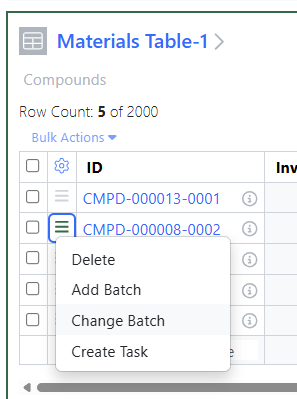
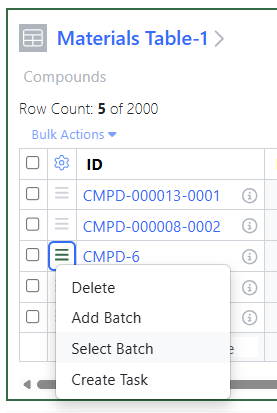
 

A total row limit of 2000 rows has been applied to Hierarchical Tables. This limit is applied across all of the table layers.
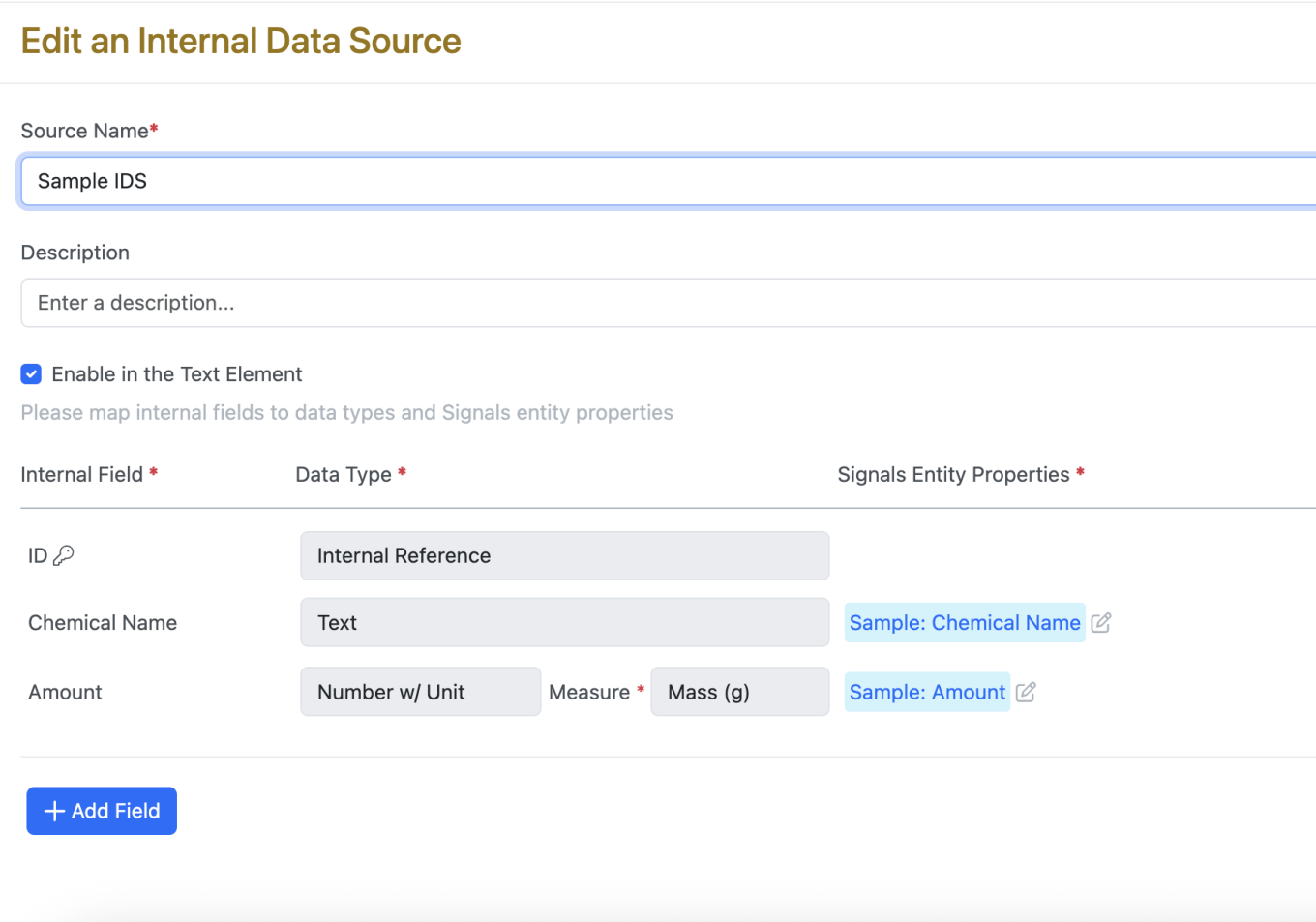
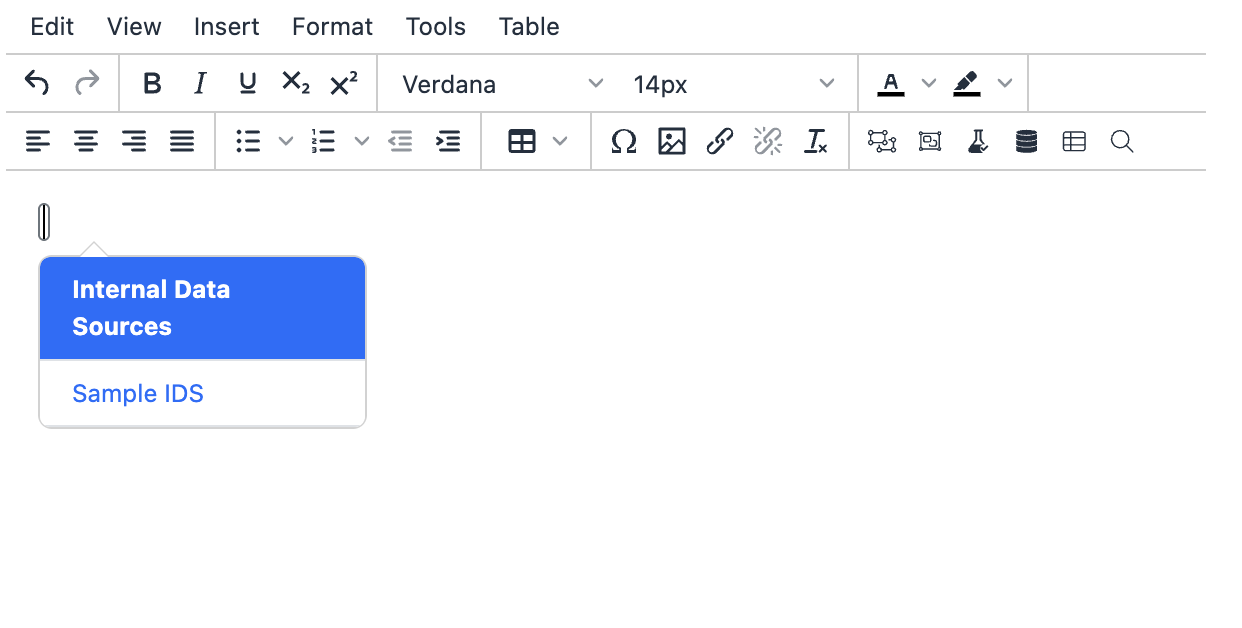
Administrators can now define properties for display of the headers. Headers are displayed in consecutive vertical blocks of up to four, a maximum number of headers in each block and a definable maximum width of the labels and values.
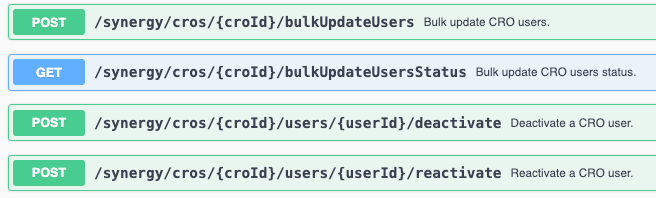
External and Internal Data Sources can now be applied to the table layers in Hierarchical Tables. Each table layer can have up to one data source applied.

If the data source is an appropriately configured Internal Data Source, Inventory columns can optionally be added to a single data layer. This will add the barcode lookup capability to the ID column, along with Barcode, ContainerID and Inventory Decrement columns.

Properties of type Internal Reference can now be defined to limit to “within the same entity”. This capability, already available in Variation Tables, is now extended to Hierarchical Tables. When selected the list of available references will be limited to Materials referenced in Material Tables within the same Experiment. An additional column of type Variable Property can be added to add the Material Name.

Worksheets

The Contextual List property type has been added to Worksheets.

Administration

Contextual Lists are now included in Configuration Transfer.

This release brings the beta release of a System Configuration Report. This feature allows the generation of a PDF that captures the current configuration settings for a tenant. The Configuration Report is accessed from the Export Configurations dropdown.